
- Sustainability doesn’t start with big, dramatic changes, it actually starts at the kitchen sink, the grocery list, and the light switch.
- For children, the most powerful environmental lessons often come from watching everyday choices at home.
- So, here’s how to turn ordinary household decisions into meaningful lessons in eco-conscious living.
- Why Daily Habits Matter More Than One-Time Lessons Kids learn sustainability best through repetition, not lectures.
- When eco-friendly choices become part of daily routine, they eventually turn into lifelong habits rather than occasional efforts.
Sustainability doesn’t start with big, dramatic changes, it actually starts at the kitchen sink, the grocery list, and the light switch. For children, the most powerful environmental lessons often come from watching everyday choices at home.
So, here’s how to turn ordinary household decisions into meaningful lessons in eco-conscious living.
Why Daily Habits Matter More Than One-Time Lessons
Kids learn sustainability best through repetition, not lectures. When eco-friendly choices become part of daily routine, they eventually turn into lifelong habits rather than occasional efforts.
Additionally, small, consistent actions teach children that sustainability is achievable, not overwhelming.
Everyday Household Decisions That Teach Sustainability
1. Grocery Shopping Choices
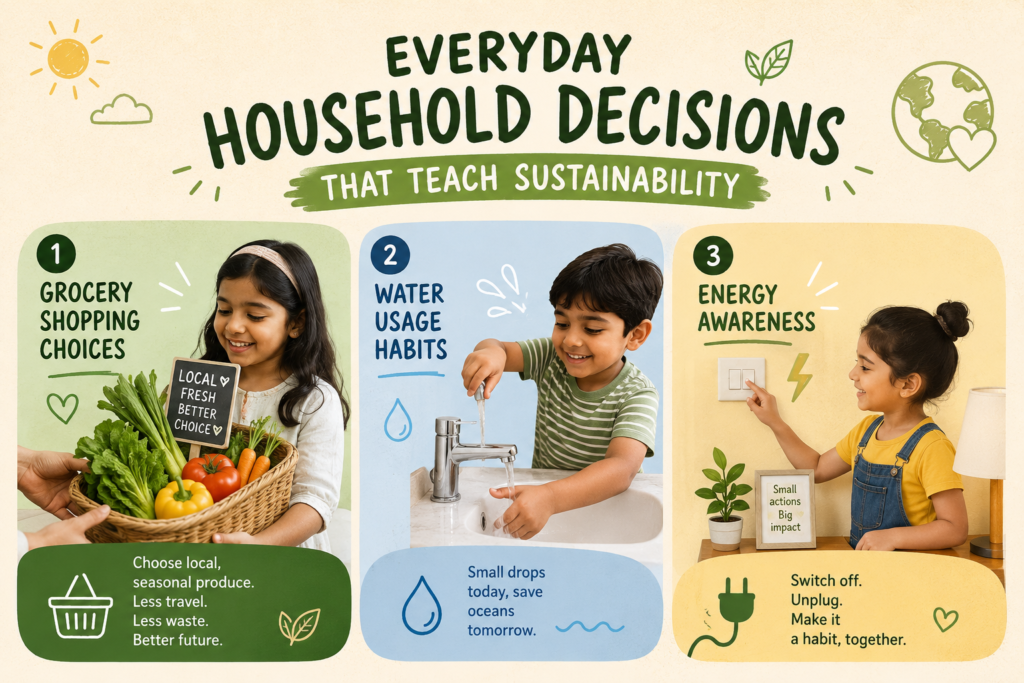
Involve kids in choosing local, seasonal produce over packaged alternatives. For instance, explain how this reduces transportation emissions and packaging waste.
2. Water Usage Habits
Simple actions, such as turning off taps while brushing or fixing leaks promptly, teach kids that conservation starts with small daily choices.
3. Energy Awareness
Similarly, make switching off lights and unplugging devices a shared household habit, not just a rule kids are told to follow.
4. Waste Segregation
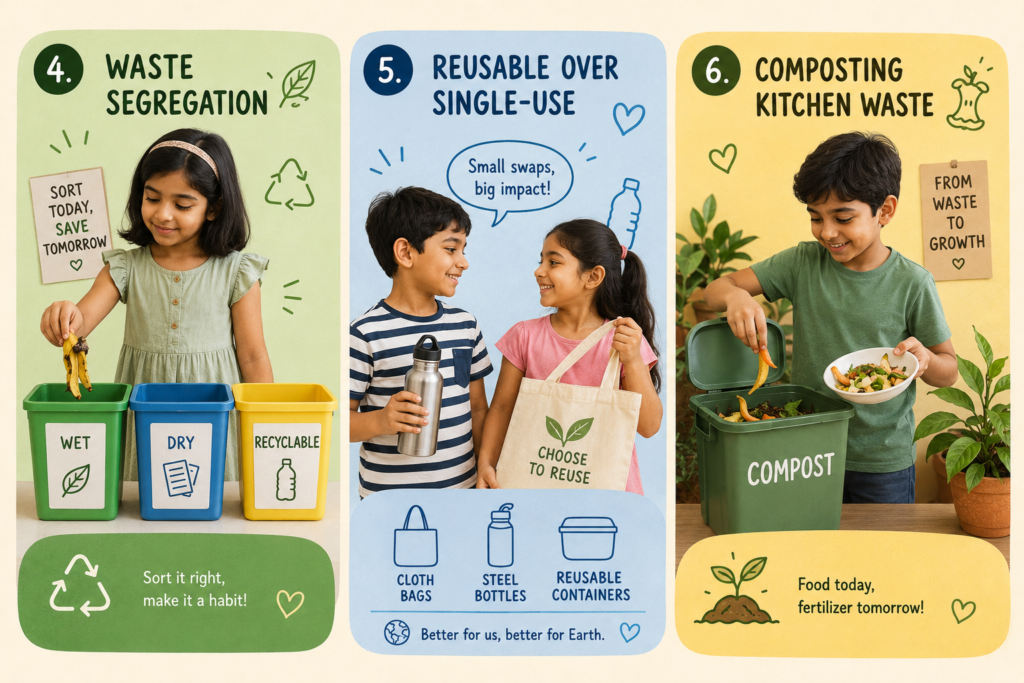
Set up simple, color-coded bins for wet, dry, and recyclable waste. As a result, kids quickly learn sorting habits when it’s part of the routine.
5. Reusable Over Single-Use
Choose cloth bags, steel bottles, and reusable containers together, and then explain why these small swaps matter over time.
6. Composting Kitchen Waste
Even a small home compost bin teaches kids how food waste can become useful, rather than ending up in landfills.
Quick Reference: Habit vs Environmental Impact
| Household Habit | Environmental Benefit |
|---|---|
| Buying seasonal produce | Reduces transport emissions |
| Fixing leaks promptly | Conserves water |
| Switching off unused devices | Reduces energy consumption |
| Waste segregation | Improves recycling efficiency |
| Using reusable bags/bottles | Reduces single-use plastic waste |
| Composting food scraps | Reduces landfill waste |
Making Sustainability a Family Habit, Not a Chore
- First, involve kids in decisions, ask their opinion on eco-friendly swaps.
- Then, explain the “why” simply, connect actions to real outcomes like less waste or cleaner water.
- Also, celebrate small wins, like a week without food waste.
- However, avoid guilt-based messaging, focus on positive impact instead.
- Above all, be consistent, since kids notice when actions don’t match words.
Turning Mistakes Into Learning Moments
Forgot to carry a reusable bag? Left a light on? Even so, these moments are opportunities, not failures.
Instead, calmly discussing what could be done differently teaches accountability without shame, an approach that sticks far better than criticism.
Why This Matters Beyond the Home
Children who grow up practicing sustainable habits eventually carry that awareness into schools, communities, and, in turn, their own households. Consequently, these early lessons shape long-term environmental responsibility.
Moreover, schools that reinforce sustainability through hands-on learning, gardening, recycling drives, and eco-projects, help extend these home habits into a broader, lasting mindset.
FAQs
1. At what age should children start learning sustainable habits?
Generally, children as young as 3–4 can begin with simple habits like switching off lights or sorting waste.
2. How can I make sustainability fun instead of feeling like a chore?
Simply involve kids in decisions, use positive reinforcement, and celebrate small eco-friendly wins together.
3. Does composting work for small homes or apartments?
Yes, in fact, compact compost bins are designed specifically for balconies and small kitchen spaces.
4. How do I explain sustainability without overwhelming my child?
Instead, focus on one habit at a time and connect it to simple, relatable outcomes they can understand.
5. How can schools support sustainable habits taught at home?
Ultimately, schools that include eco-projects, gardening, and sustainability education help reinforce and expand what children learn at home.
Want to see how schools nurture eco-conscious habits in students? Explore Vega Schools’ approach to sustainability education.
Infrastructure, facilities, and experienced teachers are a big asset to the learning & development of students, be it for Nursery, Primary or Senior children making Vega Schools the best schools in Gurgaon. For information about admission, please visit the Vega Schools campuses in Sector 48 and Sector 76 Gurugram. Get the best education for you child in New Gurgaon and be part of the top school infrastructure for sector 78, Sector 83, Sector 85, Sector 90, Sector 102, Sector 106 in Gurgaon, near Dwarka Expressway.