
- Do you find yourself doing things for your child that they could actually do themselves?
- It’s a common parenting habit, but it often unintentionally slows down independence.
- This is something educators at progressive CBSE schools in Gurgaon see often, children thrive when given room to try, fail, and try again.
- Building self-reliance isn’t about stepping back all at once.
- It’s about creating small, consistent opportunities for children to trust their own abilities.
Do you find yourself doing things for your child that they could actually do themselves? It’s a common parenting habit, but it often unintentionally slows down independence. This is something educators at progressive CBSE schools in Gurgaon see often, children thrive when given room to try, fail, and try again.
Building self-reliance isn’t about stepping back all at once. It’s about creating small, consistent opportunities for children to trust their own abilities.
Why Independence Matters Early
Children who develop independence early tend to build stronger problem-solving skills, confidence, and resilience. These traits extend far beyond daily tasks into academics and social situations.
Moreover, independence teaches children that mistakes are part of learning, not something to be avoided entirely, a philosophy that shapes how the best schools in Gurgaon design their classrooms today.
Signs Your Child May Need More Independence
- Frequently asks for help with tasks they’re capable of doing
- Struggles to make simple decisions without reassurance
- Relies heavily on reminders for daily routines
- Avoids trying new tasks for fear of doing them wrong
Practical Ways to Build Self-Reliance
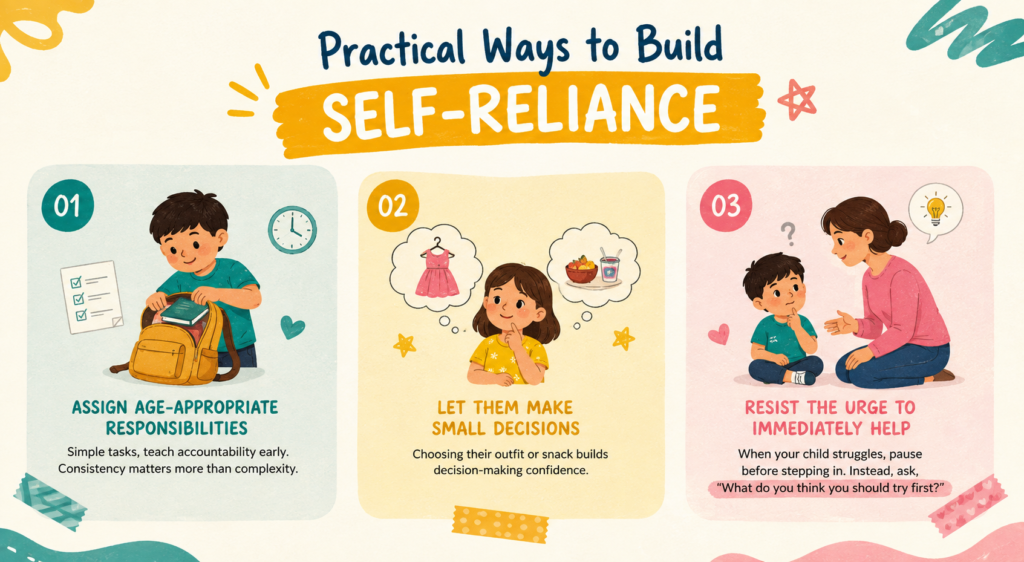
1. Assign Age-Appropriate Responsibilities
Simple tasks, packing their own bag, setting the table, teach accountability early. Consistency matters more than complexity here.
2. Let Them Make Small Decisions
Choosing their outfit or snack builds decision-making confidence. Over time, these small choices prepare them for bigger ones.
3. Resist the Urge to Immediately Help
When your child struggles, pause before stepping in. Instead, ask, “What do you think you should try first?”
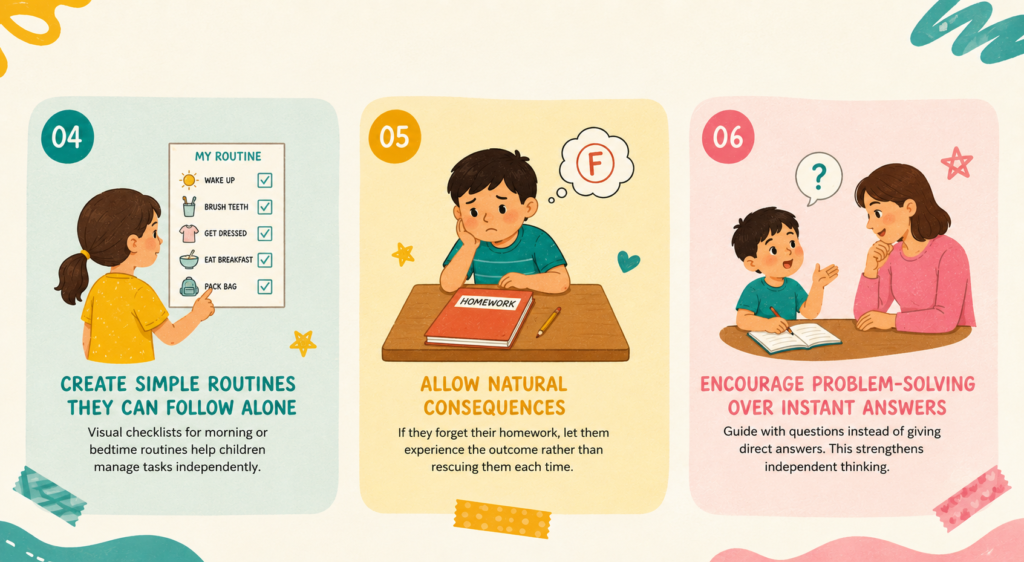
4. Create Simple Routines They Can Follow Alone
Visual checklists for morning or bedtime routines help children manage tasks independently, without constant reminders.
5. Allow Natural Consequences
If they forget their homework, let them experience the outcome rather than rescuing them each time. This builds accountability naturally.
6. Encourage Problem-Solving Over Instant Answers
When they ask for help, guide with questions instead of giving direct answers. This strengthens independent thinking, a skill reinforced daily through experiential learning and project-based learning approaches.
Age-Appropriate Independence Guide
| Age Group | Independence-Building Task |
|---|---|
| 3–5 years | Dressing themselves, tidying toys |
| 6–8 years | Packing school bags, simple chores |
| 9–11 years | Managing homework schedule, small errands |
| 12+ years | Planning study time, handling responsibilities independently |
Common Mistakes Parents Should Avoid
- Doing tasks for convenience instead of allowing extra time.
- Over-correcting mistakes instead of letting kids learn from them.
- Comparing independence levels between siblings or peers.
- Praising outcomes only, not effort or attempts.
Balancing Support With Independence
Building self-reliance doesn’t mean removing support entirely. Instead, it means shifting from doing things for your child to guiding them through the process.
Additionally, celebrating small wins, like completing a task without reminders, reinforces confidence far more effectively than criticism ever could.
Why This Builds Long-Term Confidence

Children who practice independence regularly grow into adults who trust their own judgment. This mindset supports academic performance, social relationships, and emotional resilience over time.
Environments that encourage responsibility, both at home and school, help reinforce this growth consistently. At Vega School, a holistic education school in Gurgaon with campuses in Sector 48 and Sector 76 Gurugram, independence is treated as a core part of everyday learning, not an occasional lesson.
FAQs
1. At what age should I start building independence in my child?
Independence-building can begin as early as age 3, starting with simple, age-appropriate tasks.
2. How do I encourage independence without being too strict?
Offer guided choices and support, rather than removing help entirely or enforcing rigid expectations.
3. My child gets frustrated when tasks are difficult. What should I do?
Encourage small steps and celebrate effort, frustration is often part of the learning process.
4. Does allowing natural consequences really help build responsibility?
Yes, experiencing outcomes, within safe limits, helps children understand accountability more effectively than repeated reminders.
5. How can schools support independence alongside home efforts?
Progressive CBSE schools in Gurgaon that encourage responsibility, decision-making, and self-directed learning help reinforce independence taught at home.
🪜 The Independence Ladder
Pick your child’s age group and help them climb toward self-reliance!
Choose an age group to begin:
Want to see how self-reliance is nurtured in the classroom? Explore admissions at Vega School, a progressive CBSE school in Gurgaon with campuses in Sector 48 and Sector 76 Gurugram.