
- “Good job!” It’s the most natural thing to say when your child does something well.
- But said too often, in the same way, for everything, it starts to lose meaning, and its power to actually help a child grow.
- Here’s why the praise you give matters as much as the fact that you’re giving it, and what to say instead.
- Why “Good Job” Runs Out of Steam Generic praise feels nice in the moment, but it doesn’t tell a child much.
- It doesn’t say what they did well or why it mattered, so it’s hard for them to repeat it on purpose next time.
“Good job!” It’s the most natural thing to say when your child does something well. But said too often, in the same way, for everything, it starts to lose meaning, and its power to actually help a child grow.
Here’s why the praise you give matters as much as the fact that you’re giving it, and what to say instead.
Why “Good Job” Runs Out of Steam
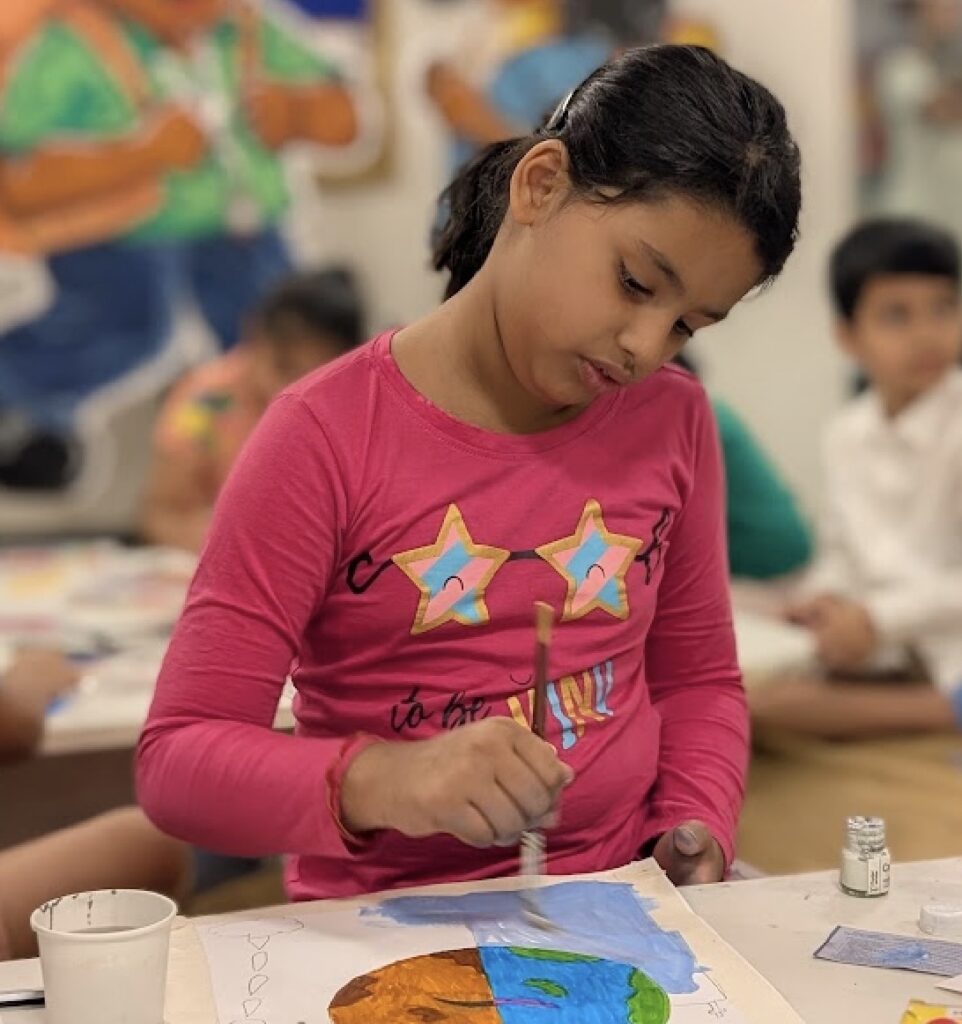
Generic praise feels nice in the moment, but it doesn’t tell a child much. It doesn’t say what they did well or why it mattered, so it’s hard for them to repeat it on purpose next time.
This is exactly why experiential learning school environments in Gurgaon train teachers to give specific, process-focused feedback rather than blanket approval, helping children understand what actually worked.
The Praise That Actually Builds Confidence
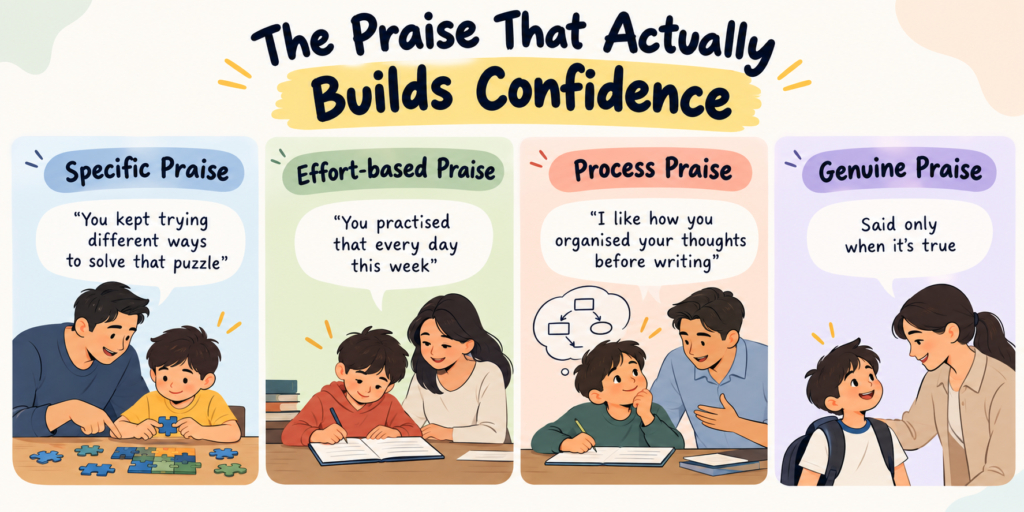
- Specific praise: “You kept trying different ways to solve that puzzle” tells a child exactly what worked.
- Effort-based praise: “You practised that every day this week” reinforces persistence, not just outcome.
- Process praise: “I like how you organised your thoughts before writing” highlights the thinking, not just the result.
- Genuine praise: Said only when it’s true, not as a reflex after every small action.
Why Praising Ability Can Backfire
When you tell a child they’re smart, it sounds like a compliment. But it can accidentally teach them that being smart is just something you either have or don’t have. So when they hit something hard later, they might think, “I guess I’m not smart after all,” instead of realizing that struggling is just a normal part of learning anything new.
A better approach is praising what they did, not who they are. Saying something like “You worked through that carefully” shows them that effort is what matters. That way, struggling with something doesn’t feel like proof they’re not good enough, it just feels like part of getting better.
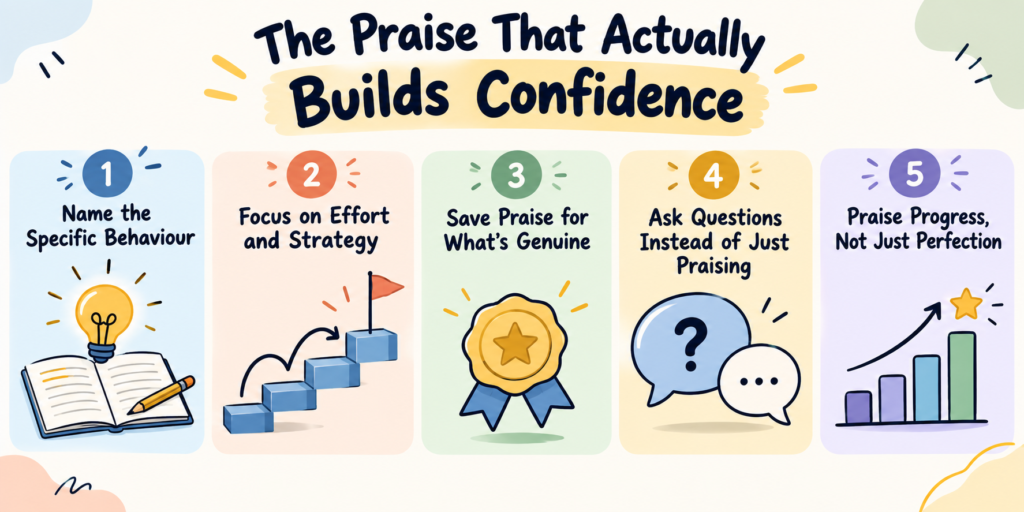
1. Name the Specific Behaviour
Instead of “Good job,” try “You really thought that through before answering.” Specificity makes praise meaningful and repeatable.
2. Focus on Effort and Strategy
Praise the “how,” not just the “what”: “You tried a different approach when the first one didn’t work.”
3. Save Praise for What’s Genuine
Constant, automatic praise loses value quickly. Save it for moments that actually deserve recognition.
4. Ask Questions Instead of Just Praising
“What part are you most proud of?” invites reflection and often means more to a child than external approval alone.
5. Praise Progress, Not Just Perfection
Acknowledging improvement, even without a perfect result, encourages children to keep trying rather than chase flawless outcomes.
Quick Reference: Generic Praise vs Praise That Works
| Generic Praise | Praise That Works |
|---|---|
| “Good job!” | “You stuck with that even when it got hard.” |
| “You’re so smart.” | “You found a clever way to solve that.” |
| “Nice drawing.” | “I like how you used so many colours here.” |
| Constant, automatic praise | Specific praise given when it’s genuinely earned |
Why This Shift Matters Long-Term
Children who receive specific, effort-focused praise tend to develop stronger resilience and a genuine love of learning, rather than a need for constant external validation. This mirrors how a holistic education school model approaches growth, valuing the process of learning as much as the outcome itself.
A Vega School Perspective
At Vega Schools, a progressive CBSE school in Gurgaon with campuses in Sector 48 and Sector 76 Gurugram, learning leaders are trained to give specific, meaningful feedback that helps children understand their own growth, not just hear that they did well.
FAQs
Q1. Is it bad to say “good job” to my child sometimes?
Not at all, occasional simple praise is fine. The concern is relying on it as the only form of feedback.
Q2. How do I praise a young child who doesn’t understand complex feedback yet?
Keep it simple but specific: “You put the blocks in a line, that’s a fun pattern!” works well even for toddlers.
Q3. Can too much praise actually harm a child’s confidence?
Yes, constant or exaggerated praise can create pressure to always succeed, rather than comfort with effort and mistakes.
Q4. What if my child didn’t do well but tried hard?
Praise the effort and strategy specifically, this reinforces persistence even when the outcome wasn’t ideal.
Q5. How do schools train teachers to give effective praise?
Progressive CBSE schools in Gurgaon that focus on experiential learning often train educators in specific, growth-oriented feedback techniques.
Curious how Vega Schools nurtures genuine confidence in learners? Explore admissions at Vega School, a progressive CBSE school in Gurgaon with campuses in Sector 48 and Sector 76 Gurugram.