
- Weeks before Diwali, the house starts to change.
- Cupboards get emptied, last year’s diyas come out of a box, and the first mithai boxes arrive.
- Crackers are the loudest part of Diwali, so they often become the whole story.
- This guide goes deeper: the five days, the many stories, and the small habits that show children what the festival is really about.
- The Diwali We Remember Most of us remember Diwali through the senses.
Weeks before Diwali, the house starts to change. Cupboards get emptied, last year’s diyas come out of a box, and the first mithai boxes arrive. Children join in the excitement. But do they know why we do any of it?
Crackers are the loudest part of Diwali, so they often become the whole story. This guide goes deeper: the five days, the many stories, and the small habits that show children what the festival is really about.
The Diwali We Remember
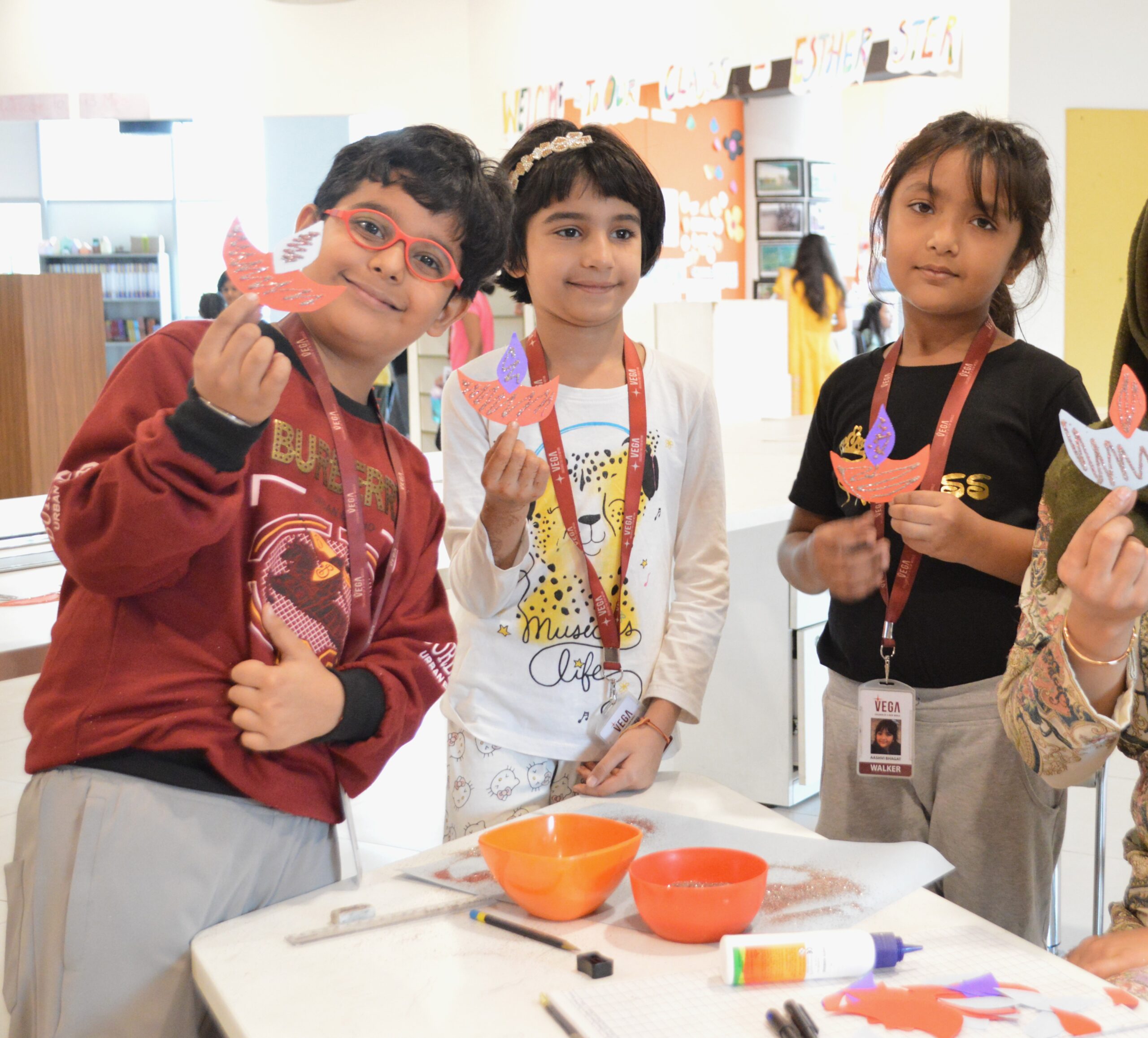
Most of us remember Diwali through the senses. The smell of ghee and besan, new clothes we couldn’t wait to wear, and Dadi or Nani telling the story of Rama’s return to Ayodhya. Nobody sat us down to teach values. We simply absorbed them.
Today, shopping, hampers, and parties can crowd out those quiet moments. As a result, children may enjoy Diwali without understanding it. A little explaining brings the meaning back.
Five Days, Five Lessons
In many parts of India, Diwali stretches over five days. Customs differ by region and family, so treat this as a guide and add your own traditions.
🪔 Light the Five Days of Diwali
Tap each day to light its diya and see what it is about.
Customs differ by region and family, so add your own traditions too.
One Light, Many Stories
Ask five families why they celebrate, and you may hear five answers.
- Many homes remember Rama’s return to Ayodhya after fourteen years, welcomed with rows of lamps.
- In much of the south, the focus is Krishna’s victory over Narakasura.
- Jain families remember Lord Mahavira’s nirvana.
- Sikh families observe Bandi Chhor Divas, linked to Guru Hargobind Ji’s release from Gwalior Fort.
- In Bengal, many families worship Goddess Kali.
The stories differ, but the thread is shared: light over darkness, good over wrong. Therefore, children who hear several versions learn something useful. One festival can hold many truths.
Small Habits That Carry the Meaning
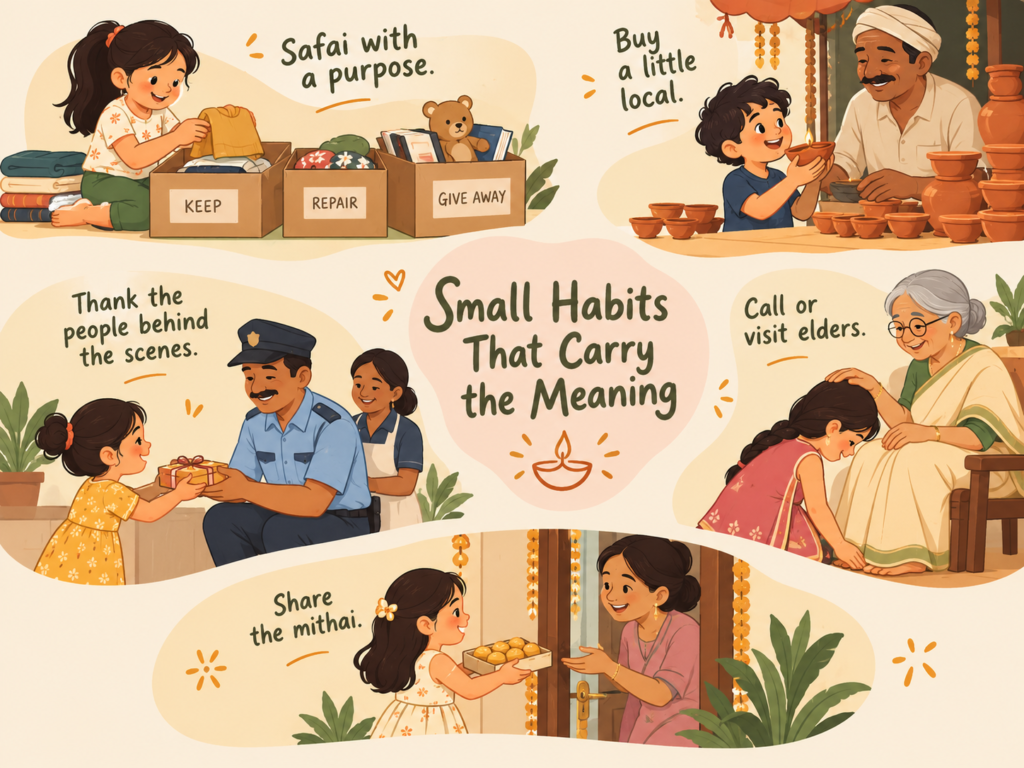
- Safai with a purpose. Let children sort what to keep, repair, or give away. Clothes and books in good condition can go to someone who needs them.
- Buy a little local. Pick up diyas from a potter or small stall. Explain that it helps someone’s Diwali too, and skip hard bargaining with people who earn little.
- Thank the people behind the scenes. Sweets or a small gift for the security guard, housekeeping staff, driver, and domestic help. Let children hand it over and say thank you by name.
- Call or visit elders. Touching feet and taking blessings teaches respect better than any talk.
- Share the mithai. Children can carry plates to neighbours, which turns sweets into connection.
Talking About Crackers Honestly
Children will ask, “Everyone else is bursting crackers, so why can’t we?” or “Why do we?” A short, honest answer works better than a flat yes or no. Every family celebrates in its own way, and that is a good thing to tell them.
Rules on firecrackers differ from city to city and can change from year to year, so check the current local guidelines before Diwali. Whatever your family chooses, teach children to think of others. Loud sounds can startle babies, elders, and street animals.
If your family does burst crackers, keep children at a safe distance with an adult beside them and water nearby. If not, offer something special: a bigger rangoli, a string of lights, a diya-lighting round, or a family game of antakshari. Above all, avoid shaming. Children who feel judged stop listening.
Questions Worth Asking This Diwali
- What do you think the diya is telling us?
- Whose Diwali can we make a little brighter?
- What is one thing we can let go of, like the old things we cleaned out?
A Vega Schools Perspective
At Vega Schools, a progressive CBSE school in Gurgaon with campuses in Sector 48 and Sector 76 Gurugram, celebrations focus on meaning over material things. For example, mindful birthdays encourage sharing fruit, donating books, and thanking support staff. Festivals like Janmashtami and Onam also become chances to explore why traditions matter. As an experiential learning school, Vega helps children feel the values, not just hear about them.
Curious how Vega Schools builds values through everyday celebrations? Explore admissions at Vega Schools, a CBSE school in Gurgaon with campuses in Sector 48 and Sector 76 Gurugram.