
- Does homework time at your house feel like a battle of distractions, half-finished worksheets, and endless “just five more minutes”?
- Teaching kids to structure homework isn’t about stricter rules, it’s about building focus and time management skills that make the process smoother for everyone.
- Here’s how to help your child approach homework with more structure and less stress.
- Why Structure Matters More Than Willpower Children rarely lack the ability to focus, they often lack a clear structure to focus within.
- Without a plan, even simple homework can feel overwhelming and open-ended, which is often why children stall before they even pick up a pencil.
Does homework time at your house feel like a battle of distractions, half-finished worksheets, and endless “just five more minutes”? You’re not alone. Teaching kids to structure homework isn’t about stricter rules, it’s about building focus and time management skills that make the process smoother for everyone.
Here’s how to help your child approach homework with more structure and less stress.
Why Structure Matters More Than Willpower
Children rarely lack the ability to focus, they often lack a clear structure to focus within. Without a plan, even simple homework can feel overwhelming and open-ended, which is often why children stall before they even pick up a pencil.
This is exactly why experiential learning school environments in Gurgaon emphasise structured, purposeful learning blocks, helping children build focus habits that carry over into homework time at home.
Signs Your Child Needs a Better Homework Structure
- Frequent distractions or wandering attention mid-task
- Homework taking far longer than it should
- Starting multiple subjects without finishing any
- Frustration or avoidance before even beginning
Practical Ways to Structure Homework Time
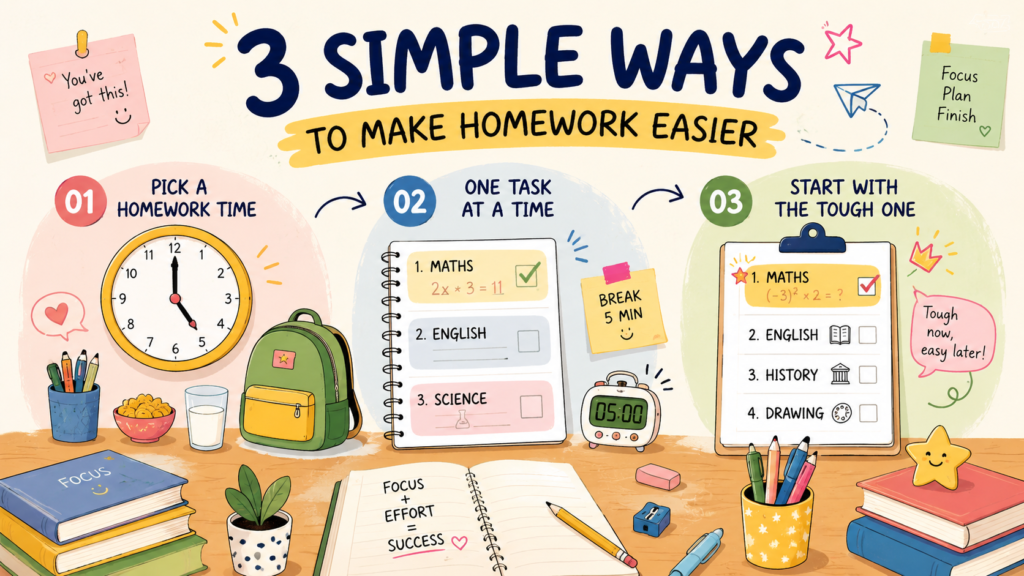
1. Set a Consistent Homework Time
A fixed daily slot, right after a snack break, for instance, helps the brain switch into “focus mode” more easily. Over time, this consistency reduces the daily negotiation over when homework actually starts.
2. Break Homework Into Smaller Chunks
Instead of “finish all homework,” try “complete math first, then a 5-minute break.” Smaller goals feel more achievable and give children a natural sense of momentum as they move through tasks.
3. Use a Simple Priority List
Have your child list tasks from hardest to easiest, and tackle the toughest one first while focus is strongest. This prevents the common trap of saving the hardest subject for when energy has already run out.
4. Create a Distraction-Free Zone
A quiet, clutter-free space with no phone or TV nearby makes a noticeable difference in focus levels, even a small, consistent corner of a room works better than switching locations daily.
5. Introduce Short Timed Sessions
15–20 minute focused sessions with short breaks work better for younger children than long, unbroken stretches, since attention naturally dips after extended periods of concentration.
6. Use a Visual Checklist
Checking off completed tasks gives children a visible sense of progress, which keeps motivation steady, especially on days when homework feels particularly long.
Quick Reference: Homework Challenge vs Structure Fix
| Homework Challenge | Structure Fix |
|---|---|
| Trouble starting | Fixed daily homework time |
| Losing focus midway | Shorter, timed sessions |
| Feeling overwhelmed | Task list, hardest first |
| Constant distractions | Dedicated, quiet workspace |
| No sense of progress | Visual checklist |
How Age Affects Homework Structure
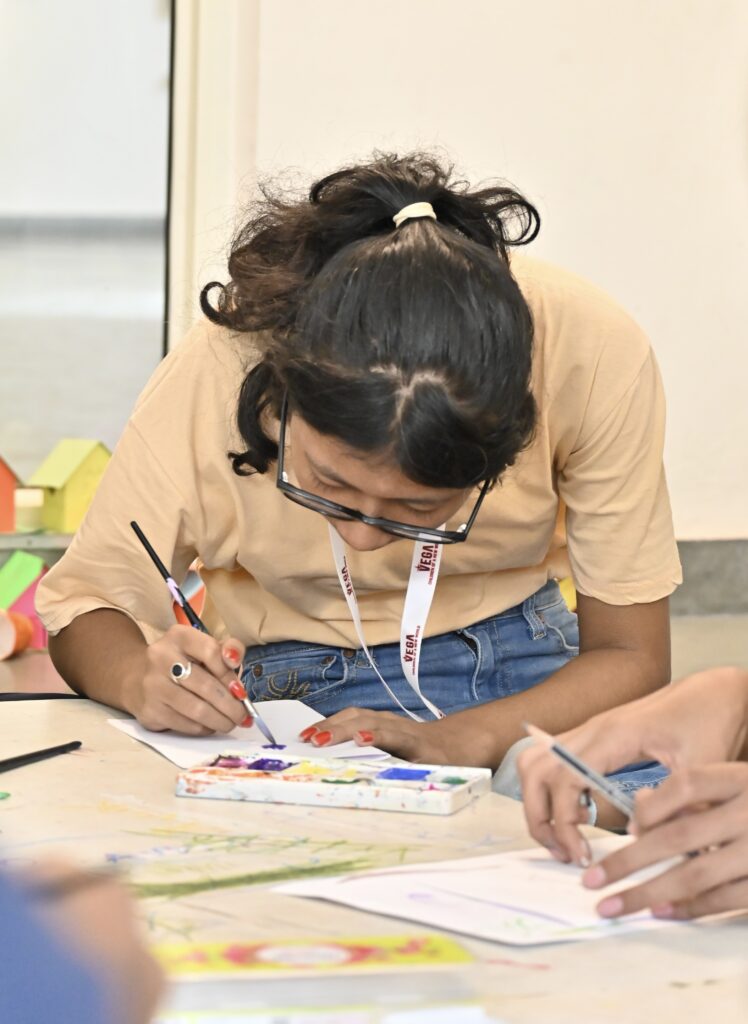
Younger children typically need shorter, more frequent breaks, while older children can manage longer focused blocks. Adjusting structure to age, rather than using one fixed approach, makes homework time far more effective for the whole family.
This mirrors how a project based learning school model works, adapting learning structures to match a child’s developmental stage rather than applying rigid, one-size-fits-all methods.
A Vega School Perspective
At Vega Schools, a progressive CBSE school in Gurgaon with campuses in Sector 48 and Sector 76 Gurugram, learners build focus and time management skills through structured, purposeful classroom routines, habits that naturally extend into how they approach homework at home.
FAQs
1. How long should homework sessions be for younger children?
Generally, 15–20 minute focused sessions with short breaks work best for younger children.
2. My child gets distracted easily during homework. What helps most?
A quiet, distraction-free workspace combined with shorter, timed sessions often makes the biggest difference.
3. Should I sit with my child during homework time?
Light supervision helps at first, but gradually encouraging independence builds stronger long-term focus.
4. How can I make homework feel less overwhelming?
Break tasks into smaller steps and use a checklist so progress feels visible and achievable.
5. How do schools support focus and time management skills?
Progressive CBSE schools in Gurgaon that use structured, experiential learning approaches help children build focus habits that extend beyond the classroom.
Curious how Vega School builds strong focus and study habits in students? Explore admissions at Vega School, a progressive CBSE school in Gurgaon with campuses in Sector 48 and Sector 76 Gurugram.