
- Is a little exam stress actually bad for children?
- In small doses, it sharpens focus and drives effort.
- However, trouble starts when pressure stays high and a child has no way to release it.
- This guide explains how stress works, how healthy pressure differs from harmful pressure, and how to support children before, during, and after mid-terms.
- Not All Stress Is the Same Researchers describe three kinds of stress.
Is a little exam stress actually bad for children? Not always. In small doses, it sharpens focus and drives effort. However, trouble starts when pressure stays high and a child has no way to release it.
This guide explains how stress works, how healthy pressure differs from harmful pressure, and how to support children before, during, and after mid-terms.
Not All Stress Is the Same
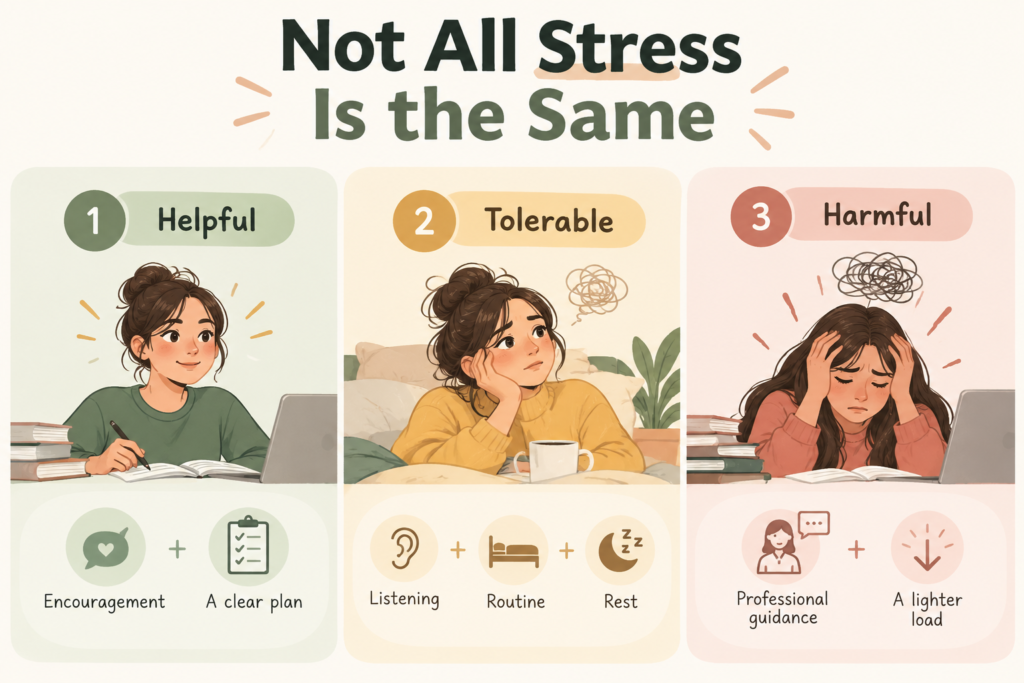
Researchers describe three kinds of stress. Therefore, knowing the difference helps adults respond well.
| Type of Stress | What It Looks Like | What Helps |
|---|---|---|
| Helpful | Nervous energy before a test, then relief | Encouragement and a clear plan |
| Tolerable | A hard week with strong worry, but support around | Listening, routine, and rest |
| Harmful | Constant pressure with no relief or support | Professional guidance and a lighter load |
What Stress Does to a Learning Brain
When an exam feels threatening, the brain’s alarm system takes over. As a result, memory and clear thinking take a back seat. That’s why a child can know an answer at home and still blank in the exam hall.
In other words, calm isn’t a bonus for learning. It’s part of how learning works.
Three Common Myths About Exam Stress
- Myth: Stressed children simply need to study more. Fact: In reality, extra hours without rest often lower focus.
- Myth: Talking about worries makes them bigger. Fact: On the contrary, naming a feeling usually shrinks it.
- Myth: Anxious children don’t care enough. Fact: Often, the most anxious children care the most.
A Simple Support Timeline
Two weeks before: First, break the syllabus into small daily tasks. Then, keep sleep and meals steady.
The night before: Choose light revision, a calm dinner, and an early bedtime. After all, cramming rarely helps at this point.
Exam morning: Offer a simple breakfast, one deep breath together, and a single reassuring line.
After the paper: Ask “How are you feeling?” before “How did it go?” Instead of reviewing answer by answer, let the paper go.
Small Daily Habits That Keep Stress Low
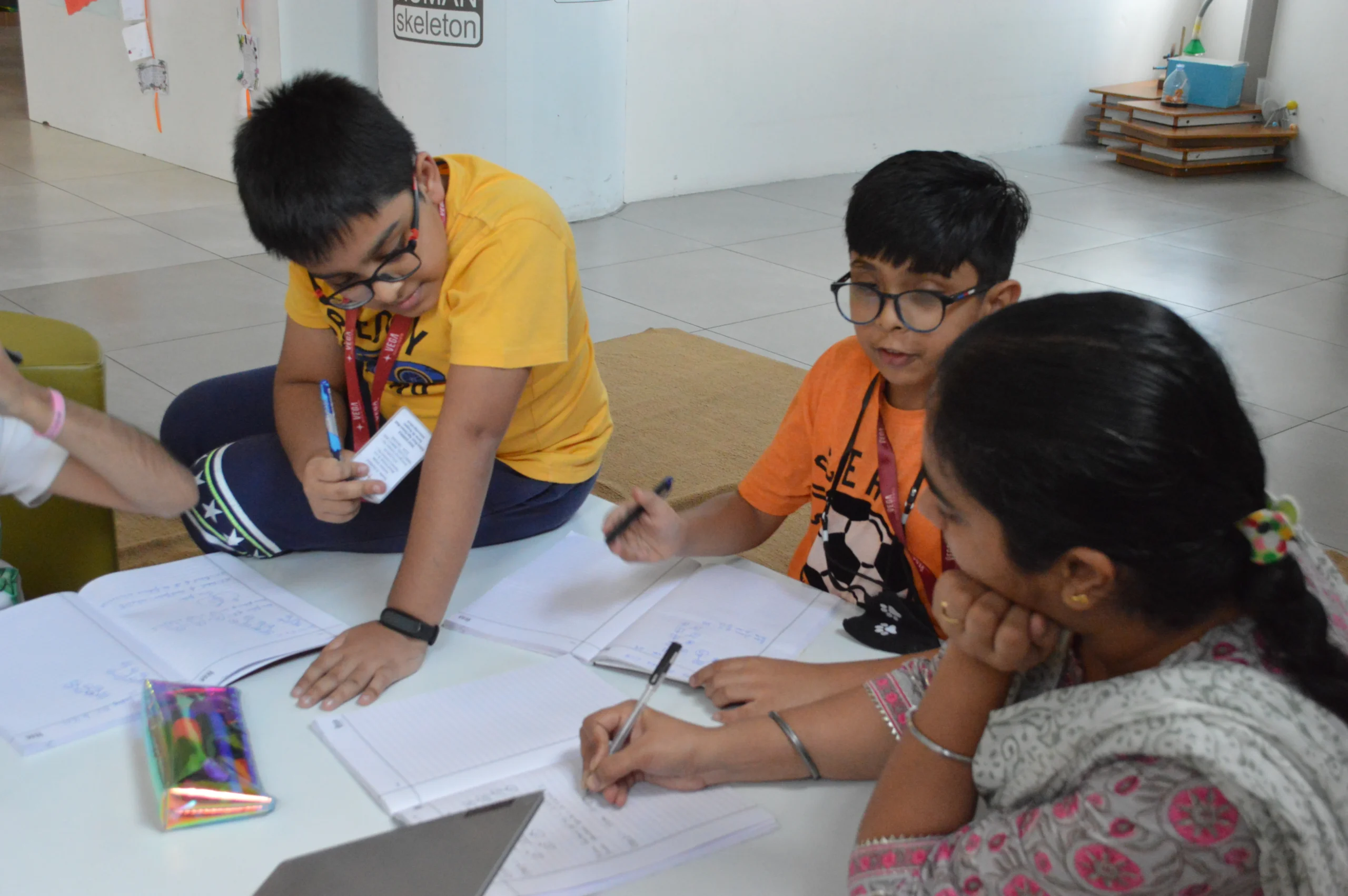
Big talks matter, but small habits matter more. For example, a fixed bedtime protects memory. Likewise, a short walk or play break clears the mind between study blocks. Meanwhile, a few minutes of quiet conversation each evening gives worries a safe place to land. Over time, these simple routines build a steady base that mid-terms can’t easily shake.
Words That Help, and Words to Skip
Short phrases work best:
- “That sounds stressful.”
- “Effort counts here.”
- “One paper doesn’t define you.”
On the other hand, lines like “This decides your future” or “Others are doing better” raise pressure without adding motivation.
When to Look for More Support
Persistent sadness, panic, sleep trouble, or withdrawal lasting several weeks deserves attention. In that case, a teacher, school counsellor, or paediatrician can help. Above all, reaching out early is a sign of care.
A Vega Schools Perspective
At Vega Schools, a progressive CBSE school in Gurgaon with campuses in Sector 48 and Sector 76 Gurugram, learning leaders work with counsellors and families to watch for stress. Additionally, as an experiential learning school, Vega uses project work and regular feedback, so exams never become the only measure of growth.
FAQs
1. Is exam stress normal in children?
Yes. Mild stress before exams is common. However, it becomes a concern when it lasts long or disrupts sleep and daily life.
2. Can some stress actually help?
Yes. Short bursts can improve focus. Problems begin only when stress stays high without relief.
3. What helps a child who panics before an exam?
Slow breathing, a calm routine, and a reminder that effort matters more than a perfect score.
4. Should study load drop during mid-terms?
Not necessarily. Instead, making the plan smaller and adding breaks usually works better.
5. How do schools in Gurgaon support students’ emotional health?
Many CBSE schools in Gurgaon offer counsellors, mentor check-ins, and holistic assessment to ease academic pressure.
Curious how Vega Schools supports emotional wellbeing alongside academics? Explore admissions at Vega Schools, a CBSE school in Gurgaon with campuses in Sector 48 and Sector 76 Gurugram.