
- Do you ever realise, mid-conversation, that you were nodding along without really hearing what your child said?
- Active listening is the simple, powerful shift that turns everyday conversations into real connection.
- Here’s how listening with intention can deepen your bond with your child, one conversation at a time.
- What Active Listening Really Means Active listening isn’t just staying quiet while your child talks.
- It means giving full attention, showing genuine interest, and responding in ways that make your child feel truly heard.
Do you ever realise, mid-conversation, that you were nodding along without really hearing what your child said? It happens to most parents. Active listening is the simple, powerful shift that turns everyday conversations into real connection.
Here’s how listening with intention can deepen your bond with your child, one conversation at a time.
What Active Listening Really Means
Active listening isn’t just staying quiet while your child talks. It means giving full attention, showing genuine interest, and responding in ways that make your child feel truly heard.
This is exactly why experiential learning school environments in Gurgaon place strong emphasis on communication and empathy, skills that start at home long before they show up in the classroom.
Why Active Listening Strengthens the Parent-Child Bond
When children feel heard, they’re more likely to open up, share their worries, and trust their parents with bigger concerns as they grow older. Conversely, feeling dismissed, even unintentionally, can slowly close that door.
Active listening also models emotional intelligence, teaching children how to listen and respond thoughtfully to others themselves.
Practical Ways to Practice Active Listening
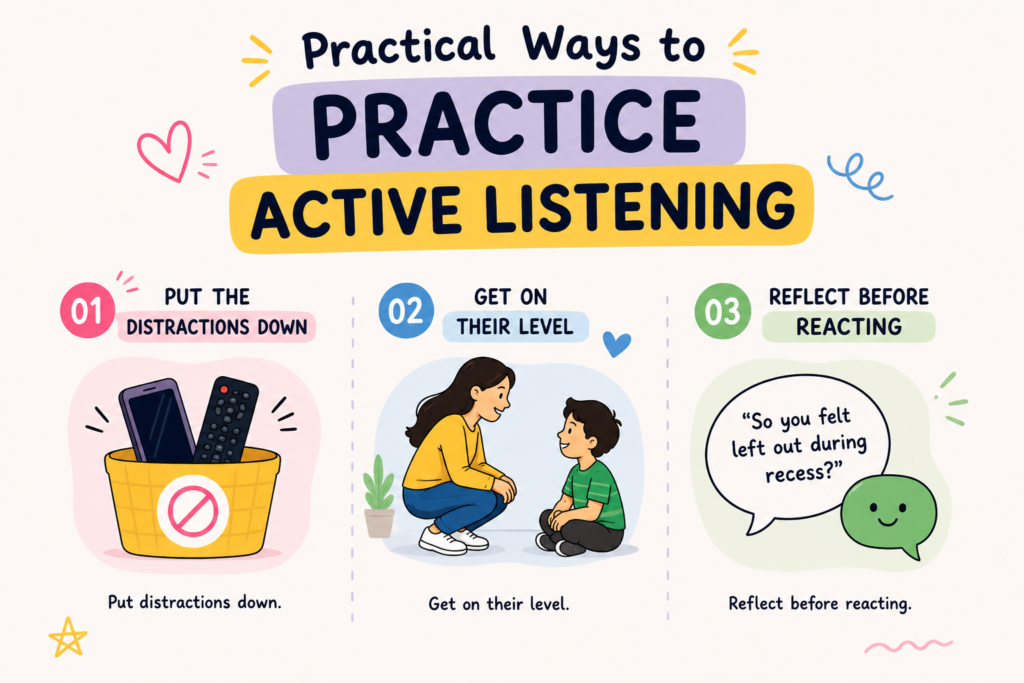
1. Put the Distractions Down
Phones, TV, or half-finished chores signal divided attention. Even 5 focused minutes matter more than 30 distracted ones.
2. Get on Their Level
Crouching down or sitting beside your child, rather than talking from across the room, shows genuine presence.
3. Reflect Before Reacting
Instead of jumping to advice, try repeating back what you heard: “So you felt left out during recess?” This confirms understanding.
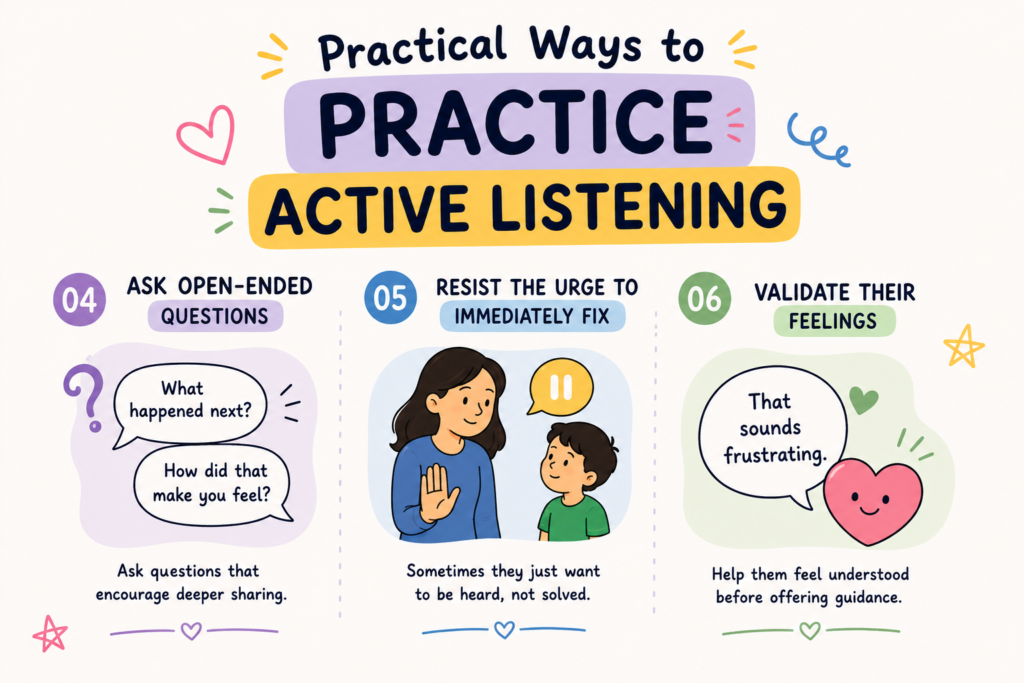
4. Ask Open-Ended Questions
Questions like “What happened next?” or “How did that make you feel?” encourage deeper sharing than yes-or-no questions.
5. Resist the Urge to Immediately Fix
Sometimes children just want to be heard, not solved. Pause before offering solutions.
6. Validate Their Feelings
Saying “That sounds frustrating” before offering guidance helps children feel understood first.
Quick Reference: Common Mistake vs Active Listening Fix
| Common Mistake | Active Listening Alternative |
|---|---|
| Half-listening while multitasking | Pausing fully to engage |
| Jumping straight to solutions | Reflecting feelings first |
| Asking yes/no questions | Asking open-ended questions |
| Interrupting to correct | Letting them finish speaking |
| Dismissing “small” concerns | Treating every concern as valid |
Making Active Listening a Daily Habit
- Create a consistent time, like dinner or bedtime, for uninterrupted conversation.
- Avoid multitasking during meaningful discussions.
- Model patience, even when the conversation feels repetitive or small.
- Praise your child when they share something difficult, this encourages future openness.
Why This Skill Matters Long-Term
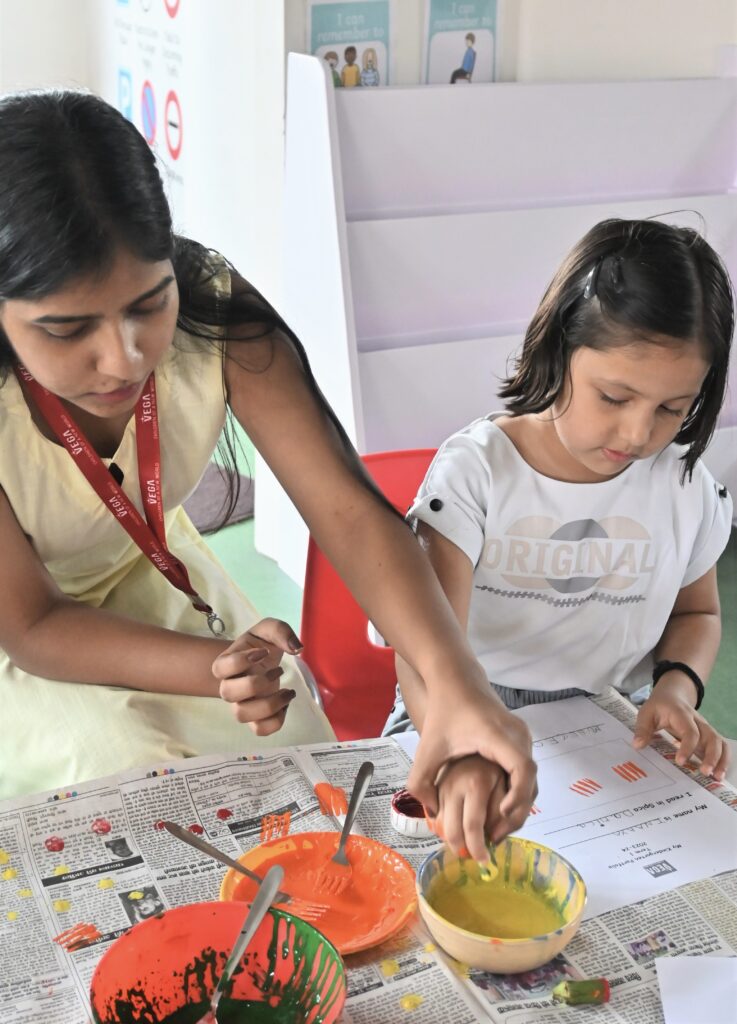
Children who feel consistently heard at home tend to develop stronger emotional regulation, communication skills, and self-esteem. These benefits extend into friendships, academics, and how they handle conflict later in life.
This mirrors how holistic education school models approach growth, treating emotional connection as equally important as academic progress.
A Vega School Perspective
At Vega Schools, a progressive CBSE school in Gurgaon with campuses in Sector 48 and Sector 76 Gurugram, Learning Leaders practise active listening as a core part of building trust with every learner, reinforcing at school what parents nurture at home.
FAQs
1. At what age should I start practicing active listening with my child?
Active listening matters from a very young age, even toddlers respond to full attention and eye contact.
2. What if my child doesn’t want to talk much?
Respect their pace. Simply being present and available often encourages sharing over time.
3. How is active listening different from just hearing?
Hearing is passive, while active listening involves full attention, reflection, and genuine engagement with what’s being said.
4. Can active listening help during conflicts or tantrums?
Yes, acknowledging feelings first, even during difficult moments, often de-escalates situations faster than immediate correction.
5. How do schools reinforce active listening skills?
Progressive CBSE schools in Gurgaon that prioritise inclusive, learner-centric classrooms help children practise active listening and empathy daily.
Curious how Vega School builds trust and connection with every learner? Explore admissions at Vega School, a progressive CBSE school in Gurgaon with campuses in Sector 48 and Sector 76 Gurugram.