
- Can a muddy patch of grass teach more than a worksheet?
- Nature-based learning taps into a child’s natural curiosity in ways indoor classrooms alone rarely can, turning leaves, insects, and open skies into lessons that stick.
- It’s an approach several of the best schools in Gurgaon are now weaving into everyday classroom life.
- Here’s how outdoor exploration builds curiosity, and why it deserves a bigger place in everyday learning.
- Why Nature Sparks Curiosity Naturally Outdoors, children encounter constant, unscripted questions.
Can a muddy patch of grass teach more than a worksheet? Often, yes. Nature-based learning taps into a child’s natural curiosity in ways indoor classrooms alone rarely can, turning leaves, insects, and open skies into lessons that stick. It’s an approach several of the best schools in Gurgaon are now weaving into everyday classroom life.
Here’s how outdoor exploration builds curiosity, and why it deserves a bigger place in everyday learning.
Why Nature Sparks Curiosity Naturally
Outdoors, children encounter constant, unscripted questions. Why do ants walk in lines? Why does the sky change colour at sunset? Nature raises questions faster than any textbook can, often before a parent or teacher even has time to plan a lesson around it.
This is exactly why experiential learning school environments in Gurgaon increasingly move lessons outdoors, letting real-world observation drive curiosity instead of forcing it through structured worksheets alone.
How Outdoor Exploration Supports Development
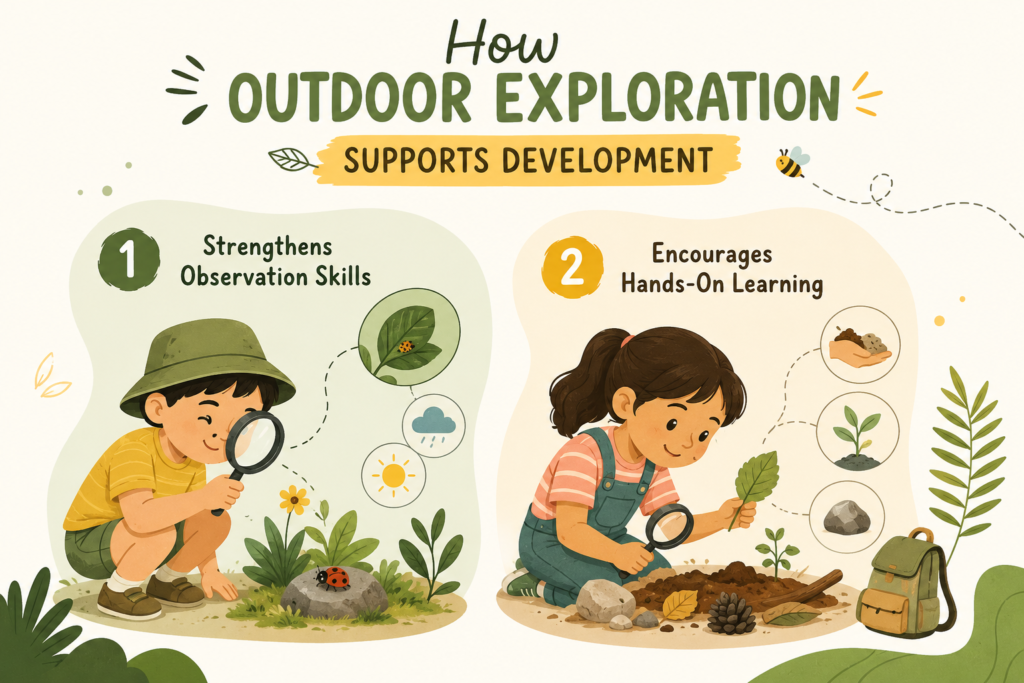
1. Strengthens Observation Skills
Watching insects, plants, or weather patterns teaches children to notice small details, an early foundation for scientific thinking and pattern recognition.
2. Encourages Hands-On Learning
Touching soil, collecting leaves, or examining rocks makes abstract concepts like texture, growth, and change feel real and memorable, rather than something read about once and forgotten.
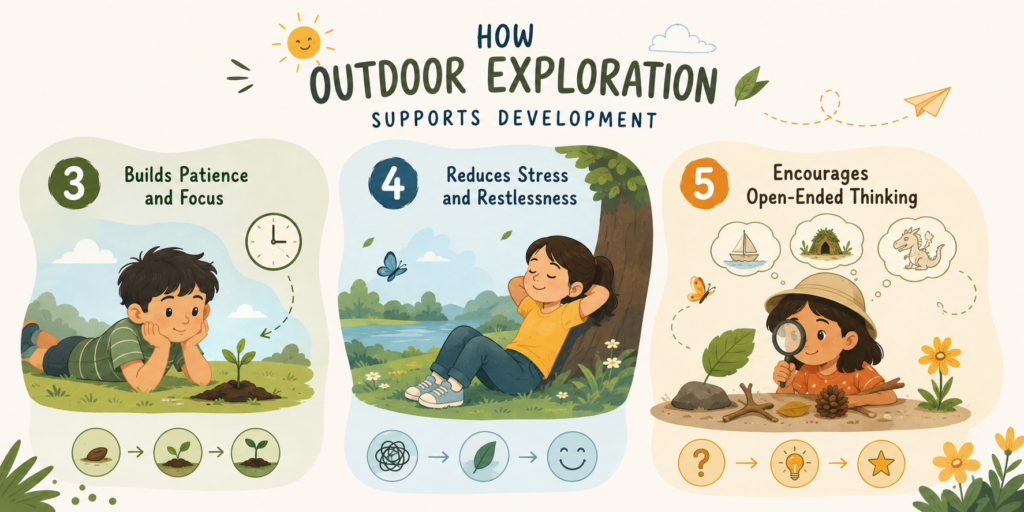
3. Builds Patience and Focus
Nature moves at its own pace. Watching a seed sprout or clouds shift teaches children patience in a way screens rarely do, since outcomes unfold gradually rather than instantly.
4. Reduces Stress and Restlessness
Time outdoors is known to calm children, improving focus once they return to structured tasks. Even short breaks outside can noticeably ease restlessness before a lesson resumes.
5. Encourages Open-Ended Thinking
Unlike worksheets with fixed answers, nature invites exploration without a single “right” outcome, encouraging creative reasoning and multiple ways of interpreting the same observation.
Simple Ways to Bring Nature-Based Learning Home
- Take short nature walks and ask, “What do you notice today?”
- Start a small backyard or balcony garden together.
- Collect leaves or stones and sort them by shape, size, or colour.
- Watch clouds and guess shapes, then discuss why clouds form.
- Encourage bug-watching instead of avoiding it, curiosity often starts with tiny creatures.
- Keep a simple nature journal where kids sketch or note down what they observe each week.
Quick Reference: Outdoor Activity vs Skill Built
| Outdoor Activity | Curiosity Skill Developed |
|---|---|
| Nature walks | Observation and questioning |
| Gardening | Patience and cause-effect thinking |
| Cloud watching | Imagination and reasoning |
| Insect exploration | Attention to detail |
| Collecting natural objects | Sorting and classification skills |
Making It a Habit, Not a One-Time Activity
Nature-based learning works best as a routine, not an occasional outing. Even ten minutes outdoors after school, without a screen in hand, can reset a child’s attention and spark a question worth exploring further.
Parents don’t need a garden or forest nearby to start. A single potted plant on a windowsill or a weekly walk to a nearby park is often enough to build this habit consistently over time, whether you live along Golf Course Extension Road or closer to Sohna Road.
Why This Matters Beyond Early Childhood
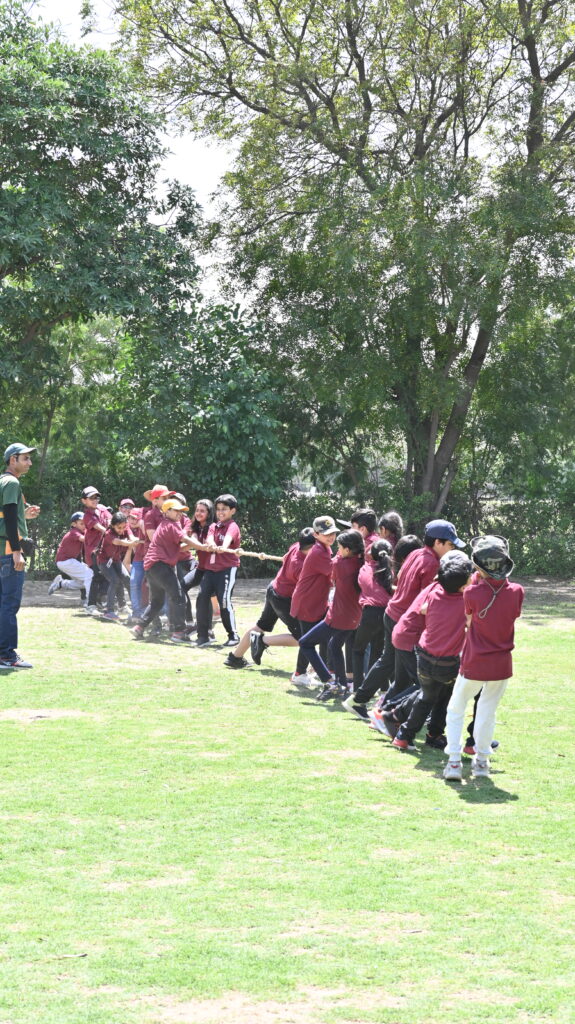
Children who regularly engage with nature tend to ask more questions, observe more carefully, and approach problems with greater curiosity, skills that extend well into academic subjects like science and environmental studies.
This mirrors how a project based learning school approach works, encouraging students to explore real-world settings rather than relying on theory alone, a hallmark of holistic education school models across New Gurgaon.
A Vega School Perspective
At Vega Schools, a progressive CBSE school in Gurgaon with campuses in Sector 48 and Sector 76 Gurugram, outdoor exploration and hands-on discovery are woven into the everyday learning experience, helping children build curiosity that stays with them long after the school day ends.
Curious how Vega School blends outdoor exploration with academics? Explore admissions at Vega School, a progressive CBSE school in Gurgaon with campuses in Sector 48 and Sector 76 Gurugram.