
- Mid-term exams often bring a familiar mix of stress, cramming, and last-minute panic.
- But it doesn’t have to be this way.
- The right study habits, built early, can turn exam preparation into a calm, manageable routine rather than a scramble.
- Here’s how to help your child prepare smartly for mid-terms, without the burnout.
- Why Smart Study Habits Matter More Than Long Hours Studying for longer doesn’t always mean studying better.
Mid-term exams often bring a familiar mix of stress, cramming, and last-minute panic. But it doesn’t have to be this way. The right study habits, built early, can turn exam preparation into a calm, manageable routine rather than a scramble.
Here’s how to help your child prepare smartly for mid-terms, without the burnout.
Why Smart Study Habits Matter More Than Long Hours
Studying for longer doesn’t always mean studying better. Children retain more when they study consistently in focused, well-structured sessions, rather than cramming for hours the night before.
This is exactly why experiential learning school environments in Gurgaon emphasise understanding concepts deeply, rather than memorising them purely for exams.
📚 Smart Study Showdown
Pick the smarter habit in each round and build your Exam Readiness meter!
Which one wins this round?
Signs Your Child’s Study Approach Needs Adjusting
- Studying for hours but forgetting concepts quickly
- Panic or last-minute cramming before exams
- Difficulty starting revision without repeated reminders
- Feeling overwhelmed by the amount of syllabus left
Practical Study Habits That Actually Work
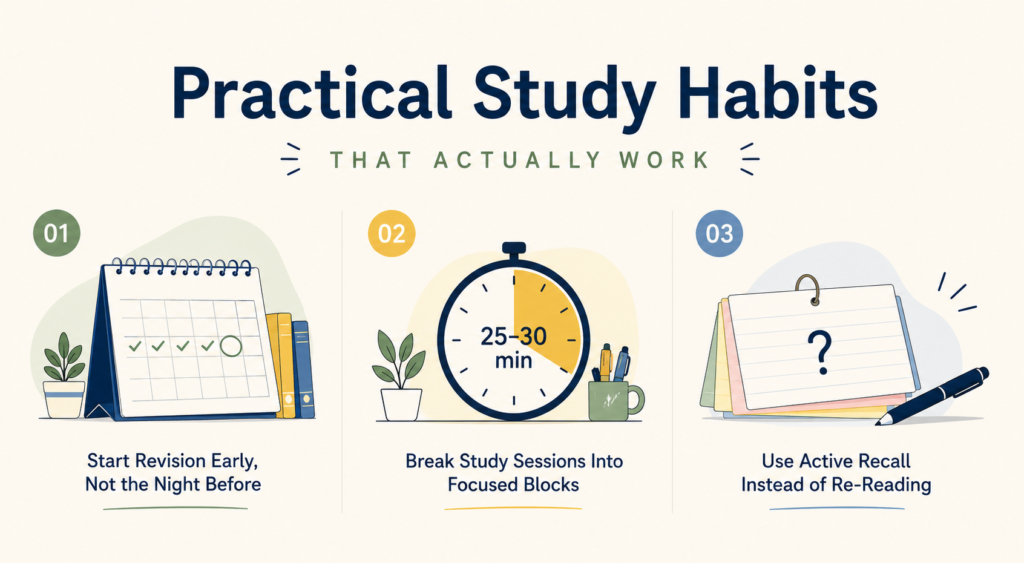
1. Start Revision Early, Not the Night Before
Spacing out revision over two to three weeks helps information move into long-term memory more effectively.
2. Break Study Sessions Into Focused Blocks
25–30 minute focused sessions with short breaks improve concentration far more than long, unbroken study hours.
3. Use Active Recall Instead of Re-Reading
Testing themselves with questions or flashcards helps children retain information better than simply re-reading notes.
4. Create a Realistic Study Timetable
A simple daily or weekly plan reduces last-minute panic and helps children track progress with confidence.
5. Prioritise Difficult Subjects First
Tackling challenging topics when energy levels are higher improves focus and retention.
6. Don’t Skip Sleep and Breaks
Adequate rest supports memory consolidation, cramming through the night often backfires the next day.
Quick Reference: Study Habit vs Benefit
| Study Habit | Key Benefit |
|---|---|
| Early, spaced-out revision | Stronger long-term memory |
| Focused study blocks with breaks | Better concentration |
| Active recall (self-testing) | Improved retention |
| Realistic timetable | Reduced exam anxiety |
| Prioritising tough subjects first | More effective energy use |
Helping Without Adding Pressure
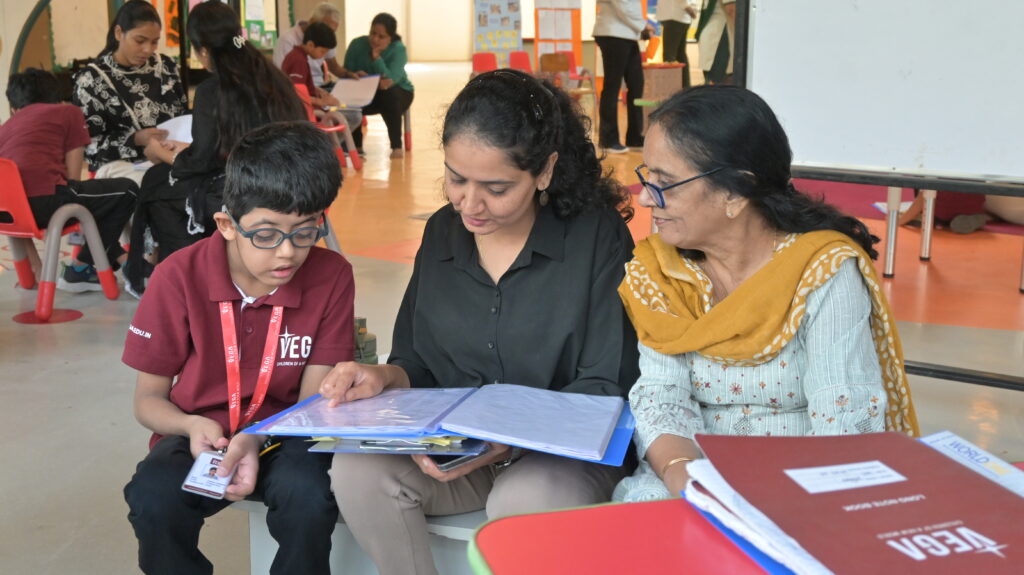
- Ask about their study plan instead of dictating one.
- Celebrate consistent effort, not just exam scores.
- Avoid comparing progress with siblings or classmates.
- Keep the mood calm at home during exam weeks, tension is contagious.
Why This Approach Builds Long-Term Success
Children who learn structured study habits early carry these skills far beyond mid-terms, into board exams, higher education, and even professional life. It’s less about one exam and more about building a lifelong learning approach.
This mirrors how a project based learning school model works, encouraging students to understand concepts thoroughly rather than rely on last-minute memorisation.
A Vega School Perspective
At Vega Schools, a progressive CBSE school in Gurgaon with campuses in Sector 48 and Sector 76 Gurugram, learners are guided to build strong study habits through structured, concept-based learning, helping them approach exams with confidence rather than anxiety.
FAQs
1. How many weeks before mid-terms should revision start?
Ideally, revision should begin two to three weeks before exams to allow spaced, effective learning.
2. How long should a single study session last?
25–30 minute focused sessions with short breaks work best for maintaining concentration.
3. My child studies a lot but still forgets concepts. Why?
This often happens with passive re-reading; active recall and self-testing usually improve retention significantly.
4. Should study routines change during exam weeks?
Not drastically, small adjustments like earlier bedtimes and lighter evenings work better than a complete overhaul.
5. How do schools in Gurgaon support smart exam preparation?
Progressive CBSE schools in Gurgaon increasingly focus on concept-based, experiential learning that reduces reliance on last-minute cramming.
Curious how Vega School builds strong academic habits in students? Explore admissions at Vega School, a progressive CBSE school in Gurgaon with campuses in Sector 48 and Sector 76 Gurugram.