
- Can Entrepreneurship really be taught at home, long before business plans or spreadsheets enter the picture?
- Raising innovators starts with everyday habits, curiosity, problem-solving, and the confidence to try new ideas.
- Here’s how parents can nurture an entrepreneurial mindset at home, without needing a business background themselves.
- What “Entrepreneurial Thinking” Really Means for Kids Entrepreneurship isn’t just about starting a business someday.
- At its core, it’s about problem-solving, resourcefulness, and comfort with taking initiative, skills that matter far beyond the business world.
Can Entrepreneurship really be taught at home, long before business plans or spreadsheets enter the picture? Absolutely. Raising innovators starts with everyday habits, curiosity, problem-solving, and the confidence to try new ideas.
Here’s how parents can nurture an entrepreneurial mindset at home, without needing a business background themselves.
What “Entrepreneurial Thinking” Really Means for Kids

Entrepreneurship isn’t just about starting a business someday. At its core, it’s about problem-solving, resourcefulness, and comfort with taking initiative, skills that matter far beyond the business world.
This is exactly why experiential learning school environments in Gurgaon focus heavily on real-world problem-solving rather than rote memorization alone.
Core Entrepreneurial Skills to Build Early
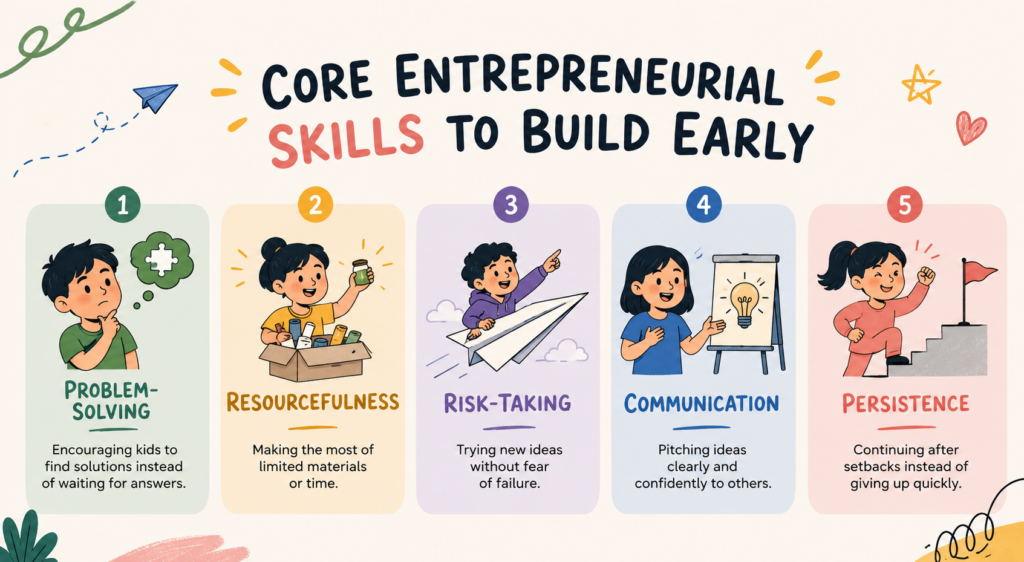
- Problem-solving: Encouraging kids to find solutions instead of waiting for answers.
- Resourcefulness: Making the most of limited materials or time.
- Risk-taking: Trying new ideas without fear of failure.
- Communication: Pitching ideas clearly and confidently to others.
- Persistence: Continuing after setbacks instead of giving up quickly.
Practical Ways to Nurture Entrepreneurship at Home
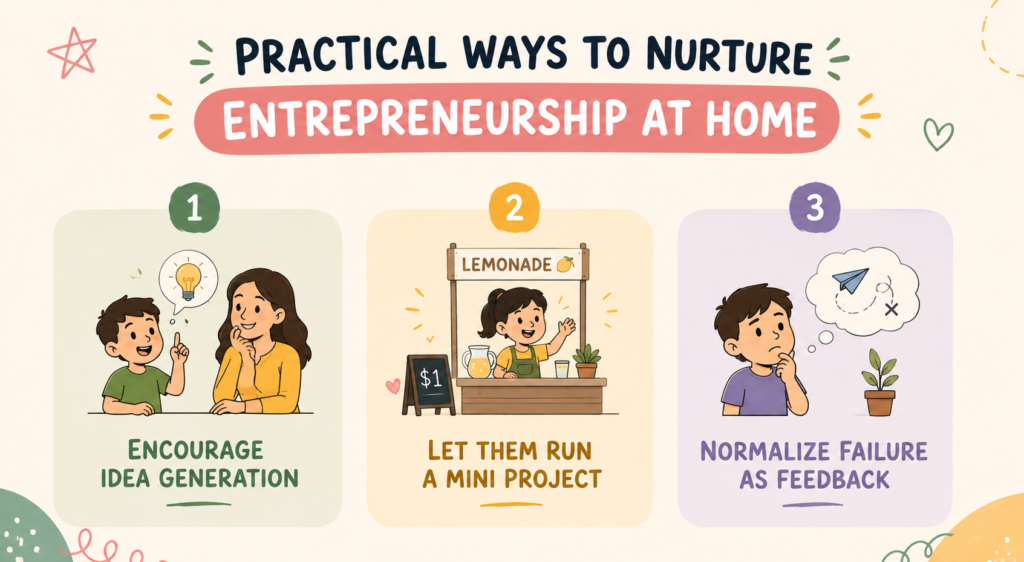
1. Encourage Idea Generation
Ask questions like, “How would you solve this?” during everyday problems, this builds independent thinking early.
2. Let Them Run a Mini Project
A lemonade stand, a small craft sale, or a home “shop” teaches basic concepts like planning, pricing, and effort.
3. Normalize Failure as Feedback
When an idea doesn’t work, ask “What would you try differently?” instead of focusing on the setback itself.
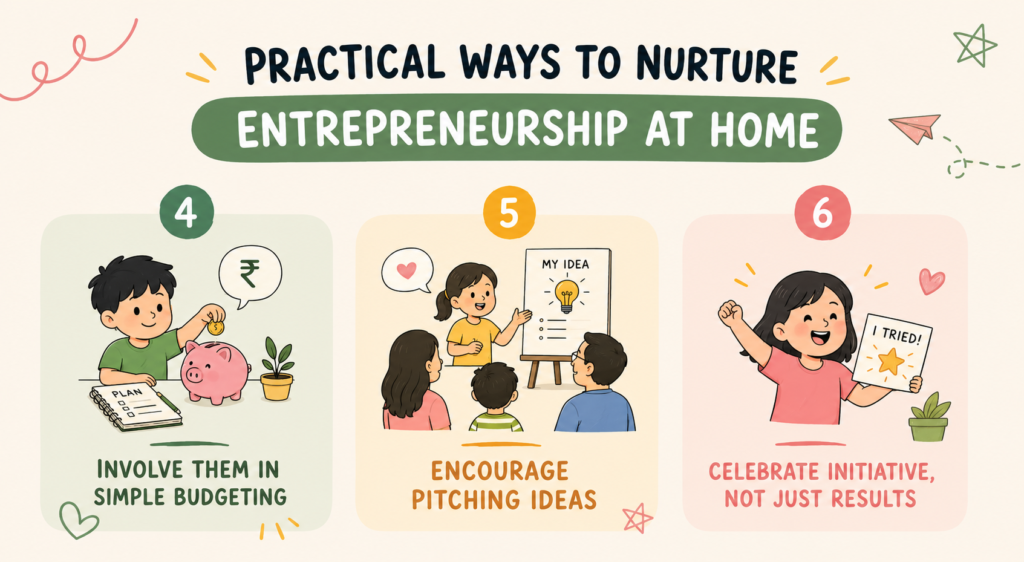
4. Involve Them in Simple Budgeting
Let kids manage small amounts of pocket money, this introduces basic financial decision-making early.
5. Encourage Pitching Ideas
Have your child explain their idea to the family, like a mini “pitch,” building communication and confidence together.
6. Celebrate Initiative, Not Just Results
Praise the attempt to start something new, even if it doesn’t fully succeed, this reinforces courage over perfection.
Quick Reference: Home Activity vs Entrepreneurial Skill
| Home Activity | Skill Developed |
|---|---|
| Running a mini project or stall | Planning and execution |
| Managing pocket money | Financial decision-making |
| Pitching an idea to family | Communication and confidence |
| Solving everyday problems | Critical thinking |
| Trying and failing safely | Resilience and persistence |
Why This Mindset Matters Long-Term
Children who grow up comfortable with initiative and problem-solving carry that confidence into academics, careers, and personal decision-making. Entrepreneurial thinking isn’t about business alone, it’s about becoming a capable, adaptable thinker.
This mirrors how project based learning school models are designed, encouraging students to apply knowledge to real, hands-on challenges rather than isolated theory.
The Real Challenge Behind Raising Innovators
The biggest barrier to entrepreneurial thinking usually isn’t a shortage of ideas, kids come up with those easily. It’s the space and patience needed to let a “bad” idea run its course. Messy, unscripted attempts often teach more than a perfectly guided project ever could, which is why the goal isn’t to engineer success, but to protect the freedom to try.
A Vega School Perspective
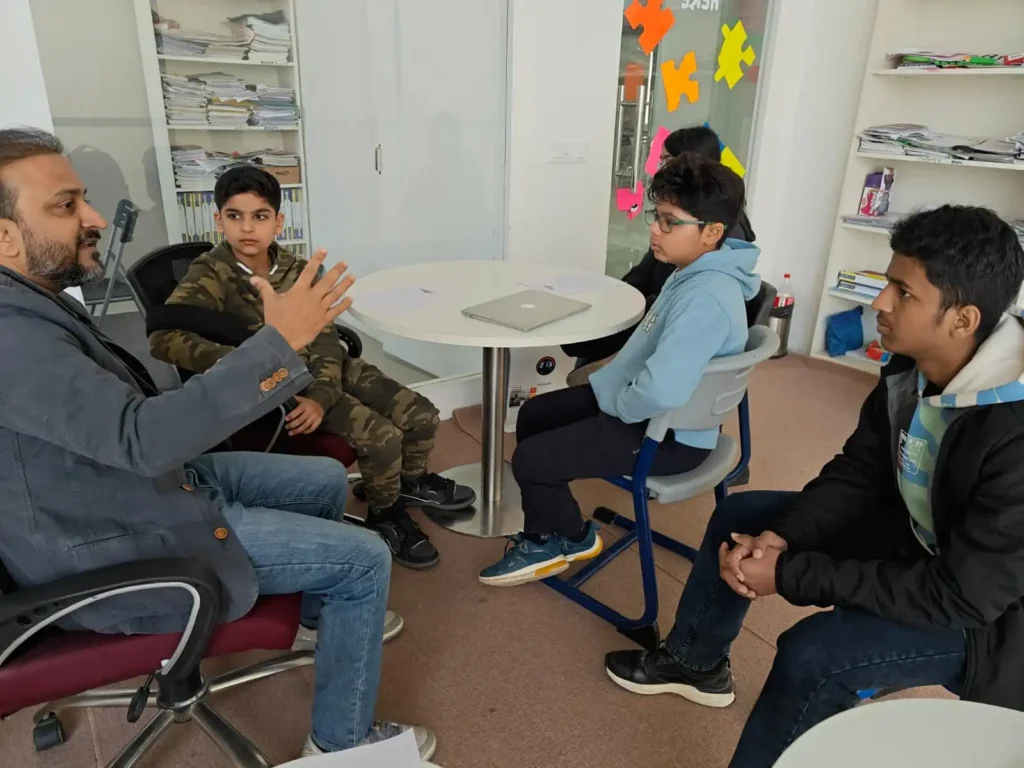
At Vega Schools, a progressive CBSE school in Gurgaon with campuses in Sector 48 and Sector 76 Gurugram, this same spirit of initiative and innovation is nurtured through hands-on, real-world learning experiences, helping students build entrepreneurial thinking as a natural extension of the classroom.
FAQs
1. At what age can I start building entrepreneurial skills in my child?
Children as young as 5–6 can start with simple problem-solving and idea-sharing activities at home.
2. Do I need business experience to teach this at home?
No, everyday encouragement, curiosity, and small real-world projects are enough to build these skills.
3. My child gives up quickly after failure. How do I help?
Reframe failure as feedback, ask what they’d try next instead of focusing on what went wrong.
4. Is entrepreneurship only relevant for kids who want to start a business someday?
No, the underlying skills, problem-solving, communication, resilience, benefit every career path.
5. How do schools support entrepreneurial thinking in Gurgaon?
Progressive CBSE schools in Gurgaon increasingly use experiential and project based learning to build real-world problem-solving skills early.
Curious how Vega School nurtures innovation and initiative in students? Explore admissions at Vega School, a progressive CBSE school in Gurgaon with campuses in Sector 48 and Sector 76 Gurugram.