
- Can your child tell the difference between a reliable source and random information online?
- With homework, projects, and even curiosity leading kids straight to Google, teaching safe and smart online research habits isn’t optional anymore, it’s essential.
- Here’s how parents can guide children toward becoming confident, responsible digital researchers.
- Why Digital Literacy Matters Early Children today start searching online well before they fully understand concepts like accuracy, bias, or online safety.
- Without guidance, they can easily encounter misinformation or unsafe content.
Can your child tell the difference between a reliable source and random information online? With homework, projects, and even curiosity leading kids straight to Google, teaching safe and smart online research habits isn’t optional anymore, it’s essential.
Here’s how parents can guide children toward becoming confident, responsible digital researchers.
Why Digital Literacy Matters Early
Children today start searching online well before they fully understand concepts like accuracy, bias, or online safety. Without guidance, they can easily encounter misinformation or unsafe content.
Teaching digital literacy early builds critical thinking skills that go far beyond just using a search engine. It shapes how children process information for life, not just for school assignments.
Core Skills Every Child Should Learn
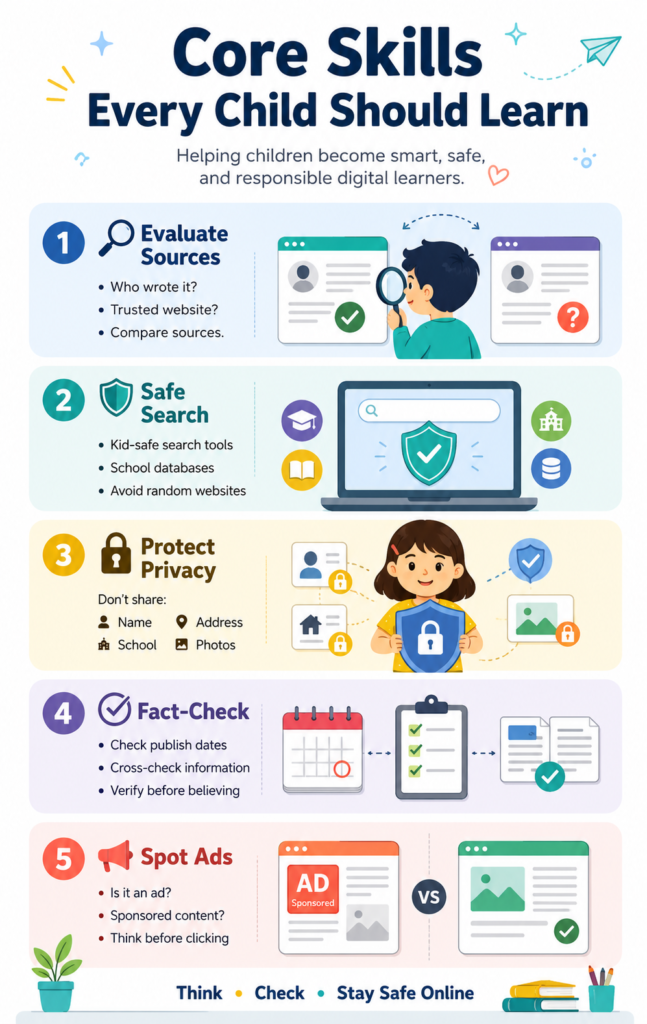
1. Evaluating Sources
Teach kids to ask: Who wrote this? Is it a trusted website, or just someone’s opinion? Comparing multiple sources helps them spot bias or outdated information.
2. Safe Search Habits
Show children how to use kid-safe search engines and school-approved databases instead of open web searches for schoolwork.
3. Understanding Privacy
Explain why they should never share personal details, school name, address, or photos, while researching or interacting online.
4. Fact-Checking Basics
Introduce simple fact-checking habits, like checking publish dates and cross-referencing information across two or more sources.
5. Recognizing Ads vs. Real Content
Help kids identify sponsored content or ads disguised as articles, a skill many adults still struggle with.
Step-by-Step: Teaching Research Habits at Home
- Start with guided searches – Sit with your child during their first few research sessions.
- Teach the “3-source rule” – Encourage checking at least three sources before trusting information.
- Bookmark trusted sites – Create a shortlist of reliable, age-appropriate websites together.
- Practice spotting fake content – Show real examples of misleading headlines or clickbait.
- Review together – After research, ask your child to explain what they learned and where it came from.
- Encourage note-taking – Have kids jot down source names as they research, this builds citation habits early.
Age-Appropriate Digital Research Guidelines
| Age Group | Recommended Approach |
|---|---|
| 5–7 years | Parent-guided searches only, kid-safe search engines |
| 8–10 years | Supervised independent searches, trusted bookmarks |
| 11–13 years | Independent research with periodic source checks |
| 14+ years | Independent research with critical evaluation skills |
Common Mistakes Parents Should Avoid
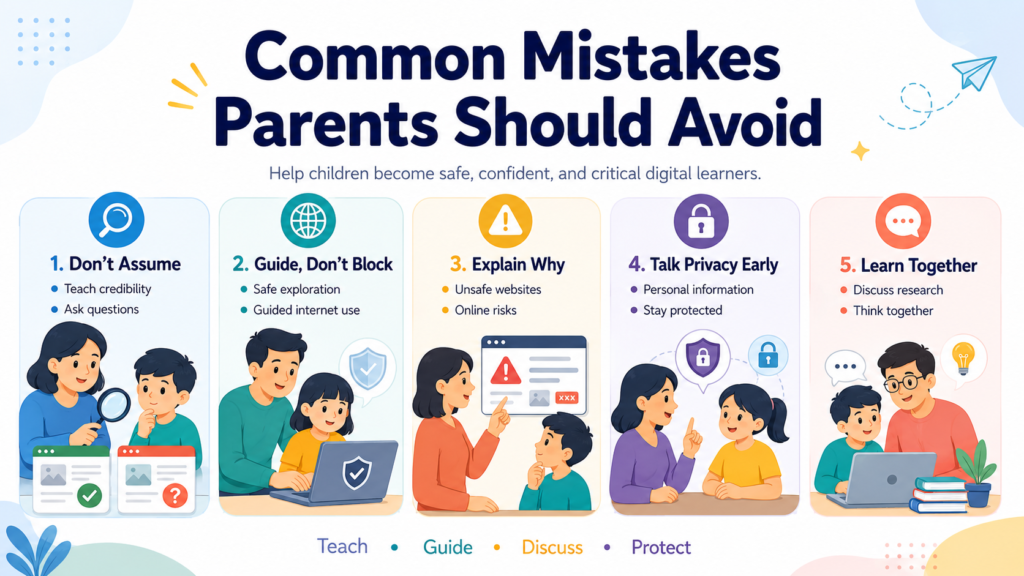
- Assuming kids automatically know how to judge credibility.
- Blocking all internet use instead of teaching guided access.
- Not explaining why certain sites or content aren’t safe.
- Skipping conversations about privacy until problems arise.
- Letting screen time replace meaningful, guided research conversations.
🕵️ Source Detective
Can you spot a reliable source? Read each card and decide!
Building Lifelong Digital Confidence
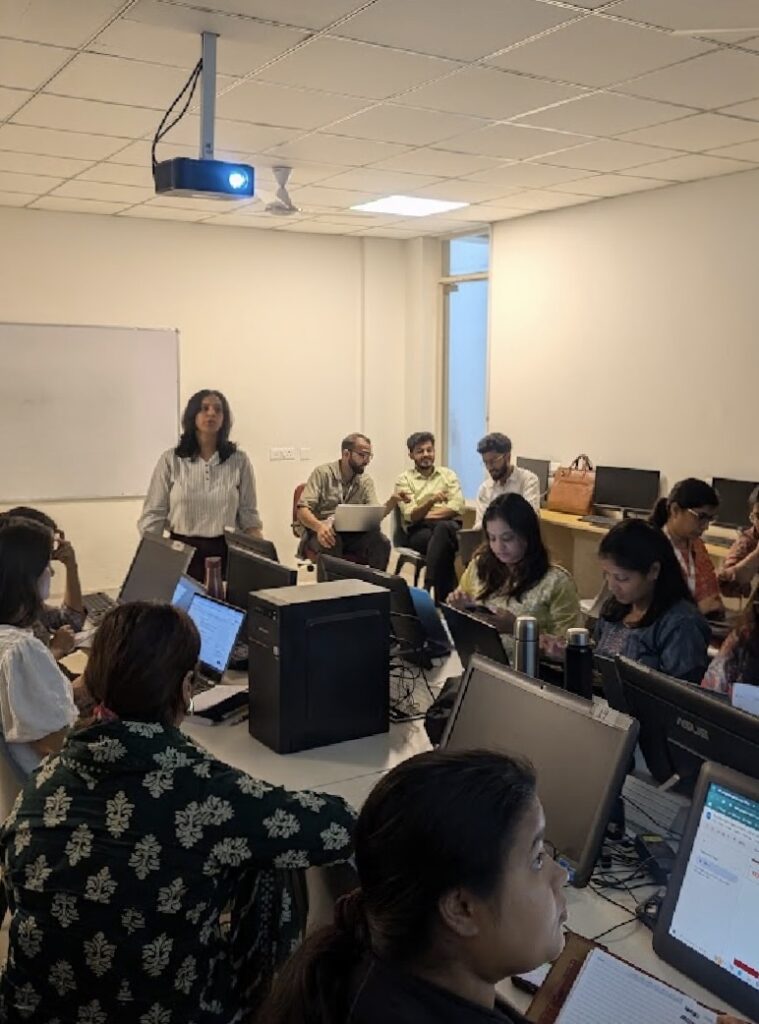
Digital literacy isn't a one-time lesson, it's an ongoing skill that grows with your child. The goal isn't to eliminate online research but to help kids navigate it thoughtfully and safely.
As children grow older, their independence online should increase gradually, paired with consistent conversations about credibility, privacy, and responsible use.
Schools that integrate research-based, inquiry-led learning naturally reinforce these habits, teaching children not just what to learn, but how to learn responsibly in a digital world.
FAQs
1. At what age should children start learning digital literacy skills?
Basic digital literacy concepts can begin as early as age 5, starting with supervised, guided searches.
2. How can I tell if a website is safe for my child to use for research?
Look for educational domains, clear author information, and age-appropriate, ad-light content.
3. Should I completely restrict internet access for younger children?
No, guided and supervised access teaches safer long-term habits than complete restriction.
4. How do I teach my child to spot fake or misleading information?
Practice comparing headlines to actual article content and checking sources across multiple reliable websites.
5. Why is digital literacy considered part of modern education?
Because most learning today involves online research, digital literacy has become as essential as reading or writing skills.
Infrastructure, facilities, and experienced teachers are a big asset to the learning & development of students, be it for Nursery, Primary or Senior children making Vega Schools the best schools in Gurgaon. For information about admission, please visit the Vega Schools campuses in Sector 48 and Sector 76 Gurugram. Get the best education for you child in New Gurgaon and be part of the top school infrastructure for sector 78, Sector 83, Sector 85, Sector 90, Sector 102, Sector 106 in Gurgaon, near Dwarka Expressway.