
- By Shruti Nagar Dave Choosing a school is one of the most important decisions parents make.
- But beyond academics, infrastructure and extracurricular activities, how do you know whether a school truly encourages independent thinking in children?
- The answer lies in the questions teachers ask, the freedom children have to express different views, the decisions they are trusted to make and how mistakes are handled.
- A school that nurtures independent thinkers encourages children to question, explore, form opinions, learn from mistakes and reflect on their learning.
- Today, most schools talk about critical thinking, creativity and future readiness.
By Shruti Nagar Dave

Choosing a school is one of the most important decisions parents make. But beyond academics, infrastructure and extracurricular activities, how do you know whether a school truly encourages independent thinking in children?
The answer lies in the questions teachers ask, the freedom children have to express different views, the decisions they are trusted to make and how mistakes are handled.
A school that nurtures independent thinkers encourages children to question, explore, form opinions, learn from mistakes and reflect on their learning.
Today, most schools talk about critical thinking, creativity and future readiness. But these qualities must go beyond promises and become part of everyday classroom experiences.
1. Does the School Encourage Questions and Independent Thinking?
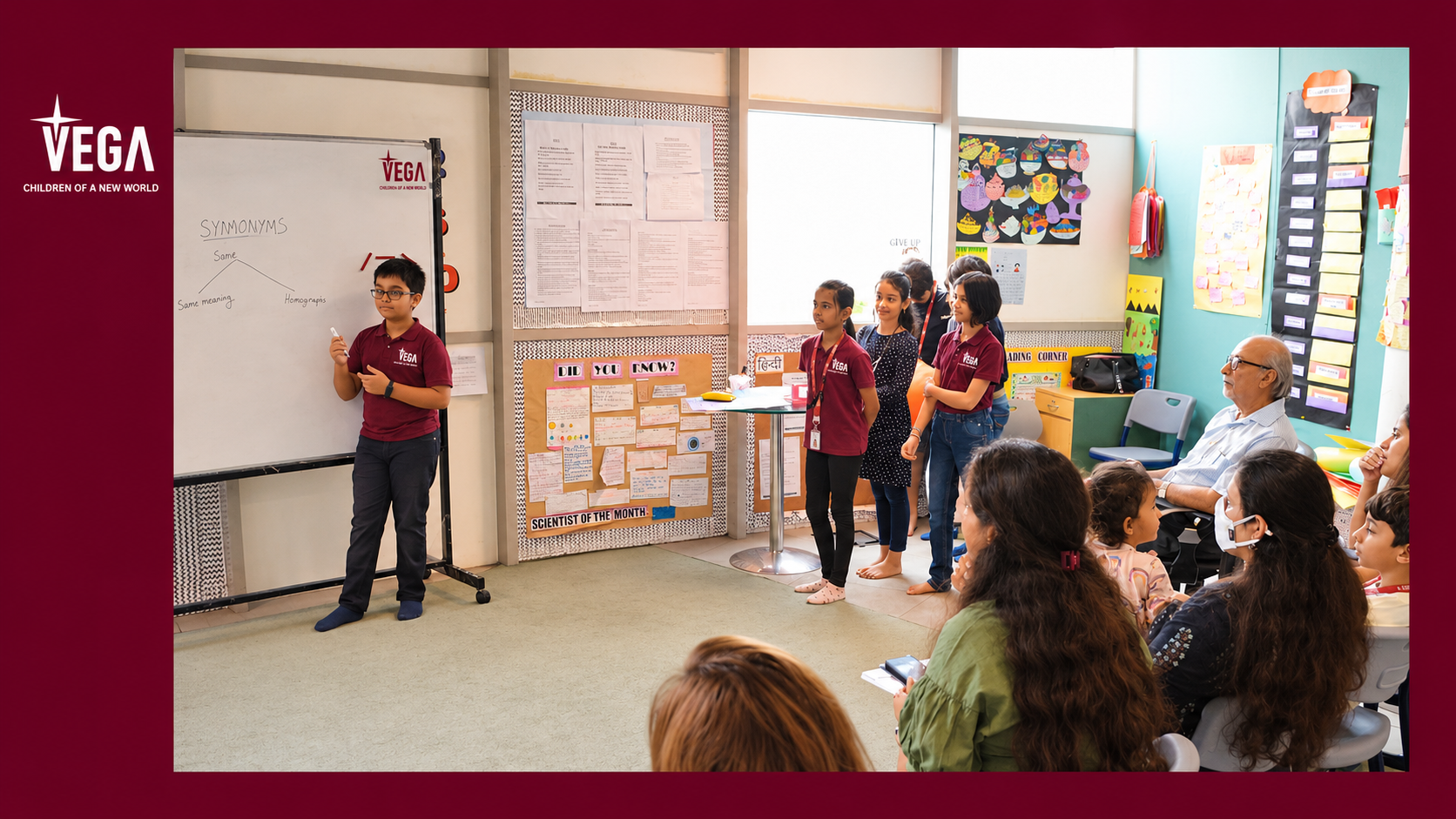
Observe the questions teachers ask in the classroom. Are children expected only to recall facts and find the right answers, or are they encouraged to ask why, explore possibilities and consider different explanations?
Children need strong academic foundations, but learning should go beyond memorising information.
When teachers encourage curiosity and open-ended questions, children begin developing their own understanding instead of waiting for adults to provide every answer.
One of the strongest signs of independent thinking is when children confidently ask questions that teachers may not have anticipated.
2. Does the School Encourage Different Perspectives?
Independent thinking also means having the confidence to express a different point of view.
Imagine a classroom discussion about whether technology is making our lives better. Are children expected to arrive at the same conclusion, or are they encouraged to examine both sides and explain their reasoning?
A healthy learning environment teaches children to:
- Express opinions confidently and respectfully.
- Listen to different perspectives.
- Question ideas rather than accept them automatically.
- Change their minds when they encounter new evidence.
Children should feel comfortable disagreeing respectfully, even with their teachers.
3. Look Beyond Projects: Understand the Value of Problem-Based Learning
School exhibitions and project displays showcase children’s creativity, but the real value lies in understanding how they arrived at the final outcome.
Consider a group of children exploring the question, “How can we reduce waste in our school?”
They might observe waste patterns, collect information, discuss possible solutions and test different approaches. Along the way, they learn to investigate problems, collaborate and rethink their ideas.
This is the value of meaningful, problem-based learning. Children apply concepts from mathematics, science and language to understand real-world situations.
Parents can look beyond the finished project and ask children what decisions they made, what challenges they faced and what they would do differently.
Student-led conferences, where children share their progress and learning goals, offer another opportunity to understand how they think.
4. Are Children Trusted to Make Decisions?
Independence develops through everyday opportunities to make meaningful choices.
Can children decide how to approach a task, choose how to present their understanding or take responsibility for planning their work?
Children need guidance and boundaries, but they also need opportunities to make age-appropriate decisions.
When trusted with responsibility, they learn to understand consequences, solve problems and take ownership of their actions.
These experiences are essential to becoming independent learners.

5. How Does the School Handle Mistakes?
One of the most revealing signs of a school’s learning culture is what happens when a child gets an answer wrong.
Does the teacher immediately provide the correct answer, or encourage the child to understand where their thinking went wrong?
Children who fear making mistakes may avoid challenges or hesitate to express their ideas.
Research on growth mindset, including psychologist Carol Dweck’s work, highlights how children’s beliefs about their abilities influence their willingness to take on challenges.
A supportive learning environment helps children see mistakes as opportunities to learn, try different approaches and improve.
Parents should also encourage this at home by giving children the space to work through problems independently.
6. Does the School Encourage Children to Reflect on Their Learning?
Independent thinking is not just about having ideas. It is also about understanding how we arrive at them.
Children should be encouraged to recognise what they have understood, where they need help and what they could improve.
Regular reflection helps children become more confident and less dependent on constant adult approval.
At Vega, the iLEAD cycle builds this habit by integrating thinking, planning, learning, leading and reflecting into the learning process.
7. The Role of Teachers in Developing Independent Thinkers
Children cannot be expected to think independently if their learning environment leaves little room for questions, exploration or decision-making.
Teachers play a crucial role in creating these opportunities. They must know when to explain, when to guide and when to step back and allow children to discover answers themselves.
This requires a school culture that encourages educators to reflect, collaborate and continuously improve their teaching practices.
Developing independent thinkers begins with educators who are willing to question their own assumptions about teaching and learning.
Questions Parents in Gurgaon Can Ask When Choosing a School
When visiting a school, look beyond its infrastructure, presentations and admission interactions. Observe the classrooms and, if possible, speak to children about their everyday learning experiences.
Here are a few questions worth asking:
- What happens when you ask a question that isn’t in your textbook?
- Can you disagree with your teacher? What happens?
- Do you get to decide how you approach your learning?
- Tell me about something you found difficult. How did you solve it?
- Have you ever changed your mind after learning something new?
Listen for genuine curiosity and ownership rather than rehearsed answers.
Parents exploring Vega Schools can also learn about the admissions process and plan a campus visit to its Sector 48 or Sector 76 campus in Gurgaon.
What Does a School That Encourages Independent Thinking Look Like?
A good school is about more than academic results, infrastructure and extracurricular opportunities. It is also about how children develop as thinkers.
Do they become more curious, confident in expressing ideas and willing to explore unfamiliar situations? Can they question information, make sound decisions and understand different perspectives?
In a world where information and answers are increasingly accessible through technology, the ability to question, reason and make thoughtful decisions is more important than ever.
A school that encourages independent thinking gives children the time, trust and opportunities to develop their own understanding.
Perhaps the real measure of a school’s success is not just how well children learn what they are taught, but how confidently they can think when no one is telling them what to think.
That is an education worth aspiring to.
Discover how Vega Schools in Gurgaon nurture independent thinking through their approach to learning. Visit https://vega.edu.in/ to explore the Sector 48 and Sector 76 campuses.
For admissions enquiries, email admissions@vega.edu.in or call +91 99997 11334 to plan a campus visit.