
- Somewhere between the excitement of a new term and the countdown to final exams, kids often hit a wall.
- Motivation dips, energy fades, and even simple homework feels heavier than usual.
- This is the mid-term slump, and it’s more common than most parents realise.
- Here’s how to support your child emotionally through this phase, without adding pressure.
- The mid-term slump is a natural dip in motivation and energy that happens midway through an academic term.
Somewhere between the excitement of a new term and the countdown to final exams, kids often hit a wall. Motivation dips, energy fades, and even simple homework feels heavier than usual. This is the mid-term slump, and it’s more common than most parents realise.
Here’s how to support your child emotionally through this phase, without adding pressure.
What Is the Mid-Term Slump?
The mid-term slump is a natural dip in motivation and energy that happens midway through an academic term. It’s driven by mental fatigue, repetitive routines, and accumulated academic pressure.
It’s not laziness, it’s a signal that your child needs emotional support, not just academic push.
Signs Your Child May Be Struggling
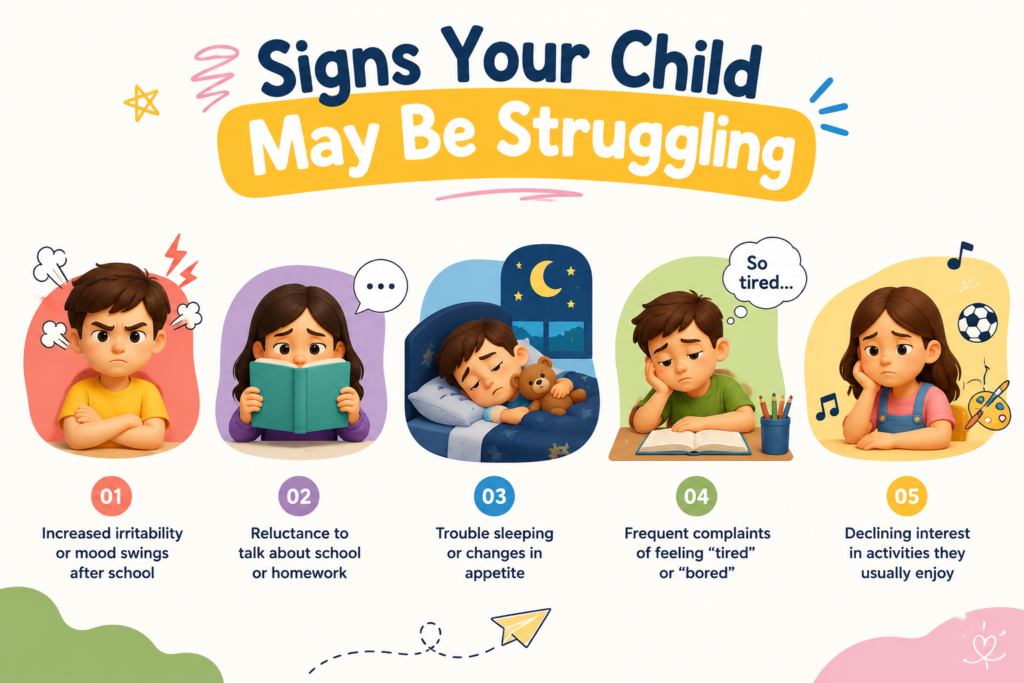
- Increased irritability or mood swings after school
- Reluctance to talk about school or homework
- Trouble sleeping or changes in appetite
- Frequent complaints of feeling “tired” or “bored”
- Declining interest in activities they usually enjoy
Why Emotional Check-Ins Matter
Academic performance often gets the spotlight, but emotional wellbeing directly affects focus, memory, and motivation. A child who feels heard is more likely to bounce back faster than one who feels unseen.
Regular emotional check-ins build trust, so kids feel safe sharing struggles before they become bigger issues.
How to Do an Effective Emotional Check-In
1. Choose a Low-Pressure Moment Avoid check-ins right after school when kids are mentally drained. Car rides, mealtimes, or bedtime often work better.
2. Ask Open-Ended Questions Instead of “How was school?”, try “What felt hardest about today?” or “What’s something you’re looking forward to this week?”
3. Validate Before Advising Say “That sounds really tiring” before jumping into solutions. Feeling understood matters more than immediate fixes.
4. Watch Body Language, Not Just Words Sometimes kids say “I’m fine” while clearly stressed. Notice tone, posture, and energy levels too.
5. Normalize the Slump Let your child know it’s completely normal to feel low energy mid-term, this reduces guilt and self-pressure.
Quick Reference: Slump Signs vs Supportive Response
| Sign at Home | Supportive Parent Response |
|---|---|
| Irritability after school | Give space before starting conversation |
| Avoiding homework talk | Ask about their day before academics |
| Low energy, seems “bored” | Validate feelings, avoid pushing productivity |
| Trouble sleeping | Create a calming bedtime routine |
Small Ways to Ease the Pressure
- Break study sessions into shorter, focused blocks with breaks.
- Celebrate small wins, not just final results.
- Encourage rest without guilt, downtime is productive too.
- Keep weekends lighter on academic pressure when possible.
When to Seek Additional Support
If low mood, withdrawal, or anxiety persists beyond a few weeks, it may be worth speaking with a school counselor or child psychologist. Early support prevents small struggles from becoming larger patterns.
Building Long-Term Emotional Resilience

The mid-term slump isn’t just something to push through, it’s an opportunity to teach children how to recognize and manage their emotions early. This builds resilience that extends far beyond academics.
Schools that prioritize emotional wellbeing alongside academics help children navigate these dips with better coping tools and consistent support.
FAQs
1. Is the mid-term slump common among students? Yes, it’s a widely recognized dip in motivation that affects many students during the middle of an academic term.
2. How long does a mid-term slump usually last? It varies, but with proper support, most children bounce back within a few weeks.
3. Should I reduce academic expectations during this phase? Not eliminate them, but adjusting pace and offering emotional support can ease pressure significantly.
4. How can I tell if it’s more than just a slump? Persistent sadness, withdrawal, or anxiety lasting several weeks may need professional support.
5. How can schools help with this transition? Schools that combine academic guidance with emotional wellbeing support help students manage slumps more effectively.
Want to see how schools support students emotionally through the year? Explore Vega Schools’ approach to student wellbeing.
Infrastructure, facilities, and experienced teachers are a big asset to the learning & development of students, be it for Nursery, Primary or Senior children making Vega Schools the best schools in Gurgaon. For information about admission, please visit the Vega Schools campuses in Sector 48 and Sector 76 Gurugram. Get the best education for you child in New Gurgaon and be part of the top school infrastructure for sector 78, Sector 83, Sector 85, Sector 90, Sector 102, Sector 106 in Gurgaon, near Dwarka Expressway.