
- What does it mean to raise a good citizen today?
- It’s no longer just about following rules, it’s about empathy, awareness, and the willingness to contribute to something bigger than oneself.
- Social responsibility is a skill children build gradually, through everyday actions at home.
- Here’s how parents can nurture modern citizenship in children, one small habit at a time.
- Why Social Responsibility Matters Today Children grow up in an increasingly connected world, where their choices, big or small, affect communities, the environment, and people around them.
What does it mean to raise a good citizen today? It’s no longer just about following rules, it’s about empathy, awareness, and the willingness to contribute to something bigger than oneself. Social responsibility is a skill children build gradually, through everyday actions at home.
Here’s how parents can nurture modern citizenship in children, one small habit at a time.
Why Social Responsibility Matters Today
Children grow up in an increasingly connected world, where their choices, big or small, affect communities, the environment, and people around them. Teaching social responsibility early helps them navigate this world thoughtfully.
This is exactly why experiential learning school environments in Gurgaon place real-world impact alongside academics, helping children understand consequences beyond the classroom.
Core Values That Build Modern Citizenship
- Empathy: Understanding and caring about others’ experiences.
- Accountability: Owning one’s actions and their impact on others.
- Community awareness: Recognising the needs of people beyond one’s immediate circle.
- Environmental responsibility: Understanding how daily choices affect the planet.
- Respect for diversity: Valuing different perspectives, backgrounds, and beliefs.
Practical Ways to Teach Social Responsibility at Home
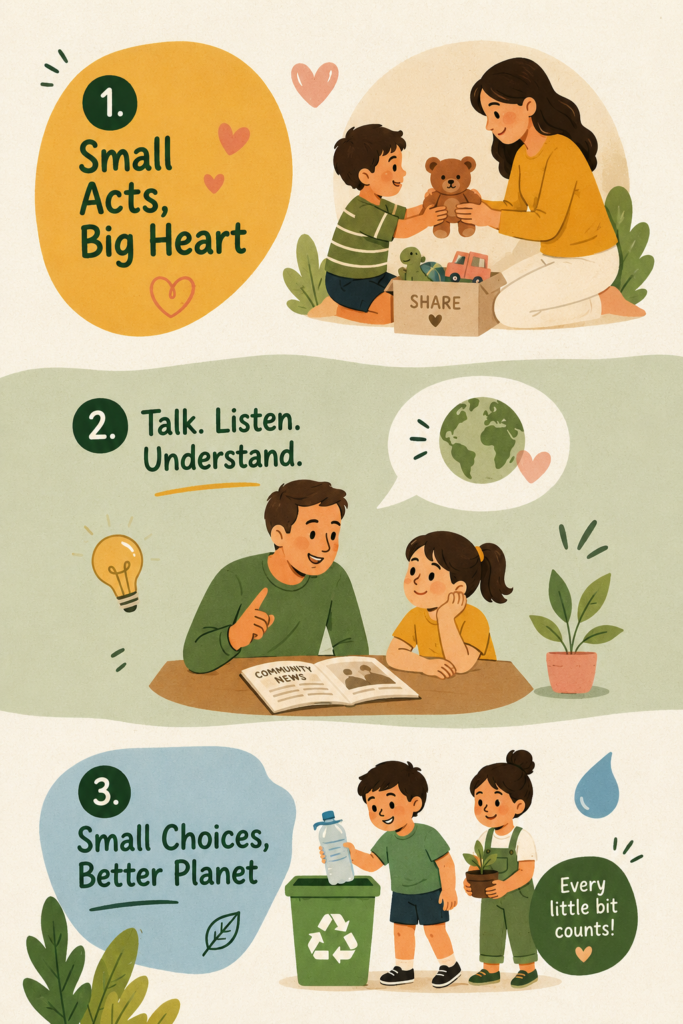
1. Involve Kids in Small Acts of Kindness
Simple actions, sharing, helping a neighbour, donating old toys, teach empathy in relatable, age-appropriate ways.
2. Discuss Current Events Simply
Talk about community issues in an age-appropriate way, this builds awareness without overwhelming young minds.
3. Encourage Environmental Habits
Involve children in recycling, saving water, or reducing waste, small actions that build long-term environmental responsibility.
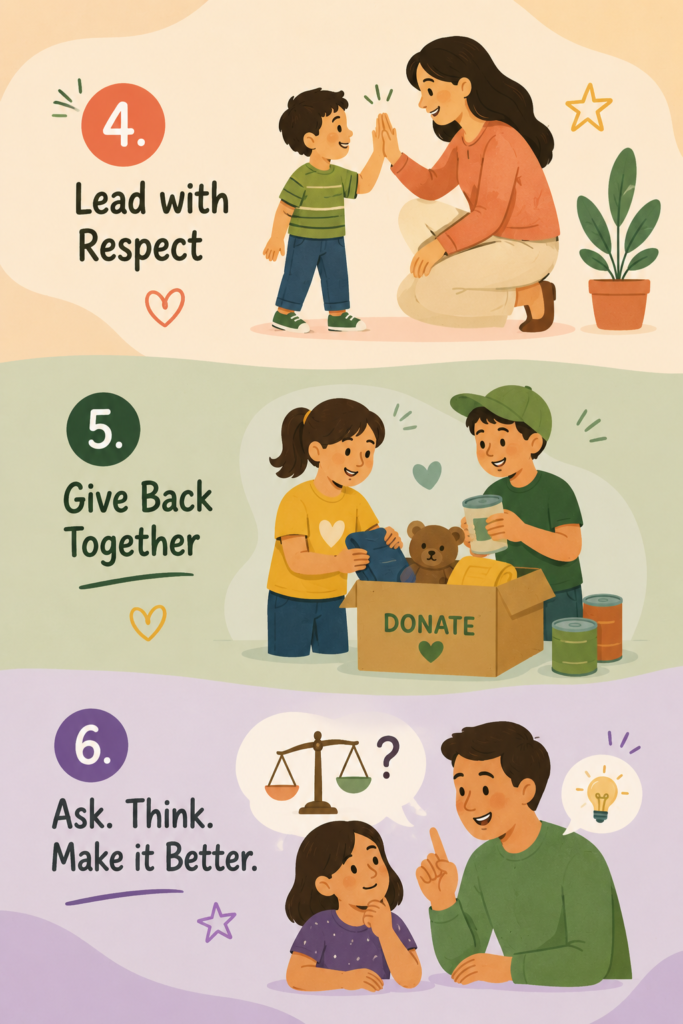
4. Model Respectful Behaviour
Children absorb how adults treat others. Demonstrating respect and fairness teaches more than any lecture could.
5. Create Opportunities for Volunteering
Even small, local volunteering experiences help children understand community contribution firsthand.
6. Encourage Questions About Fairness
When children notice something unfair, ask, “What do you think could help?” This builds critical, solution-focused thinking.
Quick Reference: Habit vs Citizenship Value Built
| Everyday Habit | Value Developed |
|---|---|
| Sharing and helping others | Empathy |
| Discussing community issues | Awareness |
| Recycling and conserving resources | Environmental responsibility |
| Observing respectful behaviour at home | Respect for diversity |
| Volunteering locally | Community contribution |
Why This Shapes Long-Term Character
Children who practice social responsibility early grow into adults who consider the impact of their actions, at school, at work, and in their communities. These values shape character far beyond academic achievement.
This mirrors how holistic education school models approach learning, treating character development as equally important as academic growth. Over time, these small, consistent habits shape how children make decisions, well before they fully understand concepts like ethics or civic duty.
A Vega School Perspective
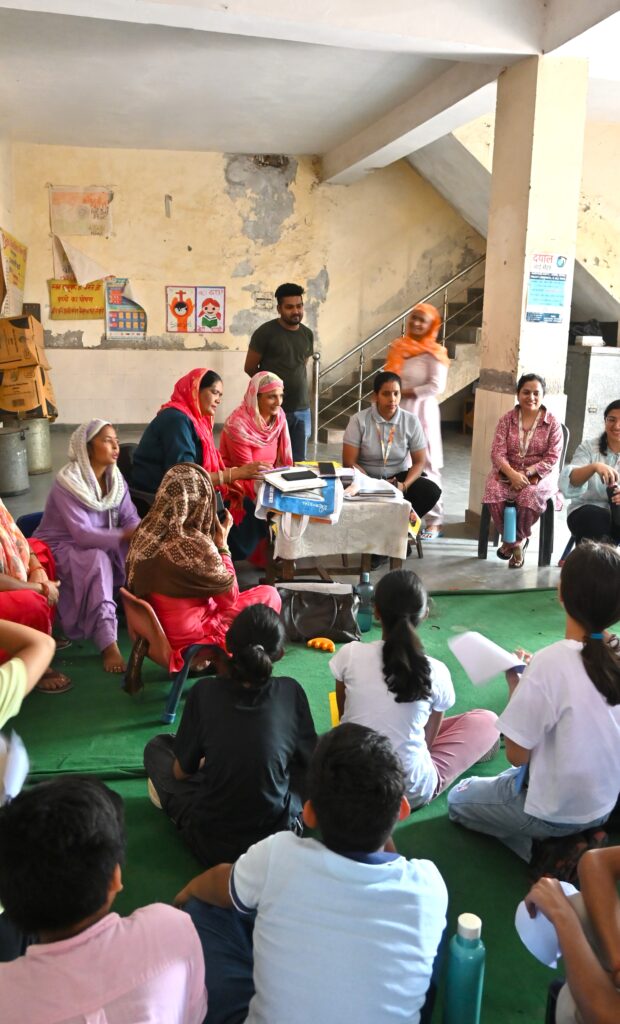
At Vega School, a progressive CBSE school in Gurgaon with campuses in Sector 48 and Sector 76 Gurugram, social responsibility is nurtured through hands-on, real-world learning experiences, helping students see citizenship as something they practice daily, not just something they read about. This approach reflects a broader belief that character and academics grow best when developed side by side, not as separate priorities.
FAQs
1. At what age should I start teaching social responsibility?
Children as young as 4–5 can begin learning empathy and sharing through simple, everyday actions.
2. How can I teach environmental responsibility without overwhelming my child?
Start with one habit at a time, like recycling or saving water, and build gradually from there.
3. Does volunteering need to be formal or structured?
No, even small, informal acts like helping a neighbour teach meaningful lessons in contribution.
4. How do I explain community issues without causing anxiety?
Keep explanations age-appropriate and focus on what positive action looks like, rather than dwelling on the problem alone.
5. How do schools in Gurgaon support social responsibility alongside academics?
Progressive CBSE schools in Gurgaon increasingly use experiential and project based learning to build empathy and community awareness early.
Curious how Vega School nurtures empathy and responsibility in students? Explore admissions at Vega School, a progressive CBSE school in Gurgaon with campuses in Sector 48 and Sector 76 Gurugram.