
- But she struggles to order her own lunch, doesn’t know how to deal with a friend saying “no”, and falls apart when things don’t go according to plan. Sounds familiar?
- We all know a child like this. And here’s a question worth asking ourselves: Are we so busy preparing our children to do well in school that we are forgetting to prepare them for life? Do the report cards measure any of this?
- We know how our children perform in a written test.
- But how well do we know how they handle life outside the classroom? Can they cope when they don’t get their way?
- Can they stand up for themselves when a friend is unkind?
She scores 96% in Science. But she struggles to order her own lunch, doesn’t know how to deal with a friend saying “no”, and falls apart when things don’t go according to plan.
Sounds familiar? We all know a child like this.
And here’s a question worth asking ourselves: Are we so busy preparing our children to do well in school that we are forgetting to prepare them for life?
Do the report cards measure any of this? We know how our children perform in a written test. But how well do we know how they handle life outside the classroom?
Can they cope when they don’t get their way? Can they stand up for themselves when a friend is unkind? Can they decide without constantly looking for an adult to guide them? And perhaps most importantly, can they pick themselves up when something doesn’t go their way?
These are everyday moments, often small and seemingly insignificant, but they tell us a great deal about how prepared our children are for life.
Perhaps this tells us something important: confidence, resilience, and the ability to navigate relationships don’t just develop with age. They can be nurtured, practiced, and learnt.
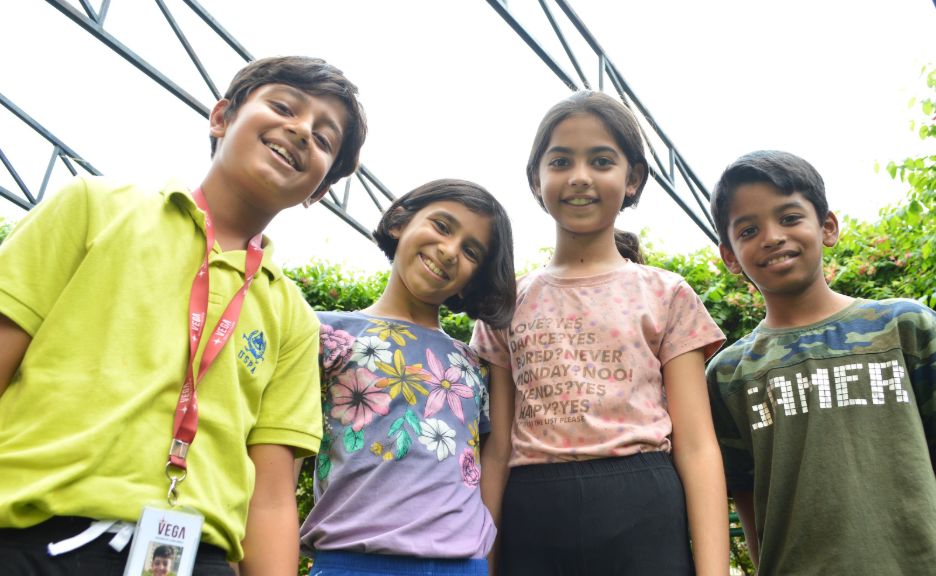
And yet, these are precisely the things that no report card tells us about.
Are we parents sometimes part of the problem?
This is perhaps the most uncomfortable part of the conversation.
An NCERT survey in 2022 covering over 3.79 lakh students found that 81% identified studies, exams and results as major causes of anxiety. A majority also felt they would not be respected if they didn’t do well academically.
And perhaps, without realizing it, we parents sometimes add to this pressure.
As parents, we want to protect our children. We step in when friendships go wrong, sort out their problems, remind them of every deadline, and make sure nothing falls through the cracks. It comes from a place of love. But when does helping become hovering?
Numerous studies across the world found that children with over-controlling parents reported higher depression and lower life satisfaction. The researchers linked this to a diminished sense of autonomy and competence.
Sometimes, in our eagerness to make life easier for our children, we unintentionally take away the very opportunities they need to learn how to manage it.
The good news? These skills can be learnt.
A meta-analysis of 213 school programmes involving over 2.7 lakh students in India found that teaching social and emotional skills also improved academic achievement by 11 percentile points.
So, perhaps we need to stop thinking of life skills and academic excellence as two separate goals. They complement each other.
What can we do differently?
- Let them struggle a little. Resist the urge to jump in immediately. Instead, ask, “What do you think you could try?”
- Give them real responsibility. Let them pack their own bags, manage their pocket money and speak to their teachers themselves.
- Celebrate how they handle setbacks. A child who tries again after failing deserves as much appreciation as one who gets the answer right the first time.
- Make failure an ordinary conversation. Let children talk about what went wrong without feeling judged or embarrassed.
One day, our children will have to deal with a difficult boss, a friendship that falls apart, a decision that goes wrong or a plan that simply doesn’t work out.
There will be no teacher to step in, no parent to negotiate on their behalf and certainly no marksheet to fall back on.
What will matter then is whether they can think for themselves, manage their emotions, make decisions, take responsibility, and find the courage to try again.
So, the next time your child brings home a great result, celebrate it. They deserve that moment.
But perhaps, later that evening, ask yourself one more question:
Am I raising a child who knows how to get the right answers, or one who knows what to do when there are no easy answers?
Because ultimately, our children don’t just need to be ready for their next examination. They need to be ready for life.