
- One week it’s monsoon puddles and rain boots, the next it’s clear skies and running shoes.
- As the weather shifts, so does a child’s routine, and it’s easy for activity levels to quietly drop somewhere in between.
- Here’s how to keep kids moving through the transition, without it feeling like a battle every time the forecast changes.
- Why Weather Transitions Disrupt Activity Levels Changing weather often means changing routines overnight.
- A child used to outdoor play during monsoon breaks may suddenly stay indoors more once skies clear, simply because the habit shifted, not because interest did.
One week it’s monsoon puddles and rain boots, the next it’s clear skies and running shoes. As the weather shifts, so does a child’s routine, and it’s easy for activity levels to quietly drop somewhere in between.
Here’s how to keep kids moving through the transition, without it feeling like a battle every time the forecast changes.
Why Weather Transitions Disrupt Activity Levels
Changing weather often means changing routines overnight. A child used to outdoor play during monsoon breaks may suddenly stay indoors more once skies clear, simply because the habit shifted, not because interest did. It takes a small, deliberate nudge to shift the routine back.
This is exactly why experiential learning school environments in Gurgaon build movement into the day regardless of season, so activity doesn’t depend entirely on the weather outside. When movement is treated as a non-negotiable part of the routine, children adapt to seasonal shifts far more smoothly.
Signs the Weather Shift Is Affecting Activity
- More screen time creeping in during the “in-between” weather days
- Reluctance to go outside even once conditions improve
- Restlessness or lower energy from reduced movement
- Outdoor gear sitting unused because routines haven’t caught up yet
- Complaints of boredom that don’t seem to have an obvious cause
Simple Ways to Keep Kids Active as Seasons Change
1. Keep a Flexible “Weather-Proof” Activity List
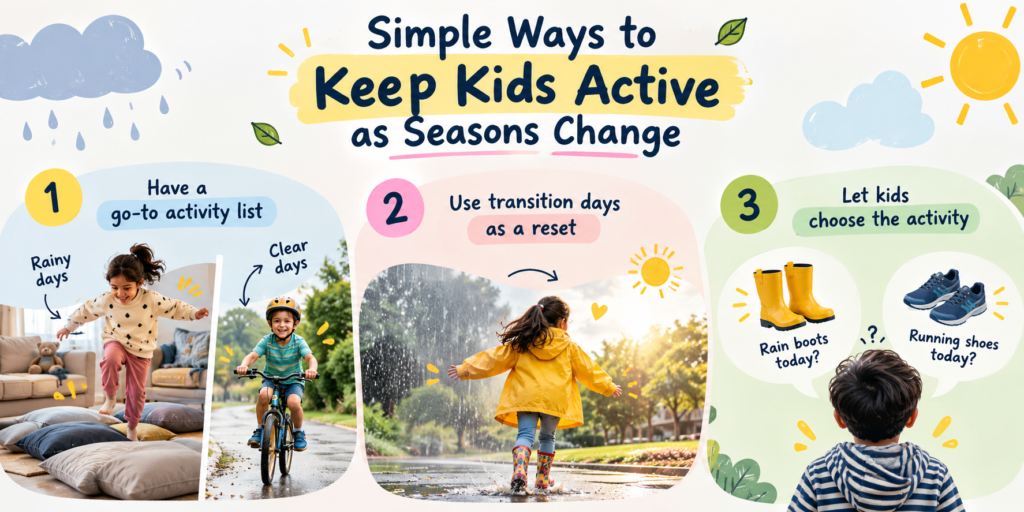
Have a few go-to options for both rainy and clear days, indoor obstacle courses for wet afternoons, a quick bike ride when it’s dry. Having the list ready removes the daily decision fatigue that often leads to just staying indoors.
2. Use Transition Days as a Reset, Not a Pause
The first clear day after rain is a good moment to head straight back outside, rather than easing in slowly. Waiting “just one more day” often turns into a week without anyone quite noticing.
3. Let Kids Help Pick the Activity
Choice matters more during transition periods. Ask, “Rain boots or running shoes today?” and let them decide based on the weather. This small bit of ownership makes children more likely to follow through.
4. Keep Gear Visible and Ready
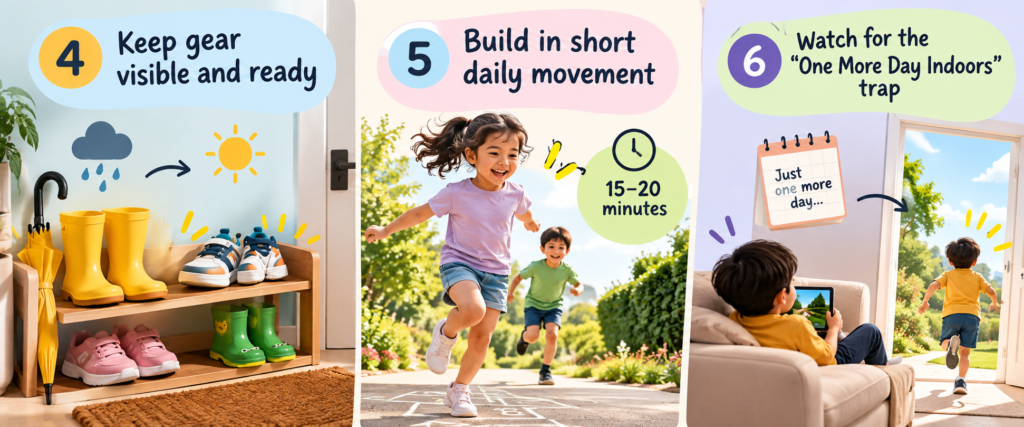
Rain boots by the door in monsoon, sneakers out and ready once it clears, small visual cues encourage quicker movement outdoors.
5. Build in Short Daily Movement, Regardless of Weather
Even 15–20 minutes of movement, indoors or out, keeps the habit alive during unpredictable weather stretches. Consistency matters more here than intensity or duration.
6. Watch for the “One More Day Indoors” Trap
It’s easy for one indoor day to become a week. Gently nudge back outside as soon as conditions allow, before the indoor routine quietly becomes the new default.
Quick Reference: Weather vs Activity Option
| Weather Condition | Simple Activity Option |
|---|---|
| Heavy rain | Indoor dance breaks, obstacle courses |
| Post-rain, humid | Short walks, puddle exploration |
| Clear and cool | Cycling, outdoor games, running |
| Transitional, unpredictable | Flexible options ready both ways |
Why Consistent Movement Matters Beyond Fitness
Regular physical activity supports focus, mood, and sleep, benefits that extend well into how children perform academically and emotionally. A drop in activity during weather transitions can quietly affect more than just fitness, it can show up as restlessness in class or trouble winding down at night.
This mirrors how a holistic education school model approaches development, treating movement as connected to overall wellbeing, not separate from it. Physical activity, in this view, isn’t an extracurricular add-on, it’s part of how a child learns to regulate energy, mood, and attention throughout the day.
A Vega School Perspective
At Vega Schools, a progressive CBSE school in Gurgaon with campuses in Sector 48 and Sector 76 Gurugram, movement stays part of the daily rhythm regardless of season, helping learners stay active and engaged through every weather shift the year brings.
FAQs
Q1. How much daily activity do children need as weather changes?
Generally, 30–60 minutes of movement daily, indoor or outdoor, helps maintain consistent energy and mood.
Q2. My child refuses to go outside once it’s clear after rain. What helps?
Start with a short, low-pressure activity, like a quick walk, rather than expecting a full return to routine immediately.
Q3. Are indoor activities as effective as outdoor play?
They can be, especially for short-term movement, but outdoor play adds benefits like fresh air and natural light.
Q4. How do I stop screen time from replacing outdoor play during transitions?
Keep outdoor gear visible and offer activity choices before screens become the default option.
Q5. How do schools keep students active despite weather changes?
Progressive CBSE schools in Gurgaon that prioritise holistic development build movement into daily routines regardless of season.
Curious how Vega School keeps learners active all year round? Explore admissions at Vega School, a progressive CBSE school in Gurgaon with campuses in Sector 48 and Sector 76 Gurugram.