
- Do sibling squabbles or playground disagreements always end with a parent stepping in to referee?
- While that instinct is natural, children who never practise resolving conflicts themselves often struggle to do so later in life.
- Raising peacemakers starts with small, everyday moments at home.
- Here’s how to teach children conflict resolution skills that last well beyond childhood.
- Why Conflict Resolution Is a Skill, Not a Personality Trait Some children seem naturally calmer during disagreements, but conflict resolution is largely learned, not innate.
Do sibling squabbles or playground disagreements always end with a parent stepping in to referee? While that instinct is natural, children who never practise resolving conflicts themselves often struggle to do so later in life. Raising peacemakers starts with small, everyday moments at home.
Here’s how to teach children conflict resolution skills that last well beyond childhood.
Why Conflict Resolution Is a Skill, Not a Personality Trait
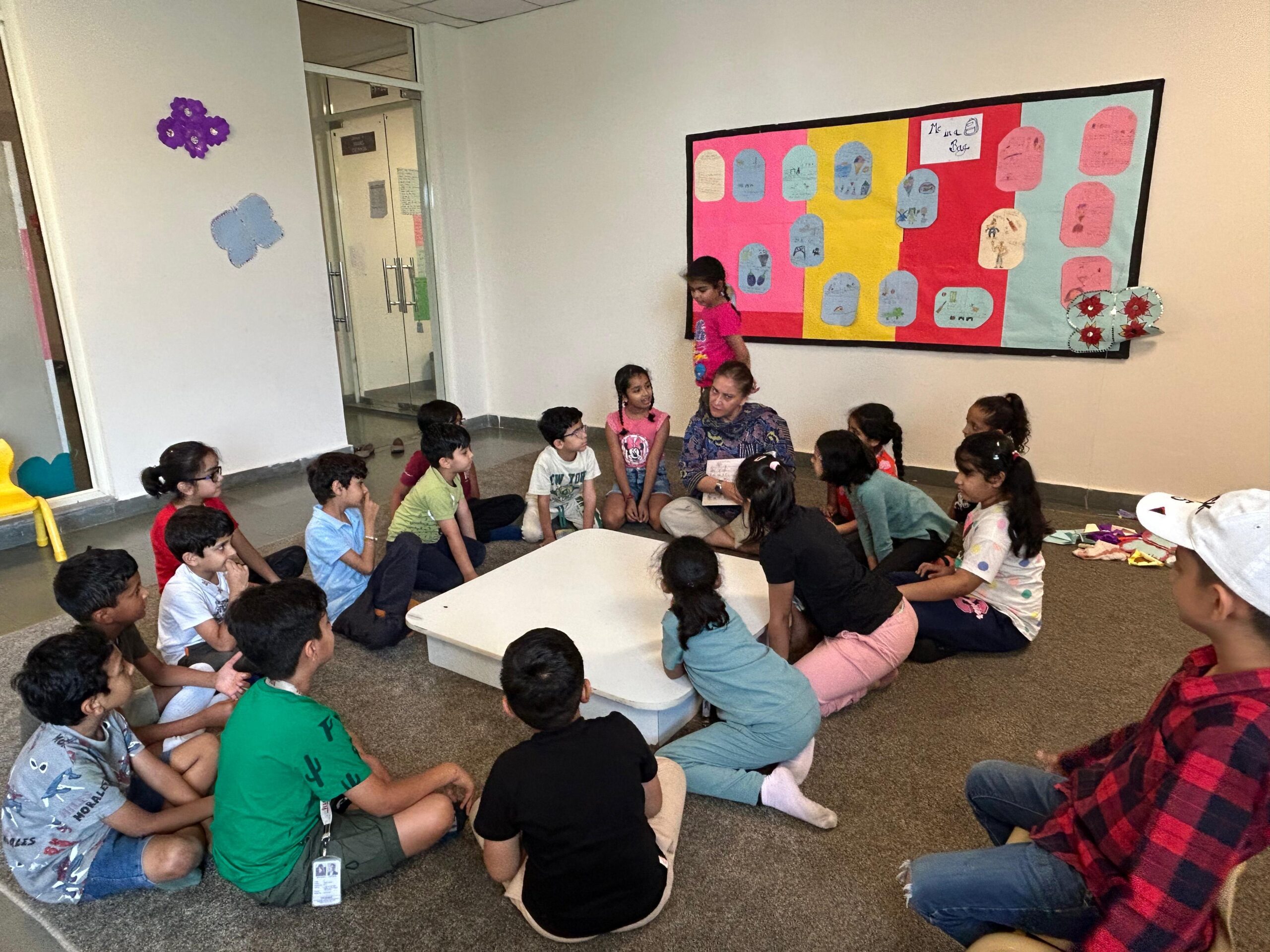
Some children seem naturally calmer during disagreements, but conflict resolution is largely learned, not innate. With guidance, any child can build the skills to navigate disagreements constructively.
This is exactly why experiential learning school environments in Gurgaon build collaborative problem-solving into everyday classroom activities, rather than only addressing conflict when it arises.
What Happens When Parents Always Step In
- Children miss the chance to practise negotiation and compromise.
- They may rely on adults to resolve every disagreement, even minor ones.
- They can struggle with peer conflicts once outside parental supervision.
- They may not learn to identify their own feelings during disagreements.
Practical Ways to Teach Conflict Resolution at Home
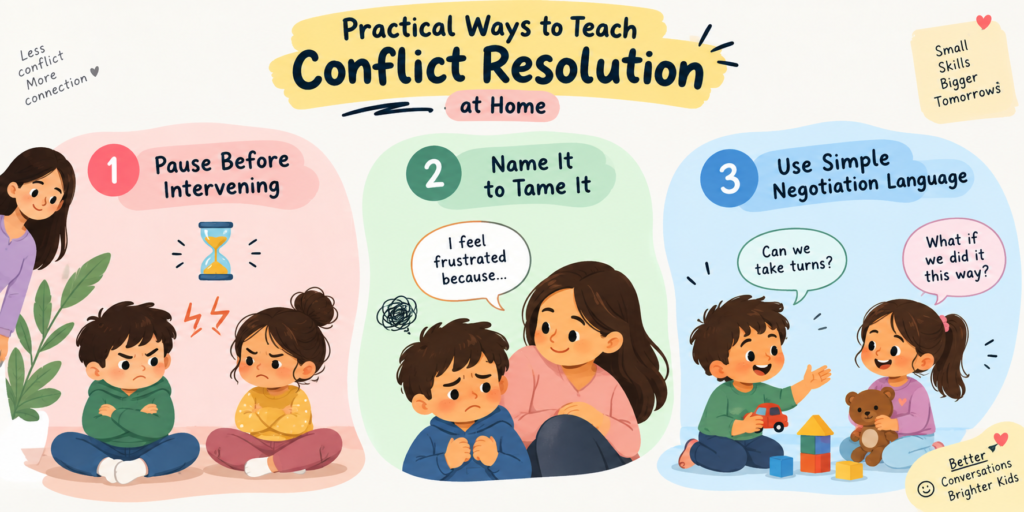
1. Pause Before Intervening
Give children a moment to attempt resolving small disagreements themselves before stepping in. Not every conflict needs an adult referee.
2. Teach the “Name It to Tame It” Approach
Help children label their feelings first, “I feel frustrated because…” This reduces reactive behaviour and builds emotional awareness.
3. Introduce Simple Negotiation Language
Phrases like “Can we take turns?” or “What if we did it this way instead?” give children practical tools to use independently.
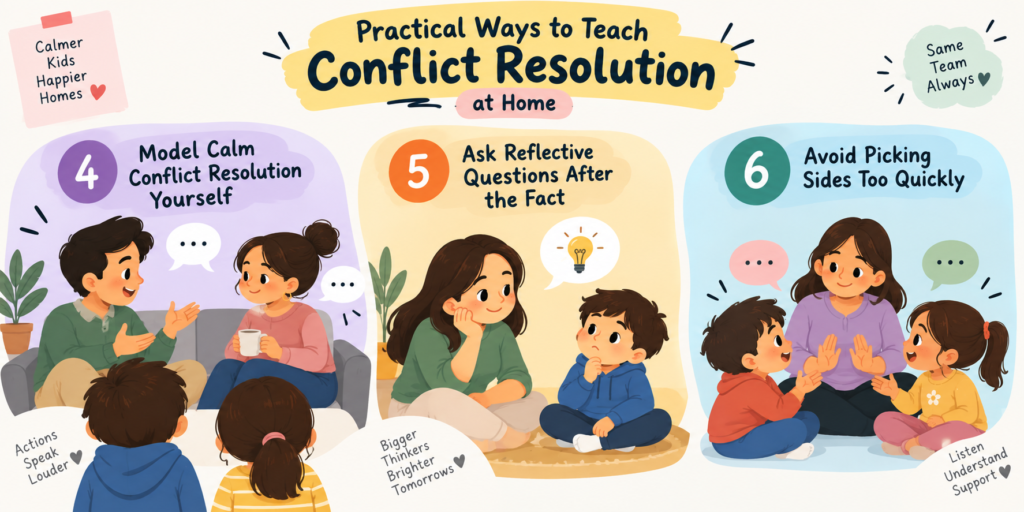
4. Model Calm Conflict Resolution Yourself
Children learn more from watching how adults handle disagreements than from any lecture on the topic.
5. Ask Reflective Questions After the Fact
Once emotions settle, ask “What could you try next time?” This builds problem-solving skills for future conflicts.
6. Avoid Picking Sides Too Quickly
Encourage both children to share their perspective before offering a solution, this teaches fairness and active listening.
Quick Reference: Common Reaction vs Peacemaking Approach
| Common Reaction | Peacemaking Approach |
|---|---|
| Immediately solving the conflict for them | Pausing to let them attempt resolution first |
| Telling them to “just stop fighting” | Helping them name and express feelings |
| Deciding who’s “right” | Encouraging both sides to be heard |
| Ignoring small disagreements | Using them as low-stakes practice moments |
Why This Skill Matters Long-Term
Children who learn conflict resolution early develop stronger empathy, communication, and emotional regulation skills. These abilities extend into friendships, teamwork, and eventually, workplace relationships as adults.
This mirrors how a project based learning school approach works, encouraging students to navigate disagreements collaboratively during group projects rather than avoiding friction altogether.
A Vega School Perspective
At Vega School, a progressive CBSE school in Gurgaon with campuses in Sector 48 and Sector 76 Gurugram, learners are guided to resolve disagreements constructively through collaborative activities, building genuine peacemaking skills rather than simply avoiding conflict.
FAQs
1. At what age should children start learning conflict resolution?
Children as young as 3–4 can begin learning simple sharing and turn-taking strategies during minor disagreements.
2. Should I always let my child resolve conflicts on their own?
Not always, step in for safety or fairness concerns, but allow space for smaller disagreements to be worked through independently.
3. My child gets very upset during conflicts. How do I help?
Allow them to calm down first, then guide reflection once emotions have settled.
4. Does conflict resolution differ between siblings and friends?
The core skills are similar, though sibling conflicts often need more consistent, repeated practice due to daily proximity.
5. How do schools support conflict resolution skills?
Progressive CBSE schools in Gurgaon that use collaborative, experiential learning help children practise conflict resolution naturally through group work.
Curious how Vega School nurtures empathy and collaborative problem-solving? Explore admissions at Vega School, a progressive CBSE school in Gurgaon with campuses in Sector 48 and Sector 76 Gurugram.