
- “How was school today?” often gets a one-word answer: “Good” or “Fine.” But what if after-school time became a space where your child’s curiosity actually grows, instead of switching off until the next school day?
- Encouraging critical questioning at home doesn’t require worksheets or lectures.
- It just needs the right approach, and a little intention.
- Why Curiosity Fades After School Most of the school day is spent absorbing information.
- By the time kids get home, mental fatigue sets in, and questioning takes a backseat to relaxation.
“How was school today?” often gets a one-word answer: “Good” or “Fine.” But what if after-school time became a space where your child’s curiosity actually grows, instead of switching off until the next school day?
Encouraging critical questioning at home doesn’t require worksheets or lectures. It just needs the right approach, and a little intention.
Why Curiosity Fades After School
Most of the school day is spent absorbing information. By the time kids get home, mental fatigue sets in, and questioning takes a backseat to relaxation.
The key isn’t forcing more learning, it’s creating natural moments where curiosity feels fun, not like extra homework. Small, low-pressure conversations often work better than structured discussions.
What “Critical Questioning” Really Means
It’s not about quizzing your child. Critical questioning means encouraging them to ask why, how, and what if, rather than just accepting information at face value.
This builds reasoning skills that help far beyond the classroom, in decision-making, problem-solving, and everyday conversations. Over time, it also builds confidence in expressing their own opinions.
Simple Ways to Spark Questions After School
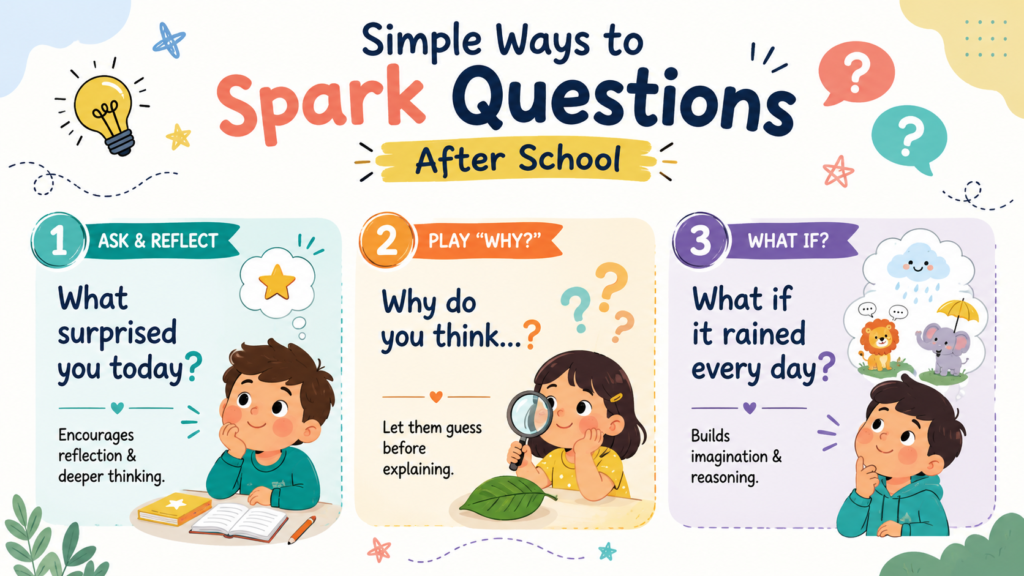
1. Ask “What surprised you today?”
This shifts focus from facts to reflection, encouraging deeper thinking about their day.
2. Play “Why Do You Think…?”
Pick something ordinary, like why leaves change color, and ask your child to guess before explaining. Guessing builds curiosity muscles.
3. Introduce Everyday “What If” Scenarios
“What if it rained every single day?” or “What if animals could talk?” These open-ended questions encourage imaginative reasoning.
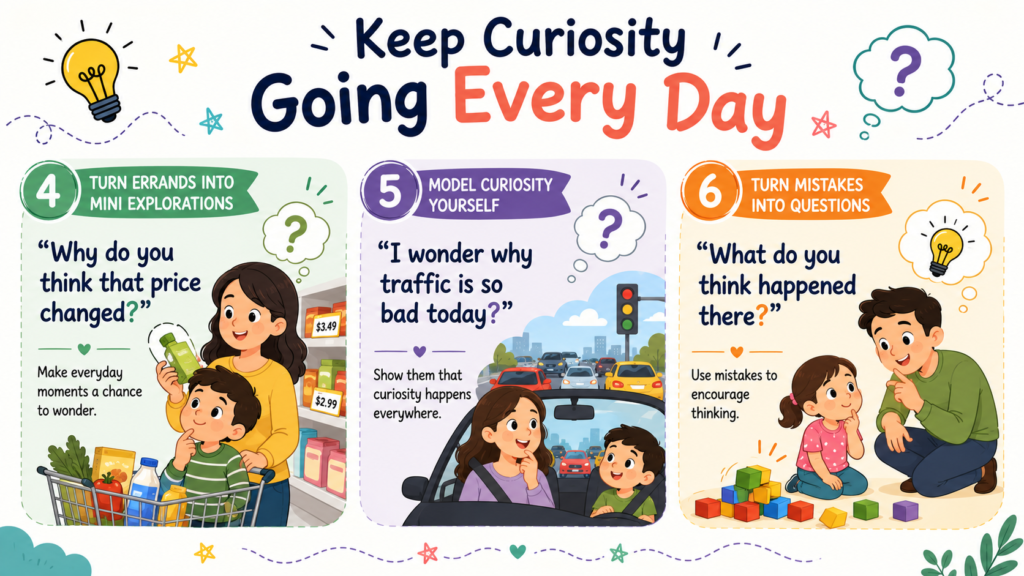
4. Turn Errands Into Mini Explorations
While grocery shopping or driving, ask questions like “Why do you think that price changed?” Real-world context makes questioning feel natural.
5. Model Curiosity Yourself
When you wonder aloud, “I wonder why traffic is so bad today,” kids learn that questioning is a normal, everyday habit, not just a classroom activity.
6. Turn Mistakes Into Questions
When something doesn’t go as planned, ask “What do you think happened there?” instead of jumping straight to the answer.
Quick Reference: Everyday Moments to Spark Questions
| Moment | Sample Question to Ask |
|---|---|
| After school pickup | “What’s one thing that confused you today?” |
| Dinner time | “If you could ask your teacher anything, what would it be?” |
| Watching TV/shows | “Why do you think that character made that choice?” |
| Outdoor walks | “Why do you think that happens in nature?” |
| Bedtime | “What’s something you’re curious about for tomorrow?” |
Tips for Parents to Keep It Natural
- Avoid turning every question into a “teaching moment,” let curiosity breathe.
- There are no wrong answers when a child is guessing or reasoning aloud.
- Follow their interests, curiosity grows faster when it’s self-led.
- Keep sessions short and casual, five minutes of genuine curiosity beats thirty minutes of forced discussion.
- Be patient with silence, kids often need a moment to think before responding.
Why This Habit Matters Long-Term
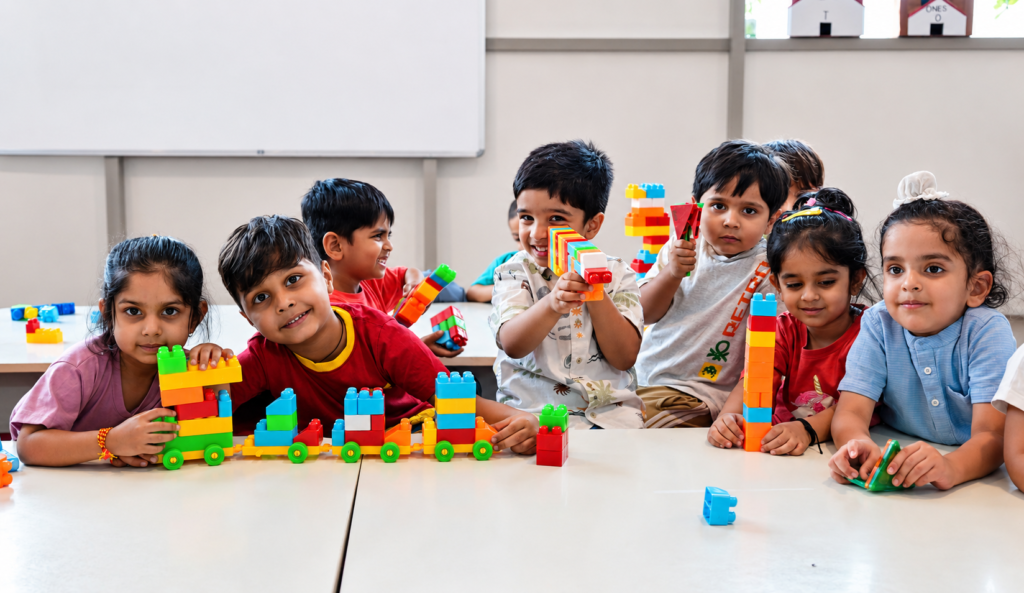
Children who regularly practice questioning grow into confident, independent thinkers. They learn to analyze information rather than just memorize it, a skill that matters far beyond school years.
This habit also strengthens the parent-child bond, since genuine curiosity-based conversations often reveal more about a child’s thinking than direct questions ever could.
Environments that encourage inquiry, whether at home or in the classroom, help children see learning as an ongoing conversation, not something that stops when the bell rings.
Infrastructure, facilities, and experienced teachers are a big asset to the learning & development of students, be it for Nursery, Primary or Senior children making Vega Schools the best schools in Gurgaon. For information about admission, please visit the Vega Schools campuses in Sector 48 and Sector 76 Gurugram. Get the best education for you child in New Gurgaon and be part of the top school infrastructure for sector 78, Sector 83, Sector 85, Sector 90, Sector 102, Sector 106 in Gurgaon, near Dwarka Expressway.
🧠 The Why Chain
Pick a topic and see how deep your curiosity can go!
Choose a topic to start questioning: