
- A dedicated reading nook does more than hold books, it signals to children that reading matters.
- When kids have a space that’s truly theirs, they return to it willingly.
- Here’s how to design one that works.
- Start With the Right Spot You don’t need a whole room.
- A window alcove, a quiet bedroom corner, or even the space under a staircase can become a cozy reading haven.
A dedicated reading nook does more than hold books, it signals to children that reading matters. When kids have a space that’s truly theirs, they return to it willingly. Here’s how to design one that works.
Start With the Right Spot
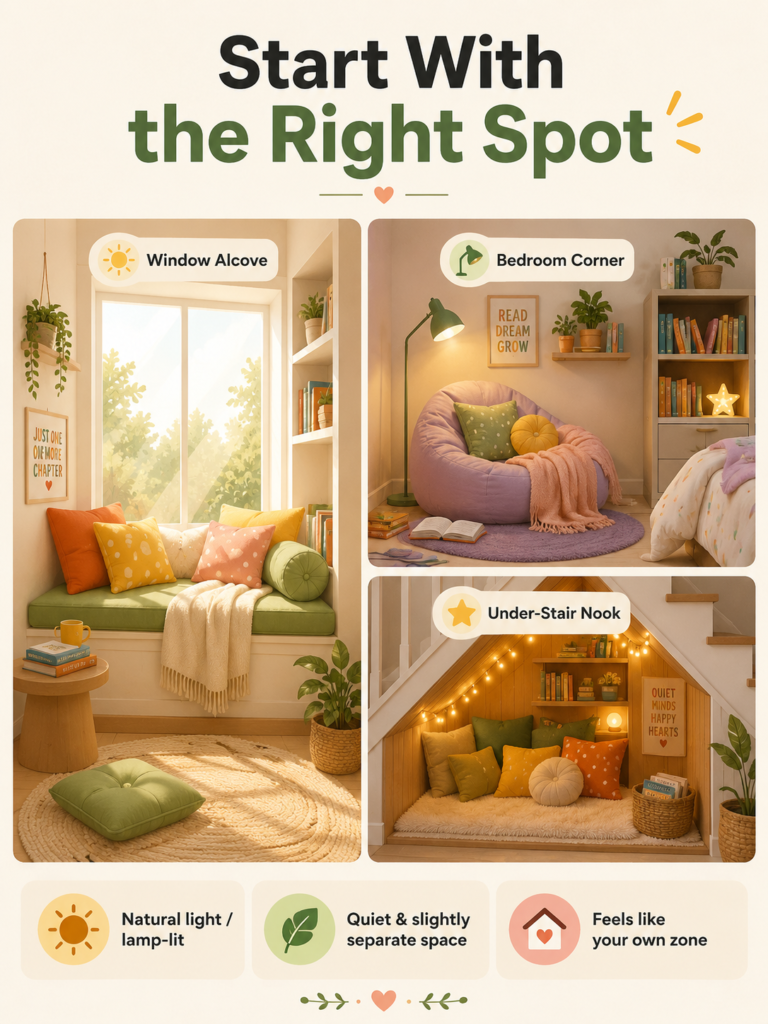
You don’t need a whole room. A window alcove, a quiet bedroom corner, or even the space under a staircase can become a cozy reading haven.
Look for a spot that is:
- Away from screens and noise
- Near natural light (or easy to lamp-light)
- Physically separate enough to feel like a “place”
Even a corner marked by a small rug creates psychological boundaries — children instantly recognise it as their reading zone.
Make Comfort Non-Negotiable
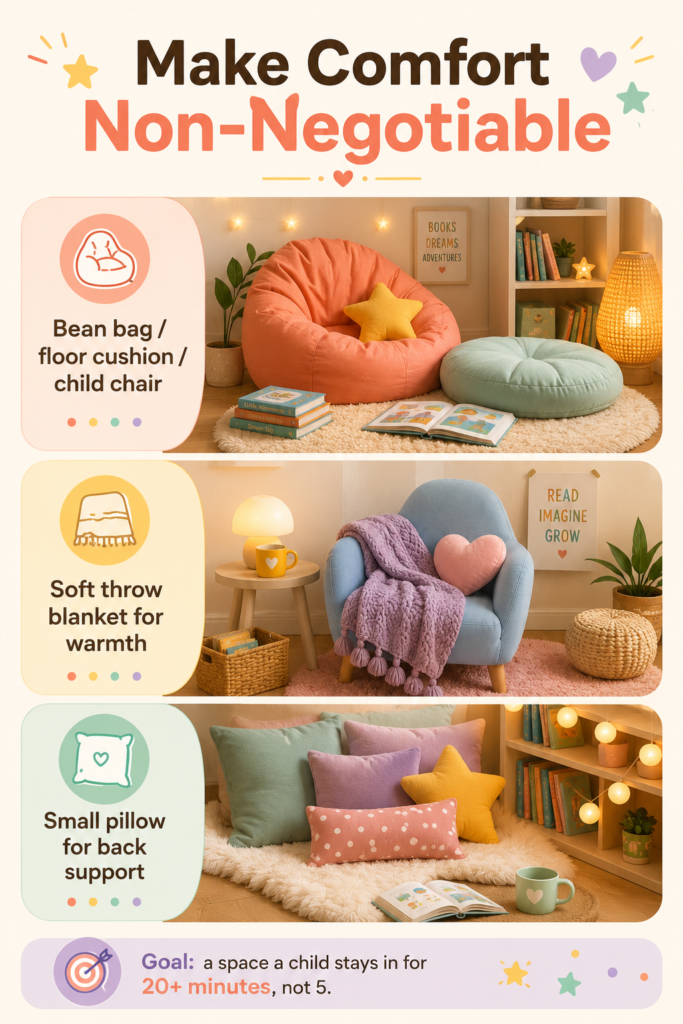
Kids won’t linger in an uncomfortable space. Layer in softness and warmth.
Must-haves:
- A bean bag, floor cushion, or child-sized chair
- A soft throw or blanket for curling up
- A small pillow for back support
The goal is a space where a child wants to stay for 20 minutes — not one they escape from after five.
Organise Books So They’re Irresistible
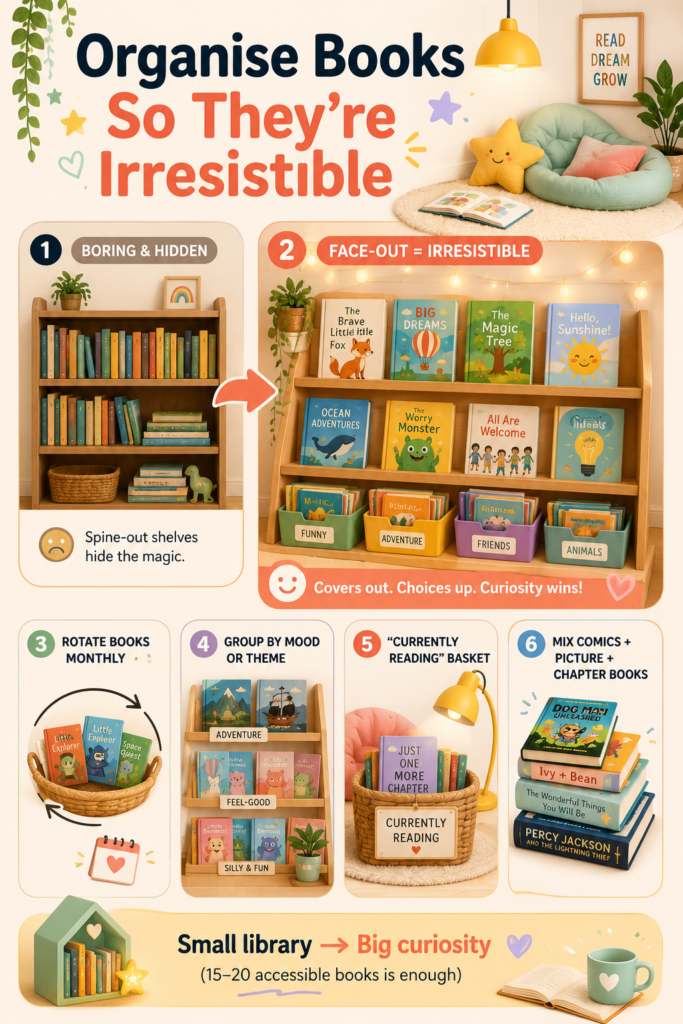
Spine-out shelving hides books. Face-out display shelves — where covers are visible — dramatically increase the chances a child picks something up.
Smart book organisation tips:
- Rotate books monthly to keep selections fresh
- Group by mood or theme, not just genre
- Keep a “currently reading” basket at eye level
- Mix comics, picture books, and chapter books freely
A small library of 15–20 accessible books beats a towering shelf of 100 hidden ones.
Light It Right
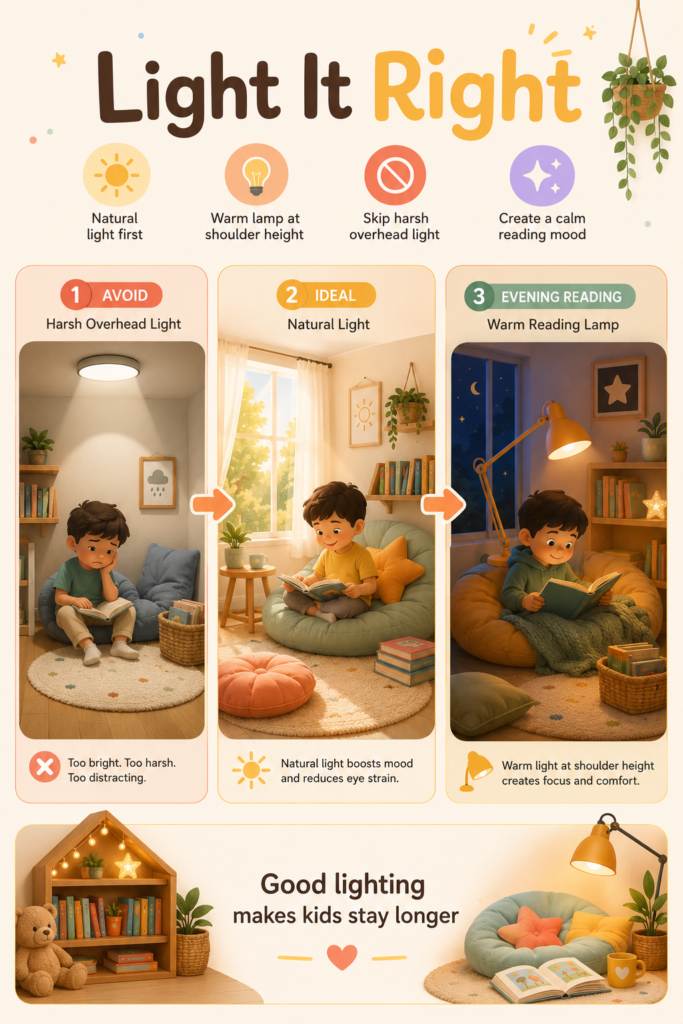
Poor lighting leads to eye strain — and an excuse to leave. Natural light is ideal, but a warm-toned reading lamp placed at shoulder height works beautifully for evenings.
Avoid harsh overhead lighting. A small adjustable lamp gives the space an intimate, focused feel that signals: this is a calm place.
Personalise It With Your Child
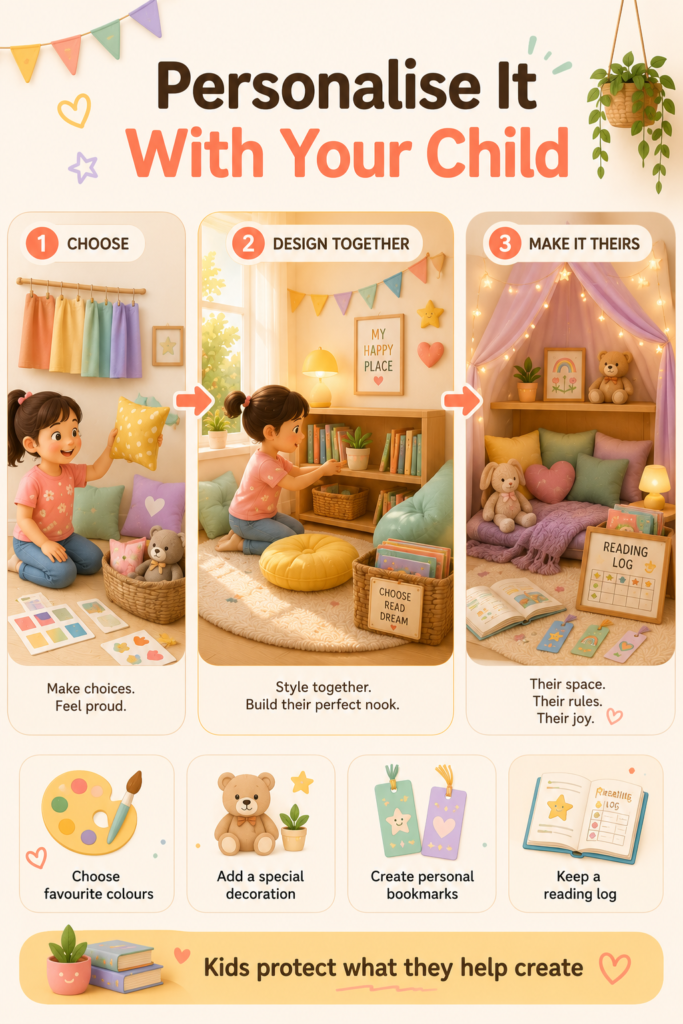
Ownership drives engagement. Let your child choose:
- A favourite colour for cushions or curtains
- A small decoration or stuffed animal for the corner
- Their own bookmarks and a personal reading log
When children help design their space, they protect it, use it, and take pride in it.
Reading Corner Essentials at a Glance
| Element | Why It Matters | Budget Option |
|---|---|---|
| Soft seating | Encourages longer reading sessions | Floor cushion or folded quilt |
| Face-out book display | Increases book selection | Wall-mounted ledge shelf |
| Warm lighting | Reduces eye strain | Clip-on or desk lamp |
| Personal touches | Builds ownership and routine | Drawings, name tag, bookmark |
| Minimal distractions | Maintains focus | Curtain divider or rug boundary |
A Few Finishing Touches
- A reading log or chart on the wall makes progress visible and motivating
- Audiobooks or soft background music can ease reluctant readers into the habit
- A small plant or fairy lights add magic without distraction
The best reading corner isn’t the most expensive one — it’s the one your child chooses to return to.
FAQs
Q1. How much space do I need for a reading corner? Even a 4×4 foot area is enough. A rug, a cushion, and a small shelf can transform any quiet corner into a functional literacy space.
Q2. What age is right to set up a reading corner? From toddlers onwards. Board books, picture books, and cozy seating can be introduced as early as age 2.
Q3. How do I keep my child interested in the reading corner? Rotate books regularly, let them personalise the space, and avoid placing screens nearby. Novelty and ownership are the two biggest motivators.
Q4. Should the reading corner have rules? Keep it simple — no screens, no loud toys. The corner should feel like a privilege, not a restriction.
Q5. Can a reading corner help with academic performance? Yes. Children who read independently for pleasure consistently show stronger vocabulary, comprehension, and writing skills across all subjects.
Infrastructure, facilities, and experienced teachers are a big asset to the learning & development of students, be it for Nursery, Primary or Senior children making Vega Schools the best schools in Gurgaon. For information about admission, please visit the Vega Schools campuses in Sector 48 and Sector 76 Gurugram. Get the best education for you child in New Gurgaon and be part of the top school infrastructure for sector 78, Sector 83, Sector 85, Sector 90, Sector 102, Sector 106 in Gurgaon, near Dwarka Expressway.