
- When your child fails a test or loses a match, is your instinct to fix it quickly, or to let them sit with it?
- But setbacks, handled the right way, aren’t obstacles to smooth over, they’re where real resilience gets built.
- Here’s why setbacks matter more than we often realise, and how to help kids bounce back rather than just cope.
- Coping vs Bouncing Back: What’s the Difference?
- Coping helps a child survive a difficult moment.
When your child fails a test or loses a match, is your instinct to fix it quickly, or to let them sit with it? Most parents lean toward the first. But setbacks, handled the right way, aren’t obstacles to smooth over, they’re where real resilience gets built.
Here’s why setbacks matter more than we often realise, and how to help kids bounce back rather than just cope.
Coping vs Bouncing Back: What’s the Difference?
Coping helps a child survive a difficult moment. Bouncing back helps them grow from it. The distinction matters because children who only learn to cope often avoid future risks, while those who learn to bounce back approach challenges with more confidence.
This is exactly why experiential learning school environments in Gurgaon build in real challenges and mistakes as part of the learning process, rather than shielding children from difficulty entirely.
Why Setbacks Are Actually Valuable
- They teach children that failure is survivable, not catastrophic.
- They build problem-solving skills that success alone rarely develops.
- They help children separate their effort from a single outcome.
- They create opportunities to practise emotional regulation in real time.
How to Help Kids Bounce Back From Setbacks
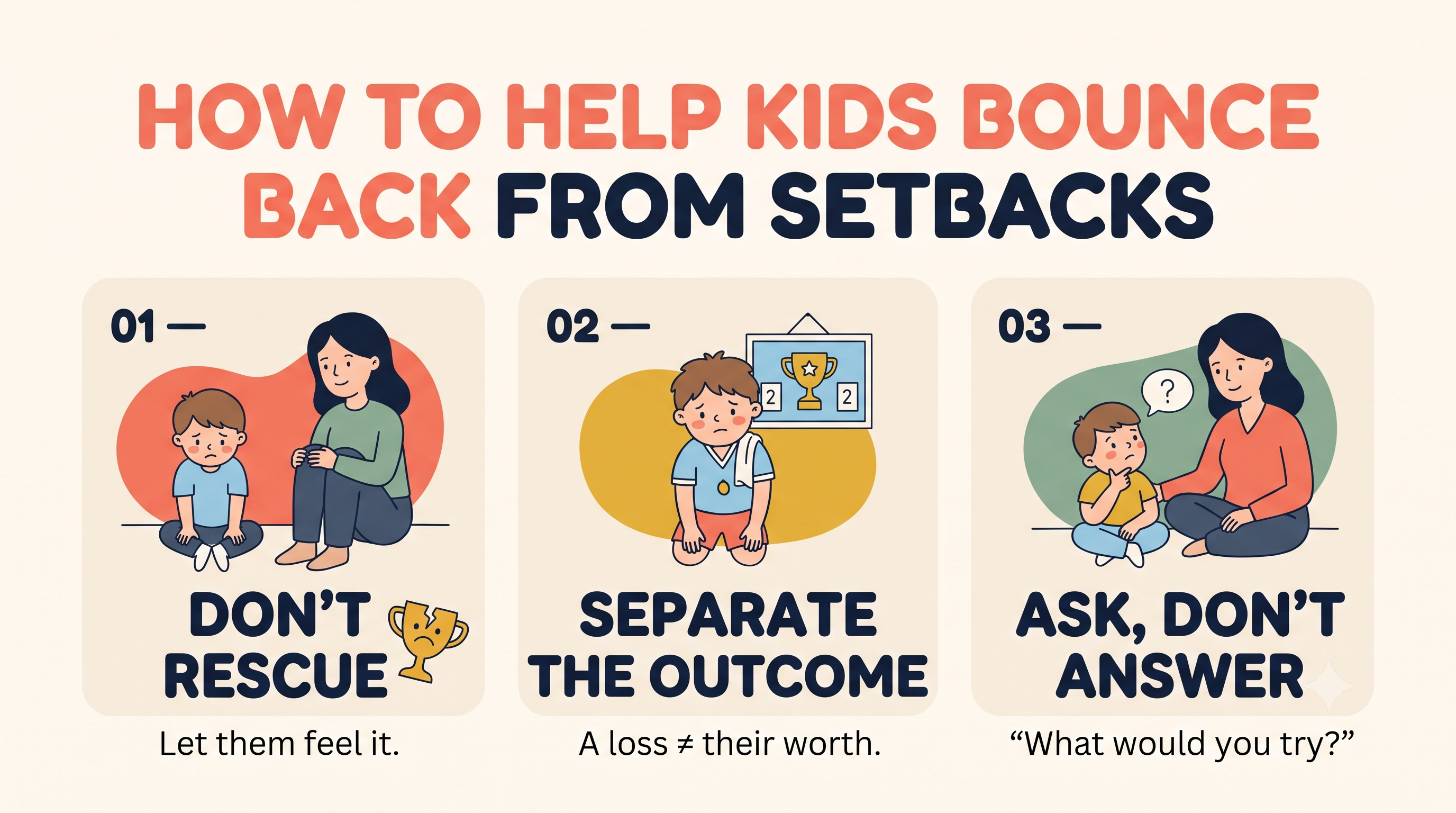
1. Resist the Urge to Rescue Immediately
Let your child sit with disappointment briefly before jumping in with solutions or comfort. This builds tolerance for difficult emotions.
2. Separate the Outcome From Their Worth
Say, “You lost the match” instead of “You’re not good at this.” Language shapes how children interpret setbacks.
3. Ask Reflective Questions
Try “What do you think happened?” or “What would you try differently?” instead of offering immediate answers.
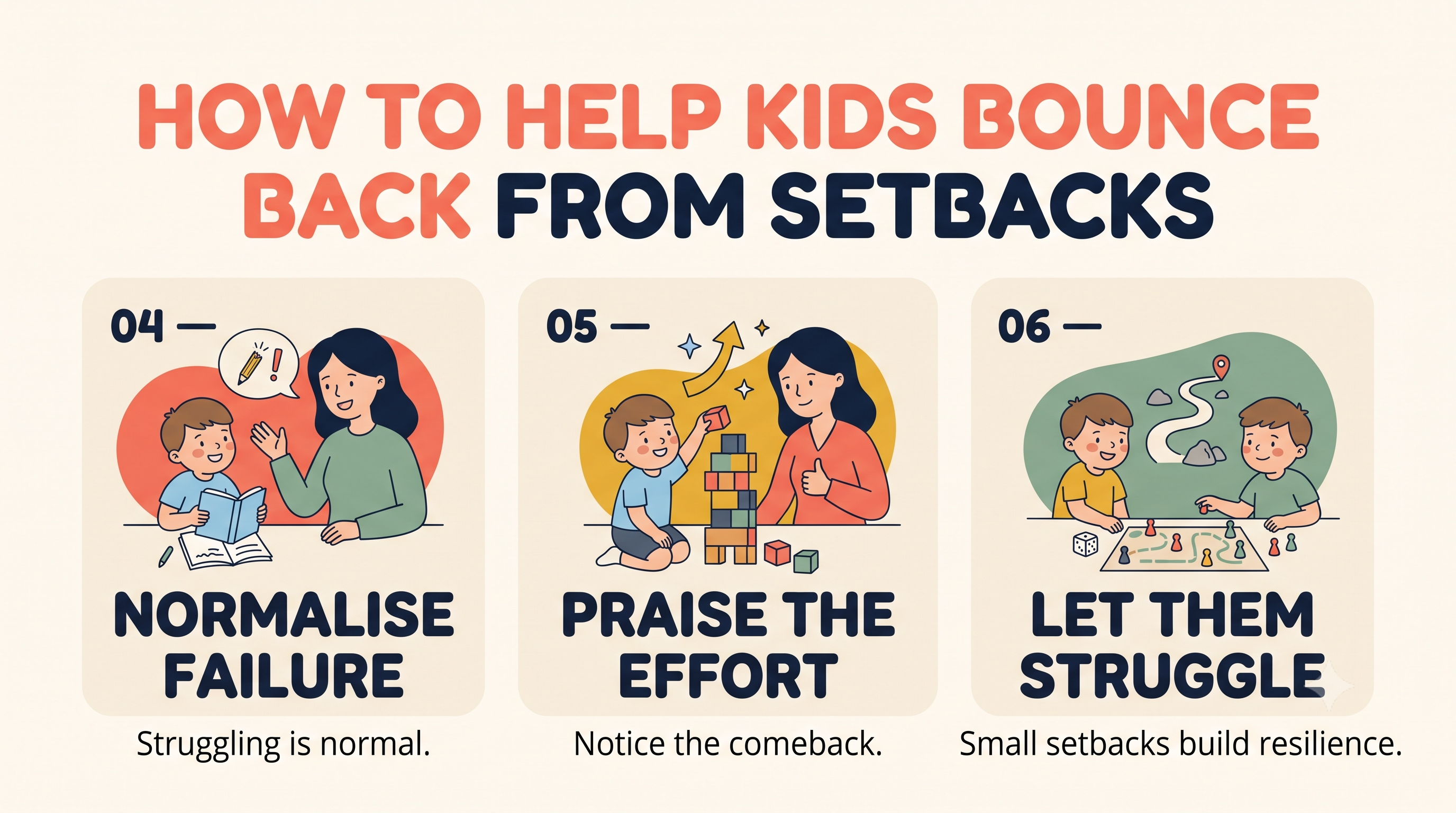
4. Normalise Failure as Part of Learning
Share your own setbacks occasionally, this shows children that struggling is a normal, shared human experience.
5. Praise the Attempt to Recover, Not Just the Comeback
Notice effort during the bounce-back process itself, not only the eventual success.
6. Avoid Overprotecting From Manageable Struggles
Small, safe setbacks, like losing a board game, help children build tolerance before facing bigger ones.
Quick Reference: Coping Response vs Bounce-Back Response
| Situation | Coping Response | Bounce-Back Response |
|---|---|---|
| Failed test | “It’s okay, don’t worry about it” | “What part felt hardest? Let’s look at it together” |
| Lost a game | Quickly distracting them | Letting them sit with disappointment briefly |
| Rejected idea | Immediately offering a fix | Asking what they’d try differently |
Why This Skill Matters Long-Term
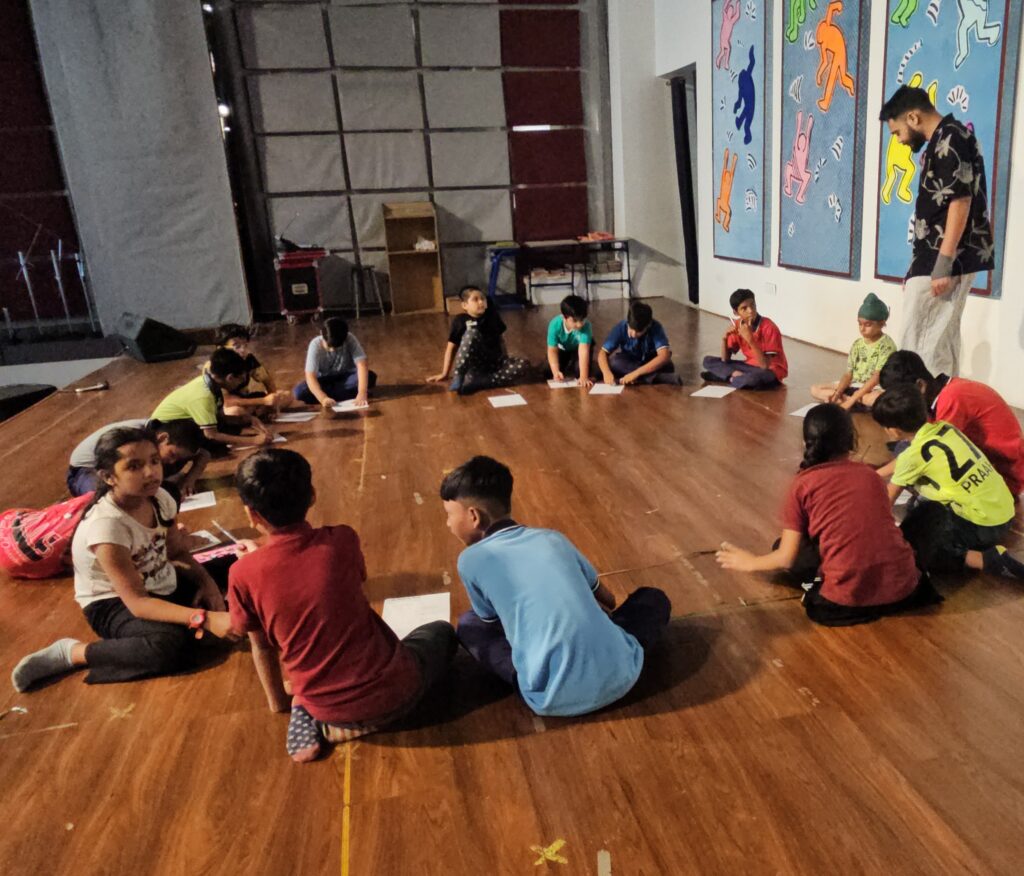
Children who learn to bounce back from setbacks develop stronger emotional regulation, persistence, and self-belief. These traits matter far beyond childhood, shaping how they handle academic pressure, relationships, and career challenges later in life.
This mirrors how a project based learning school approach works, allowing students to encounter real obstacles and work through them, rather than avoiding difficulty altogether.
A Vega School Perspective
At Vega School, a progressive CBSE school in Gurgaon with campuses in Sector 48 and Sector 76 Gurugram, learners are encouraged to view setbacks as part of the learning process, building genuine resilience rather than simply teaching them to cope and move on.
FAQs
1. At what age should children start learning to handle setbacks?
Children as young as 4–5 can begin learning resilience through small, everyday disappointments and challenges.
2. Isn’t it better to protect my child from failure?
Shielding children from all failure often prevents them from building the resilience needed for bigger challenges later.
3. My child gets very upset after setbacks. How do I help?
Allow space for their emotions first, then gently guide reflection once they’ve calmed down.
4. How is resilience different from just “toughening up”?
Resilience involves genuine emotional processing and learning, not suppressing feelings or ignoring difficulty.
5. How do schools help children build resilience?
Progressive CBSE schools in Gurgaon that use experiential, challenge-based learning help children build resilience through real, manageable setbacks.
Curious how Vega School helps learners build genuine resilience? Explore admissions at Vega School, a progressive CBSE school in Gurgaon with campuses in Sector 48 and Sector 76 Gurugram.