
- Friendships in childhood aren’t just about fun, they’re foundational.
- The peer connections children build in their early and middle school years shape their emotional intelligence, communication skills, and even their academic confidence.
- Yet for many kids, making and keeping friends doesn’t come naturally.
- The right guidance from parents and educators can make all the difference.
- Why Peer Connections Matter More Than We Realise Strong friendships help children develop empathy, resilience, and a sense of belonging.
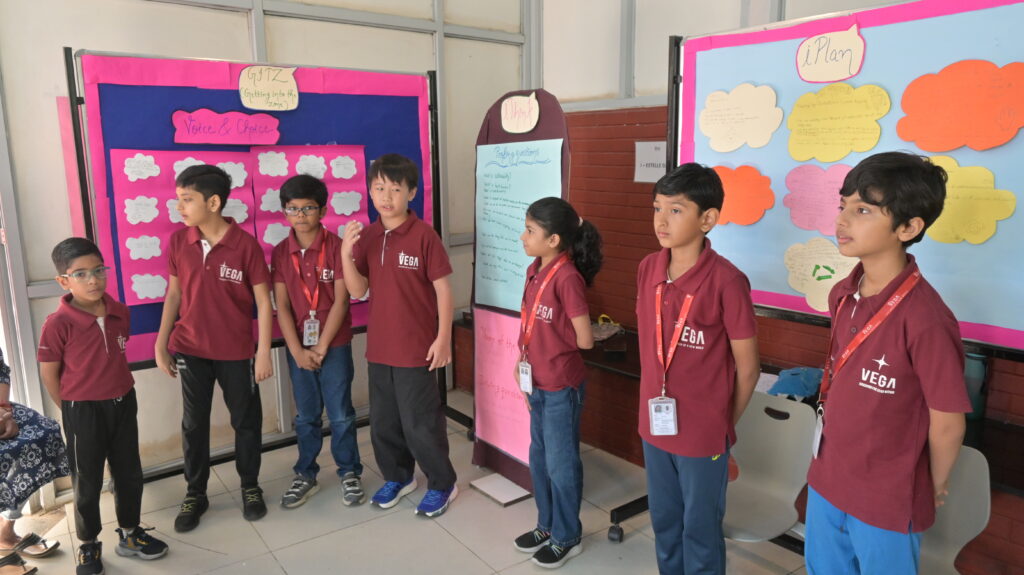
Friendships in childhood aren’t just about fun, they’re foundational. The peer connections children build in their early and middle school years shape their emotional intelligence, communication skills, and even their academic confidence. Yet for many kids, making and keeping friends doesn’t come naturally. The right guidance from parents and educators can make all the difference.
Why Peer Connections Matter More Than We Realise
Strong friendships help children develop empathy, resilience, and a sense of belonging. Moreover, research shows that children with healthy peer relationships tend to perform better academically and experience lower levels of anxiety.
A child who feels socially connected is also more likely to enjoy school, participate in class, and bounce back from setbacks. In short, friendship is a life skill — and it can absolutely be nurtured.
What Gets in the Way of Friendship?
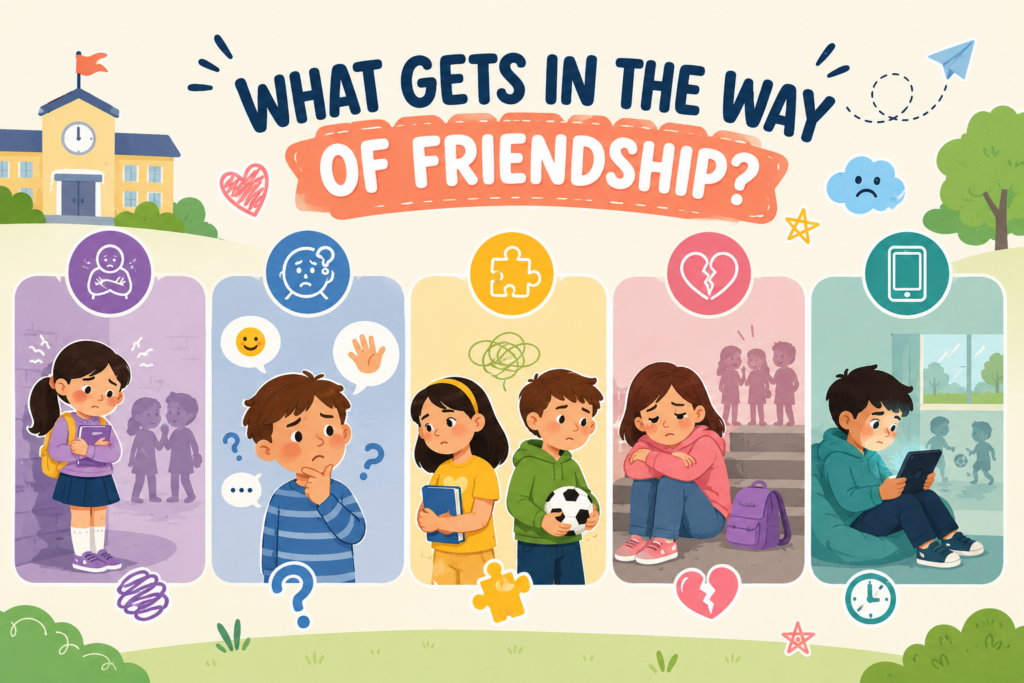
Before jumping to strategies, it helps to understand common barriers. Many children struggle with peer connections because of:
- Shyness or social anxiety
- Difficulty reading social cues
- Limited shared interests with classmates
- Past experiences of rejection or exclusion
- Too much screen time replacing face-to-face interaction
Identifying the specific barrier helps parents and teachers respond with the right support rather than generic advice.
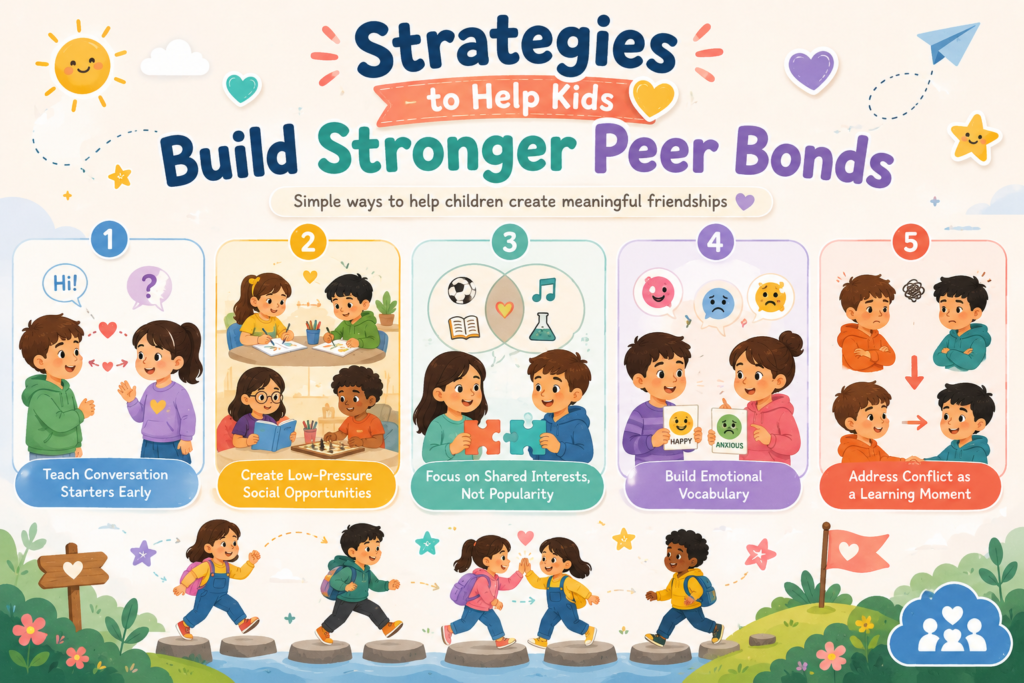
Strategies to Help Kids Build Stronger Peer Bonds
1. Teach Conversation Starters Early
Many children simply don’t know how to begin. Practise simple openers at home: “What game do you like?” or “Can I join you?” Role-playing these scenarios builds real confidence before the moment actually arrives.
2. Create Low-Pressure Social Opportunities
One-on-one playdates are far less overwhelming than group settings for shy children. Start small — invite one classmate for an activity your child already enjoys. Familiarity reduces anxiety and allows genuine connection to form naturally.
3. Focus on Shared Interests, Not Popularity
Help your child find peers who share their passions — art, sport, books, music. Friendships built on common ground tend to be deeper and more lasting than those based purely on proximity or social status.
4. Build Emotional Vocabulary
Children who can name and express their feelings are better equipped to navigate friendship challenges. Regularly ask your child how interactions made them feel — not just what happened. This builds the emotional awareness that sustains relationships over time.
5. Address Conflict as a Learning Moment
Disagreements between friends are normal — and actually valuable. Instead of stepping in immediately, guide your child through conflict resolution: “What do you think your friend was feeling? What could you do differently?” This builds problem-solving skills that strengthen bonds long-term.
What Parents and Schools Can Do Together
| Area | What Parents Can Do | What Schools Can Do |
|---|---|---|
| Social skills | Role-play conversations at home | Run structured peer interaction activities |
| Confidence | Celebrate small social wins | Pair shy students with supportive peers |
| Conflict resolution | Coach through disagreements calmly | Facilitate guided peer mediation |
| Shared interests | Encourage hobby-based friendships | Offer diverse clubs and group projects |
When home and school work in alignment, children receive consistent support — and friendships flourish far more naturally.
A Note on Introverted Children
Not every child needs a large social circle. Some children thrive with one or two close, trusted friends. The goal isn’t to make every child outgoing — it’s to ensure every child feels genuinely connected to at least one peer who understands them.
Quality, always, over quantity.
FAQs
Q: At what age should children start forming real friendships? Meaningful peer bonds typically begin forming around ages 4–6, deepening significantly between ages 8–12 as children develop empathy and shared interests.
Q: What if my child says they have no friends? Take it seriously without panicking. Talk openly, observe social patterns, and consider speaking with their class teacher to understand the school-side picture.
Q: Can friendships be taught? The skills that enable friendship — empathy, communication, conflict resolution — absolutely can be taught and practised at home and school.
Q: How much should parents intervene in children’s friendships? Guide and coach rather than manage. Children need space to navigate peer dynamics, but they also need adults nearby to help them make sense of what they experience.
Q: Is it normal for childhood friendships to change frequently? Completely. Friendship groups shift as children grow, discover new interests, and move between classes. Reassure your child that this is a normal and healthy part of growing up.
Infrastructure, facilities, and experienced teachers are a big asset to the learning & development of students, be it for Nursery, Primary or Senior children making Vega Schools the best schools in Gurgaon. For information about admission, please visit the Vega Schools campuses in Sector 48 and Sector 76 Gurugram. Get the best education for you child in New Gurgaon and be part of the top school infrastructure for sector 78, Sector 83, Sector 85, Sector 90, Sector 102, Sector 106 in Gurgaon, near Dwarka Expressway.