
- Most children begin a new school term with genuine enthusiasm — new notebooks, fresh uniforms, and quiet determination.
- But without direction, that energy fades within weeks.
- The difference between a term that feels purposeful and one that drifts?
- A conversation about goals before it begins.
- Goal setting isn’t a corporate exercise.
Most children begin a new school term with genuine enthusiasm — new notebooks, fresh uniforms, and quiet determination. But without direction, that energy fades within weeks. The difference between a term that feels purposeful and one that drifts? A conversation about goals before it begins.
Goal setting isn’t a corporate exercise. Done right, it’s one of the most powerful confidence-building tools a parent can give a child.
Why “Try Harder” Is Not a Goal
Before diving into how, it’s worth addressing what goal setting is not. Vague intentions like “do better in studies” or “be more focused” give children nothing concrete to act on. They create pressure without direction — and when results don’t improve, children blame themselves rather than the lack of a plan.
Effective goals are specific, personal, and within the child’s control. Not “score higher,” but “revise each chapter within two days of learning it.” Not “be more organised,” but “pack my bag the night before school every day.”
The shift from outcome to behaviour is everything.
Start With a Conversation, Not a Checklist
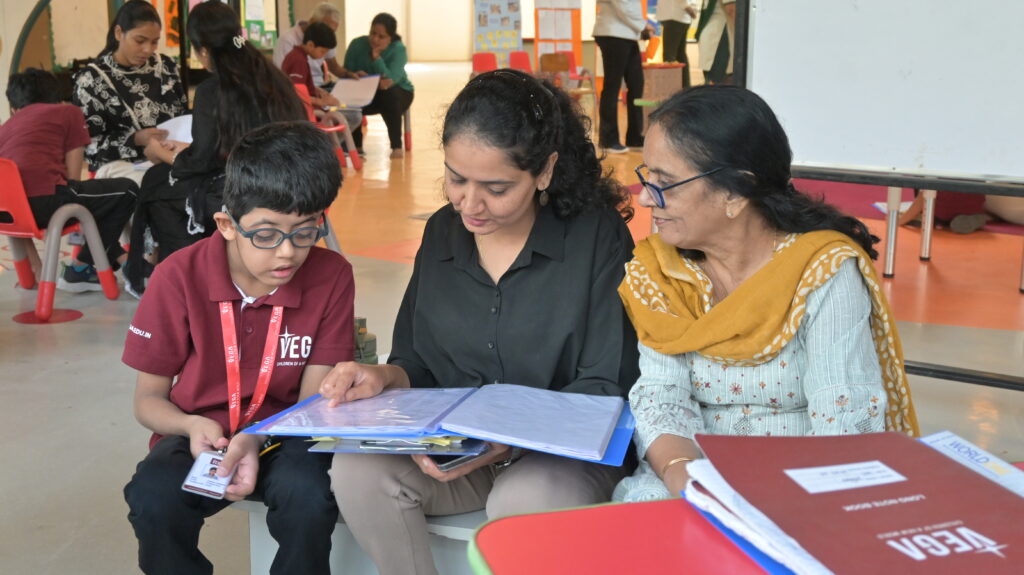
Resist the urge to hand your child a list of goals you’ve prepared. Instead, open a relaxed conversation — over a meal, during a drive, or before bed — with a few simple questions:
- What’s one thing from last term you wish had gone differently?
- Is there a subject or activity you’d like to get better at this term?
- What would make you feel proud of yourself by the end of the term?
Let them answer without interruption. You’ll likely hear something honest and far more motivating than anything you’d have suggested.
The Three Types of Goals Worth Setting
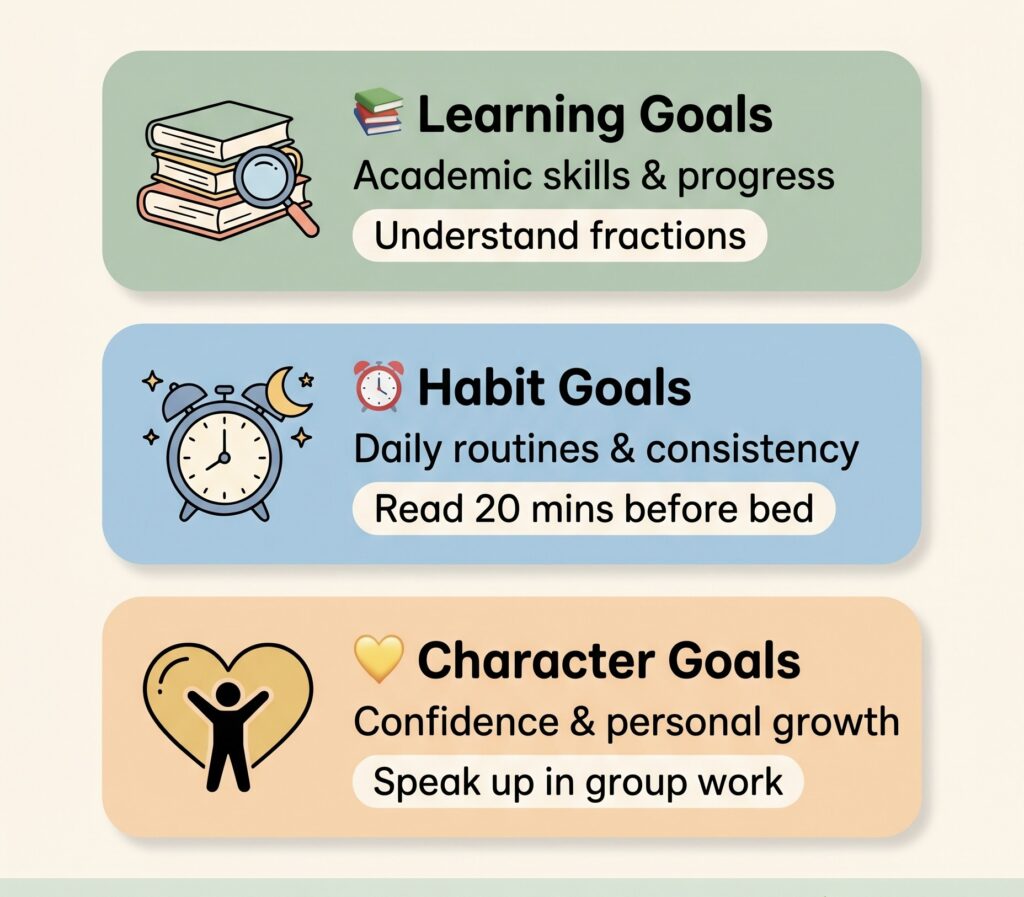
Encourage your child to think across three areas, not just academics:
| Goal Type | What It Covers | Example |
|---|---|---|
| Learning | Academic skills and subject growth | “Understand fractions before moving on” |
| Habits | Daily routines and self-management | “Read for 20 minutes before sleep” |
| Character | Social, emotional, personal growth | “Speak up more during group work” |
One goal per category is enough. Three focused intentions beat a long list that gets abandoned by Week 2.
How to Frame Goals Positively
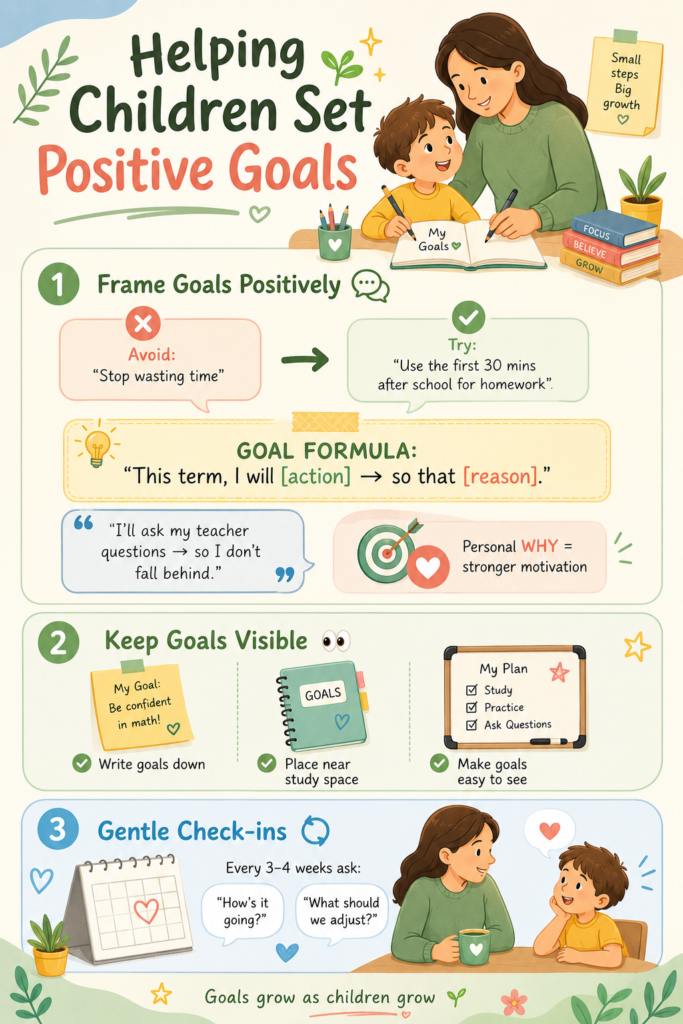
The language around goals matters more than most parents realise. Negative framing (“stop wasting time”) activates shame. Positive framing (“use the first 30 minutes after school for homework”) creates a clear, doable action.
Help your child reframe their goals using this simple structure:
“This term, I will [specific action] so that [meaningful reason].”
For example: “This term, I will ask my teacher when I don’t understand something, so that I don’t fall behind.”
When a goal has a personal why attached to it, children are far more likely to return to it when motivation dips.
Keep Goals Visible and Revisited
Write the goals down together — on a sticky note, a journal page, or a small whiteboard near their study space. Visibility matters. A goal filed away in memory is easy to forget; one on the wall becomes a quiet daily reminder.
Plan a brief check-in every three to four weeks. Not to evaluate or judge, but to ask: How’s this going? Does anything need adjusting? Goals aren’t meant to be rigid — they’re meant to evolve as your child does.
FAQs
Q1. At what age can children start setting their own goals? Children as young as six can set simple, meaningful goals with parental guidance. The language and complexity should match their age, but the habit can begin early.
Q2. What if my child’s goals seem too small or too easy? Let them be. Small wins build the confidence and momentum needed for bigger challenges. Resist the urge to raise the bar before they’ve crossed it.
Q3. How many goals should a child set per term? Three is ideal — one each for learning, habits, and character. More than five becomes overwhelming and reduces follow-through.
Q4. What if my child loses interest in their goals mid-term? Revisit the goal together and ask if it still feels relevant. It’s okay to adjust or replace a goal — what matters is staying engaged with the process.
Q5. Should parents set goals alongside their children? Yes, whenever possible. When children see parents setting and working toward personal goals, it normalises the practice and makes it feel less like a school task.
Infrastructure, facilities, and experienced teachers are a big asset to the learning & development of students, be it for Nursery, Primary or Senior children making Vega Schools the best schools in Gurgaon. For information about admission, please visit the Vega Schools campuses in Sector 48 and Sector 76 Gurugram. Get the best education for you child in New Gurgaon and be part of the top school infrastructure for sector 78, Sector 83, Sector 85, Sector 90, Sector 102, Sector 106 in Gurgaon, near Dwarka Expressway.