
- The new academic year is the perfect reset button — not just for backpacks and bedtimes, but for screen habits too.
- If summer left your child glued to a device for hours on end, you’re not alone.
- In fact, most families struggle with this exact transition.
- A few intentional changes made right now can set a genuinely healthier tone for the entire year ahead.
- Why Screen Boundaries Matter More During the School Year Unstructured screen time in summer is one thing.
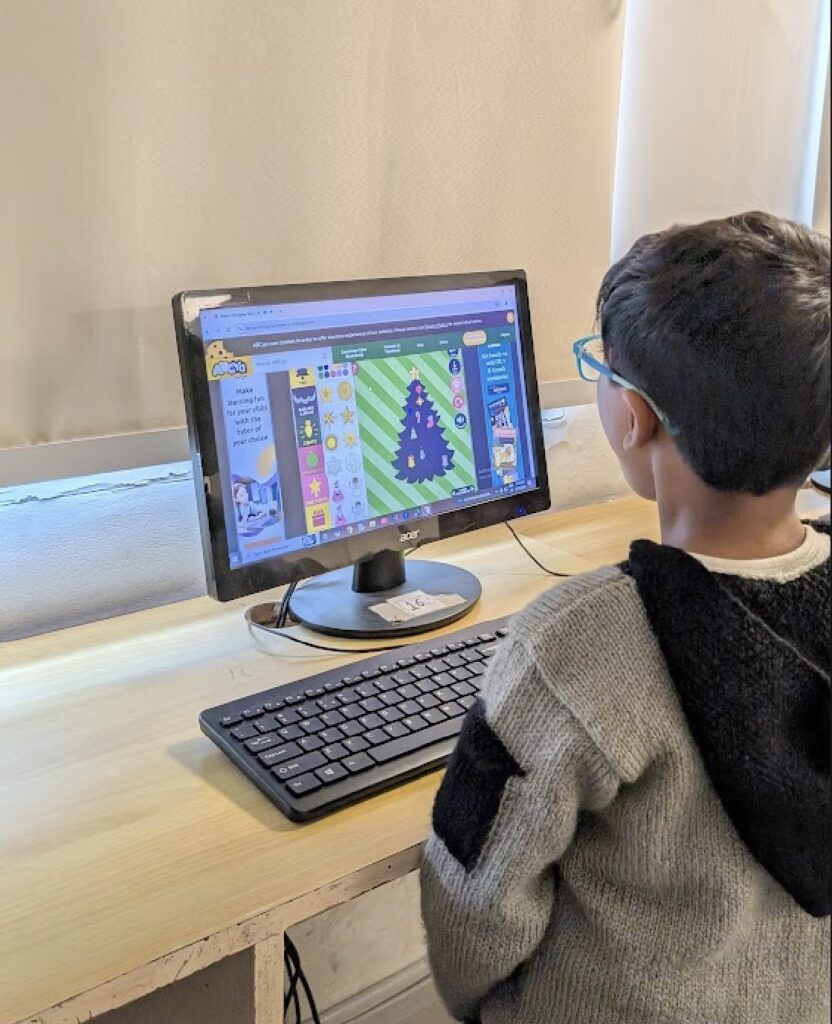
The new academic year is the perfect reset button — not just for backpacks and bedtimes, but for screen habits too. If summer left your child glued to a device for hours on end, you’re not alone. In fact, most families struggle with this exact transition. The good news? A few intentional changes made right now can set a genuinely healthier tone for the entire year ahead.
Why Screen Boundaries Matter More During the School Year
Unstructured screen time in summer is one thing. However, carrying those habits into the school year affects sleep, focus, and emotional regulation — all things that directly impact how a child learns, retains information, and performs under pressure.
Research consistently shows that children with structured screen limits sleep more soundly, concentrate better in class, and demonstrate stronger emotional balance. Therefore, the goal here isn’t to eliminate screens entirely — it’s to make screen time intentional rather than habitual.
Step-by-Step: Resetting Digital Habits Before School Starts
Start With What You Can Measure
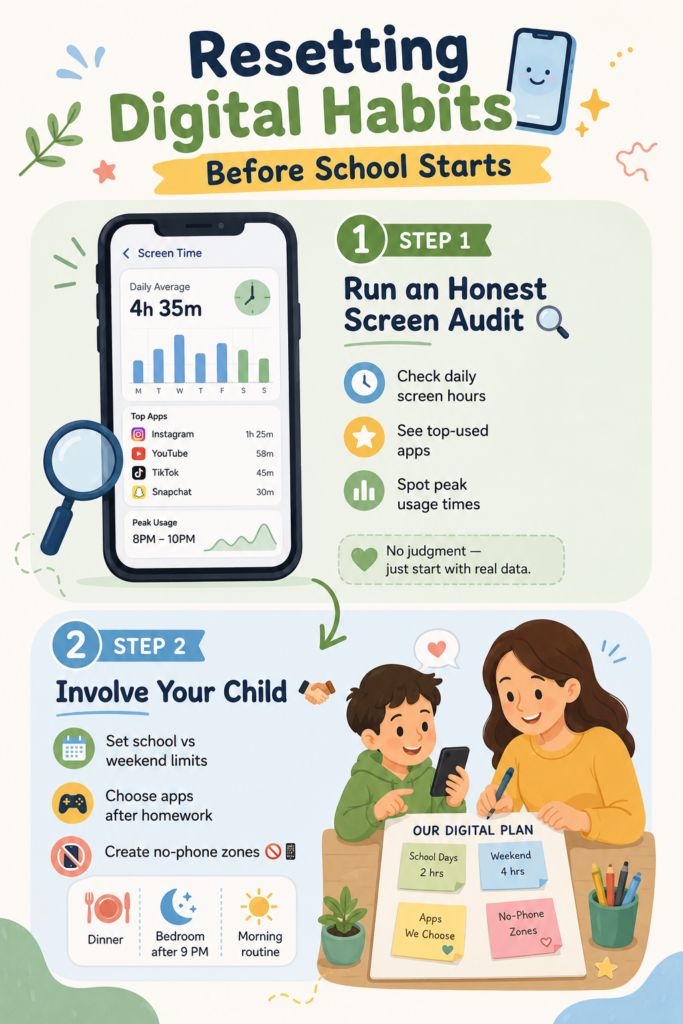
Step 1: Run an Honest Screen Audit
Before writing any new rules, look at current usage patterns. Most devices have built-in screen time reports under settings. Simply review total daily hours, top apps used, and peak usage windows across the week. No judgment — just honest data to work from as a clear starting point.
Step 2: Involve Your Child in the Process
Rules that kids help create are rules kids actually follow. So sit down together and agree on:
- Daily screen time limits for school days versus weekends
- Which apps are acceptable after homework is done
- Clear no-phone zones: the dinner table, bedroom after 9 PM, and morning routines before school
Then Build Structure Around the Day
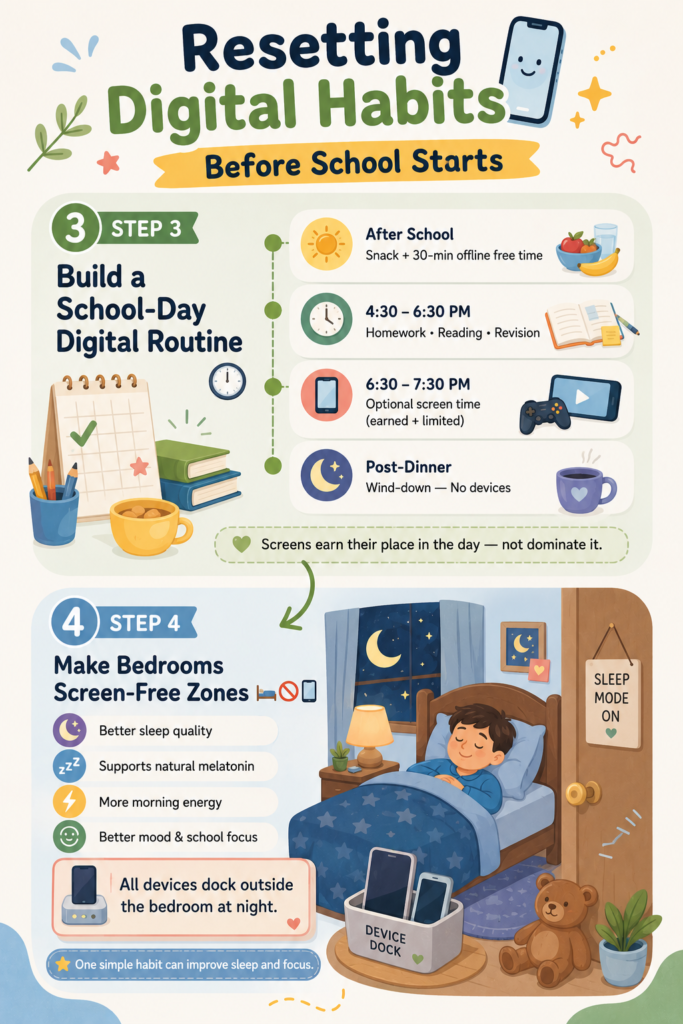
Step 3: Build a School-Day Digital Routine
A clear daily structure removes the need for negotiation every single evening. Here’s a simple framework to adapt for your family:
| Time Slot | Activity |
|---|---|
| After school | Snack + 30-min offline free time |
| 4:30 – 6:30 PM | Homework, reading, revision |
| 6:30 – 7:30 PM | Optional screen time (earned, limited) |
| Post-dinner | Wind-down — no devices at all |
Essentially, screens earn their place in the day rather than dominating it by default.
Step 4: Make Bedrooms Screen-Free Zones
This single change can genuinely transform sleep quality for children and teenagers alike. Blue light from screens suppresses melatonin production and delays natural sleep onset. As a result, a consistent household rule — all devices dock outside the bedroom at night — pays real dividends in morning energy, mood stability, and school-day focus.
Address Resistance Before It Starts
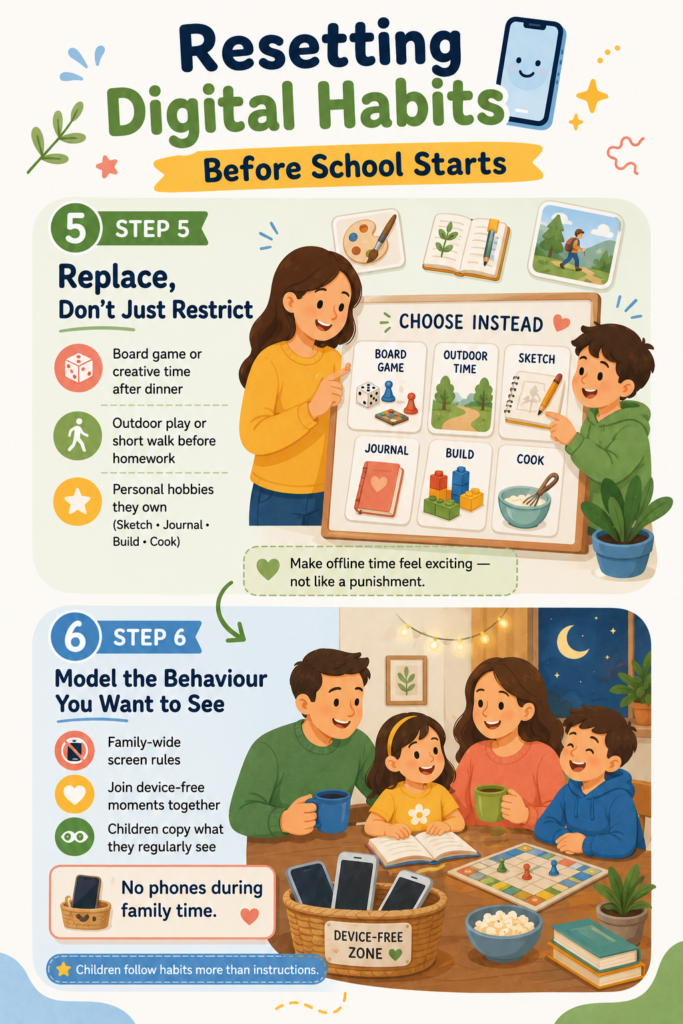
Step 5: Replace, Don’t Just Restrict
Children instinctively resist blanket bans. Instead, they respond far better to engaging alternatives. So rather than simply saying no, make offline time genuinely appealing:
- A favourite board game or creative kit after dinner
- Outdoor time or a short walk before homework begins
- A personal hobby they can own independently — sketching, journaling, building, or cooking
Step 6: Model the Behaviour You Want to See
If your phone is constantly in hand during family time, screen rules lose credibility almost immediately. Therefore, set family-wide norms — not just child-specific ones. When parents actively participate in device-free windows, children follow far more willingly.
Step 7: Review Weekly and Adjust as Needed
Finally, what works well in Week 1 may genuinely need tweaking by Week 3. Build in a brief weekly family check-in — ten minutes is enough — to discuss what’s working, what’s creating friction, and what small adjustments to make. Consistency, after all, matters more than perfection.
Signs the Reset Is Actually Working
Once you’ve made these changes, watch for these positive signals:
- Falling asleep faster and waking up without a daily battle
- Noticeably less irritability when devices are put away
- More spontaneous reading, outdoor play, or creative activity
- Sharper, more sustained focus during homework time
Quick Tip: Younger Kids vs Teens
Ages 6–10: Visual countdown timers work well. Seeing time run out feels fairer to younger children than being cut off suddenly mid-activity.
Pre-teens and teens: Meanwhile, give them meaningful ownership of their own screen schedule within agreed boundaries. Autonomy builds genuine responsibility — not resentment.
Infrastructure, facilities, and experienced teachers are a big asset to the learning & development of students, be it for Nursery, Primary or Senior children making Vega Schools the best schools in Gurgaon. For information about admission, please visit the Vega Schools campuses in Sector 48 and Sector 76 Gurugram. Get the best education for you child in New Gurgaon and be part of the top school infrastructure for sector 78, Sector 83, Sector 85, Sector 90, Sector 102, Sector 106 in Gurgaon, near Dwarka Expressway.