
- Here’s something no teacher training programme really prepares you for: the moment a student shuts down completely — arms crossed, eyes down, done — and you have to decide in real time whether to push through the lesson or stop and actually see them.
- And it’s the most important thing that happens in a classroom all day.
- You can’t schedule empathy for a Thursday afternoon and tick it off the list.
- It lives in the small moments — the way a teacher responds when a student gets something wrong, whether a child feels safe saying “I don’t understand.” Teachers who build genuinely kind classrooms don’t do it through grand gestures.
- They do it through consistent, quiet habits that signal to every student: you matter here.
Here’s something no teacher training programme really prepares you for: the moment a student shuts down completely — arms crossed, eyes down, done — and you have to decide in real time whether to push through the lesson or stop and actually see them.
That decision? That’s empathy in action. And it’s the most important thing that happens in a classroom all day.
Empathy Isn’t a Lesson Plan. It’s a Climate.
You can’t schedule empathy for a Thursday afternoon and tick it off the list. It lives in the small moments — the way a teacher responds when a student gets something wrong, whether a child feels safe saying “I don’t understand.”
Teachers who build genuinely kind classrooms don’t do it through grand gestures. They do it through consistent, quiet habits that signal to every student: you matter here.
Start with these:
- Use a student’s name when they seem withdrawn — it pulls people back into the room
- Say “I hear you” before jumping to a solution or consequence
- Acknowledge collective stress: “I know this week has been hard for a lot of us”
That last one costs nothing and means everything.
6 Things That Actually Work
1. Morning Check-In Circles Five minutes. Students share one word, colour, or emoji reflecting how they’re walking into the day. It sounds small — until a usually-bubbly child says “grey” and you catch something early.
2. Perspective-Taking Activities Take a story, news clip, or historical moment and ask: “How do you think that person felt? Why might they feel that way?” You’re building emotional reasoning — a skill most adults are still developing.
3. Empathy Journals Weekly entries about a moment students noticed someone struggling — and what they did, or wished they’d done. Quiet, personal, and surprisingly powerful even for older students.
4. Conflict Resolution Sentence Stems Teach students a structure for disagreements:
- “When you said ___, I felt ___.”
- “What I need from you is ___.”
Conflict stops being something to punish and starts being something to navigate.
5. Kindness Challenges Monthly, low-key, completely voluntary. Leave a note, include someone on the edges, compliment someone unexpected. The voluntary part matters — assigned kindness rings hollow.
6. Books With Real Emotional Weight Stories are the oldest empathy tool humans have. After reading, ask: “How did that character feel — and have you ever felt anything like that?” Skip the plot summary. Go straight to the feeling.
The Difference It Makes — Side by Side
| Traditional Classroom | Empathy-Centred Classroom |
| Behaviour correction is the goal | Understanding why comes first |
| “Stop crying, get on with it” | “I can see you’re upset — let’s talk” |
| Students compete against each other | Students look out for each other |
| Silence means compliance | Speaking up feels safe |
What Schools Like Vega Schools Gurgaon Understand
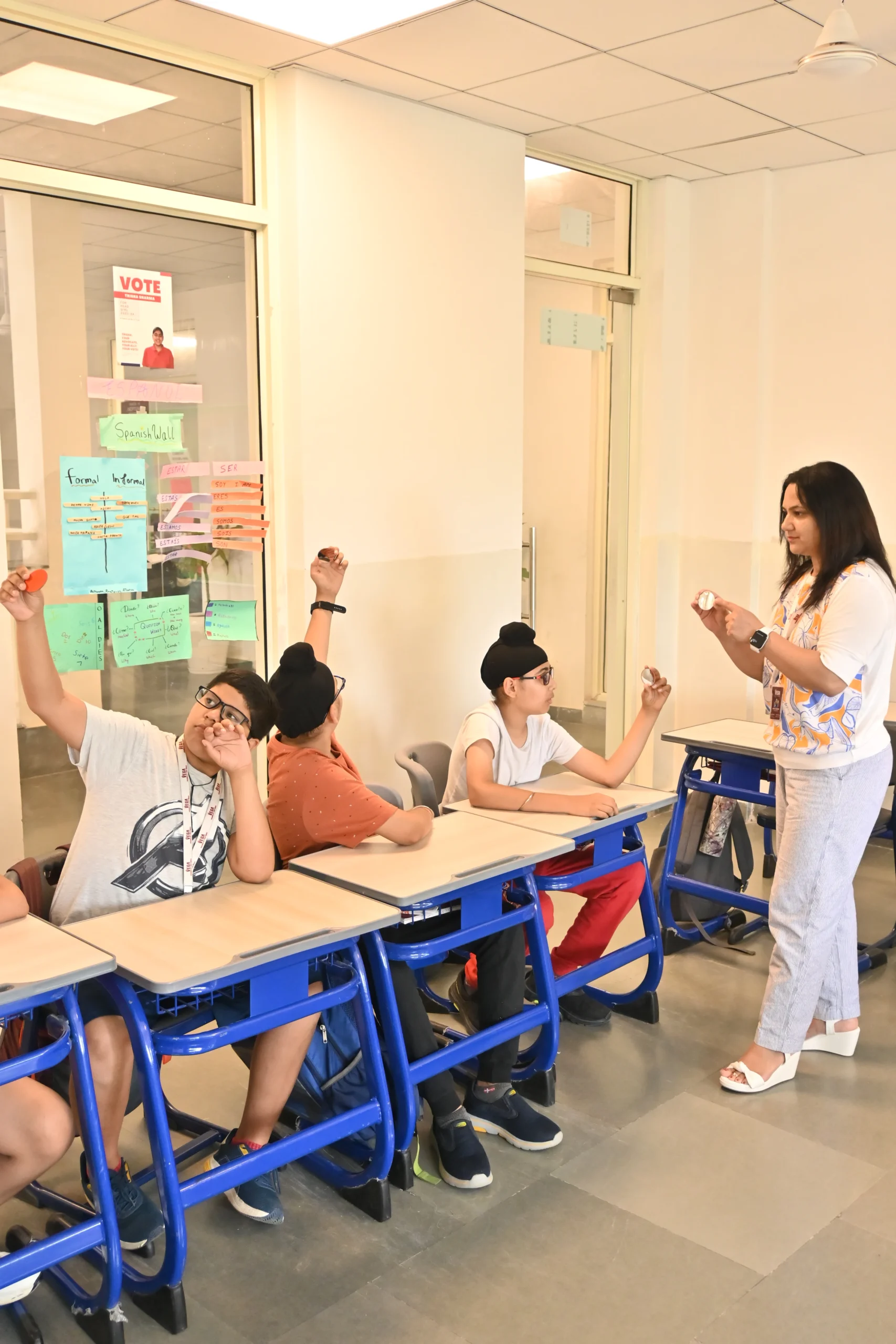
In Gurgaon’s increasingly competitive academic environment, the schools making a real difference aren’t just focused on grades — they’re focused on the whole child. At Vega Schools, Gurgaon, social-emotional learning and empathy-first classroom culture are woven into daily school life, not treated as an afterthought.
When children feel emotionally safe, they learn better. That’s not idealism — it’s backed by research and increasingly visible in schools that prioritise it.
FAQs
1. Can empathy genuinely be taught, or is it just personality?
It’s absolutely a skill — built through practice, modelling, and reflection. Structured activities make a measurable difference over time.
2. How early should this start?
Preschool. Young children are naturally curious about feelings and respond beautifully to simple emotion-naming activities.
3. What if a student refuses to engage?
Don’t push. Offer quieter alternatives — journaling, written reflections. Resistance is usually about safety, not stubbornness.
4. Does this take away from academic time?
Barely — most practices take 5–10 minutes. Emotionally safe classrooms have fewer disruptions and more actual learning time overall.
5. How do I involve parents?
Share monthly kindness challenges via newsletters. Consistent language between school and home makes everything stick faster.
infrastructure, facilities, and experienced teachers are a big asset to the learning & development of students, be it for Nursery, Primary or Senior children making Vega Schools the best schools in Gurgaon. For information about admission, please visit the Vega Schools campuses in Sector 48 and Sector 76 Gurugram. Get the best education for you child in New Gurgaon and be part of the top school infrastructure for sector 78, Sector 83, Sector 85, Sector 90, Sector 102, Sector 106 in Gurgaon, near Dwarka Expressway.