
- Science doesn’t live only in laboratories or classrooms.
- It’s in your kitchen, your bathroom, your backyard — waiting for someone to ask why.
- When children learn to look at ordinary things with curiosity, they begin thinking like scientists.
- You don’t need expensive equipment or a science degree to make that happen.
- The Kitchen Is Your First Lab The kitchen is one of the richest places for scientific exploration.
Science doesn’t live only in laboratories or classrooms. It’s in your kitchen, your bathroom, your backyard — waiting for someone to ask why.
When children learn to look at ordinary things with curiosity, they begin thinking like scientists. And the best part? You don’t need expensive equipment or a science degree to make that happen.
The Kitchen Is Your First Lab
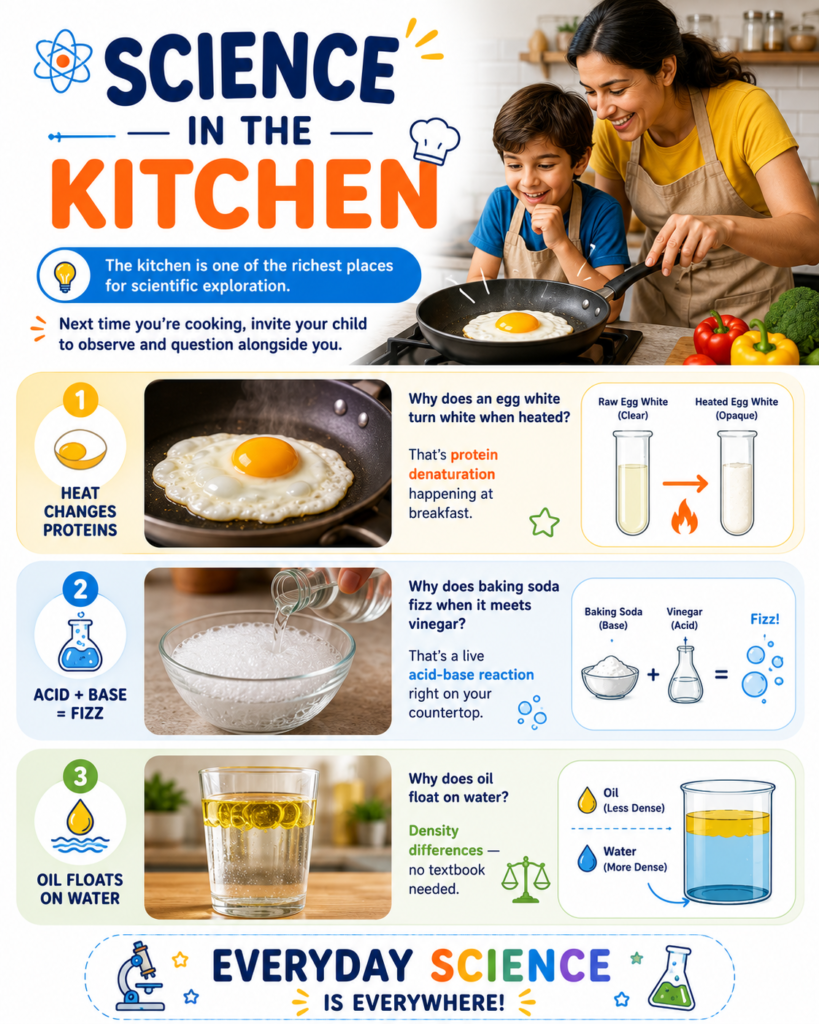
The kitchen is one of the richest places for scientific exploration. Next time you’re cooking, invite your child to observe and question alongside you.
Why does an egg white turn white when heated? That’s protein denaturation happening at breakfast. Why does baking soda fizz when it meets vinegar? That’s a live acid-base reaction right on your countertop. Why does oil float on water? Density differences — no textbook needed.
These aren’t just fun moments. They build a lifelong habit of asking why before simply accepting what.
Everyday Objects, Extraordinary Questions
The most ordinary things around your home are hiding remarkable science. Here’s how to unlock it.
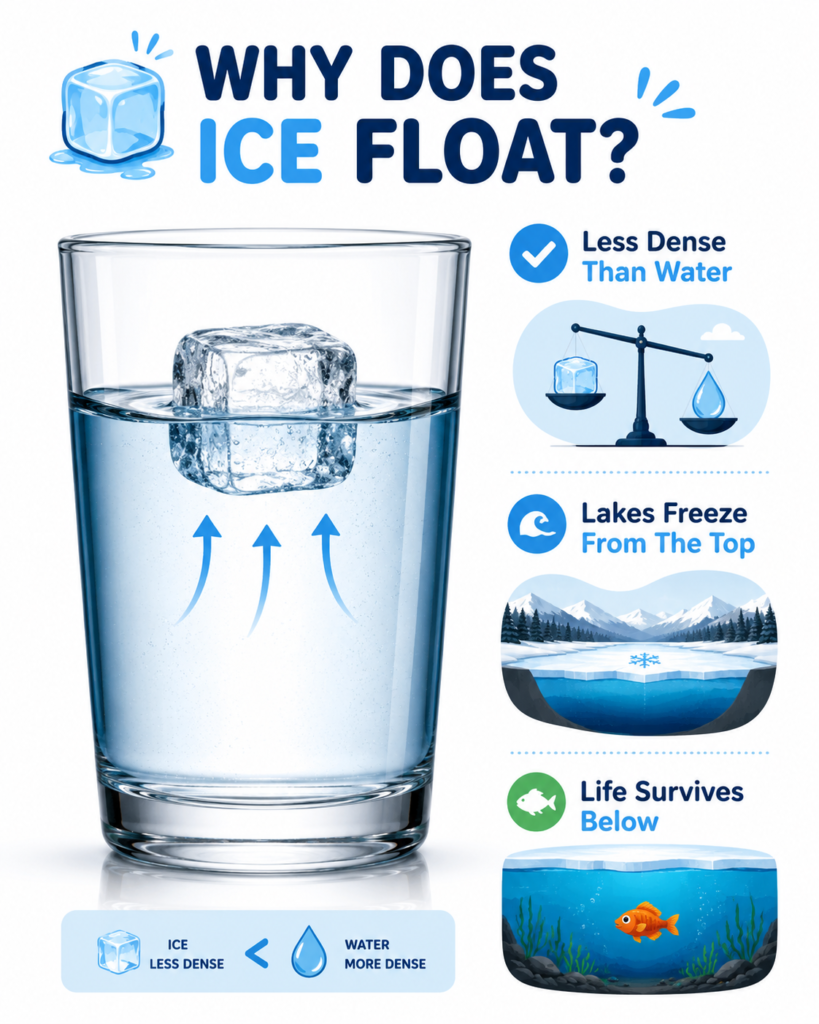
The Ice Cube in a Glass Drop an ice cube into a glass of water and ask your child: Why does it float instead of sinking?Most solids are denser than their liquid form — but water is different. Ice is actually less dense than liquid water, which is why it floats. It’s also why lakes freeze from the top down, protecting aquatic life below. A simple glass of water, and suddenly you’re discussing one of nature’s most important anomalies.
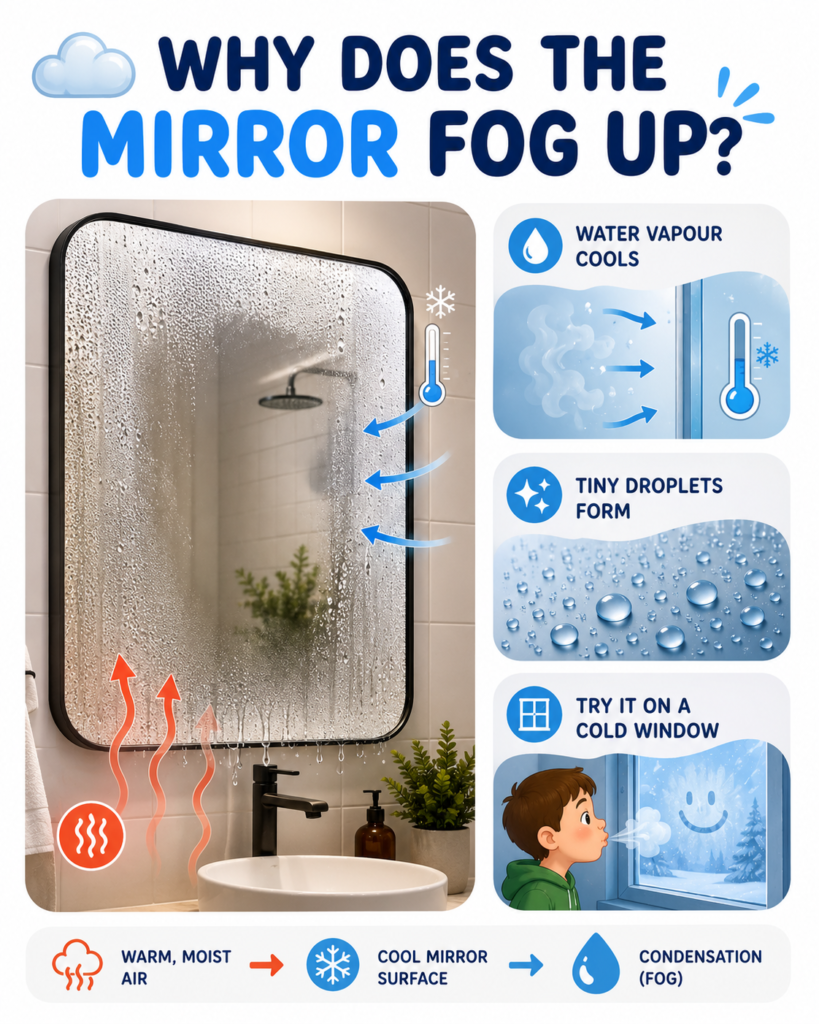
The Foggy Bathroom Mirror After a hot shower, the mirror fogs up. Why? Warm air holds more moisture, and when that humid air meets the cooler mirror surface, it loses energy and the water vapour turns back into tiny droplets — that’s condensation. Ask your child to breathe on a cold window and watch the same thing happen instantly.
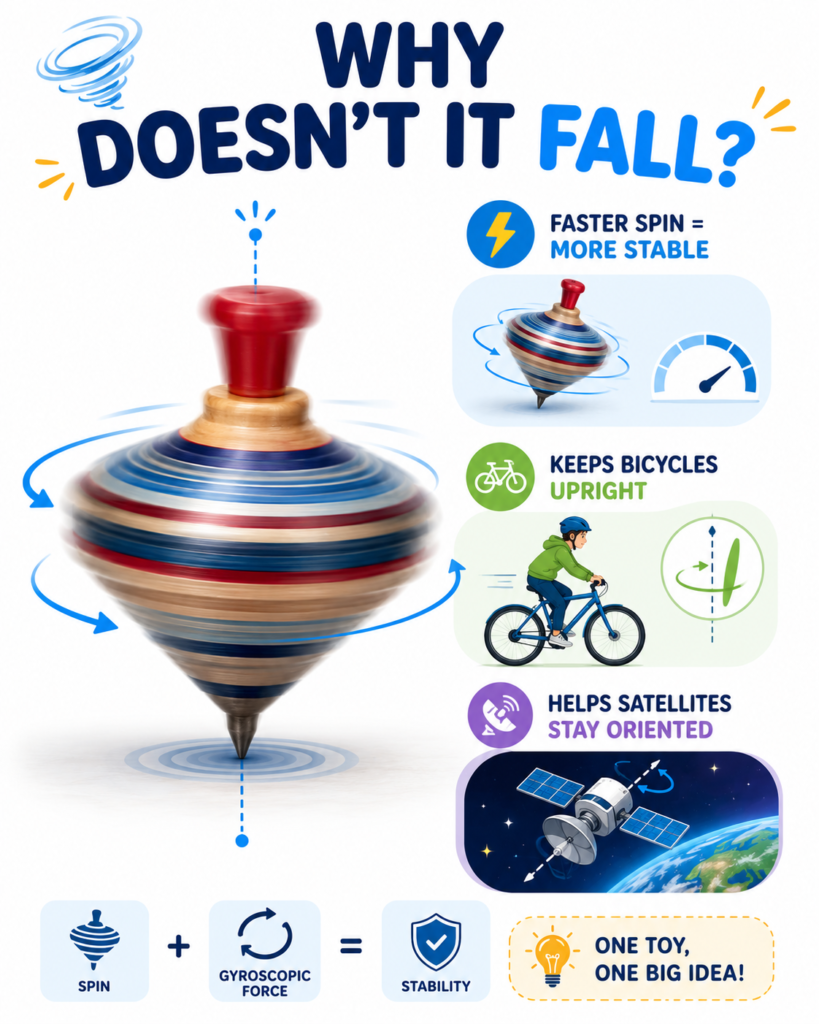
The Spinning Top A spinning top defies gravity longer than it should. Why doesn’t it fall immediately? This is gyroscopic force at work — a spinning object resists changes to its orientation. The faster it spins, the more stable it stays. It’s the same principle that keeps bicycles upright and satellites oriented in space. One toy, one big idea.
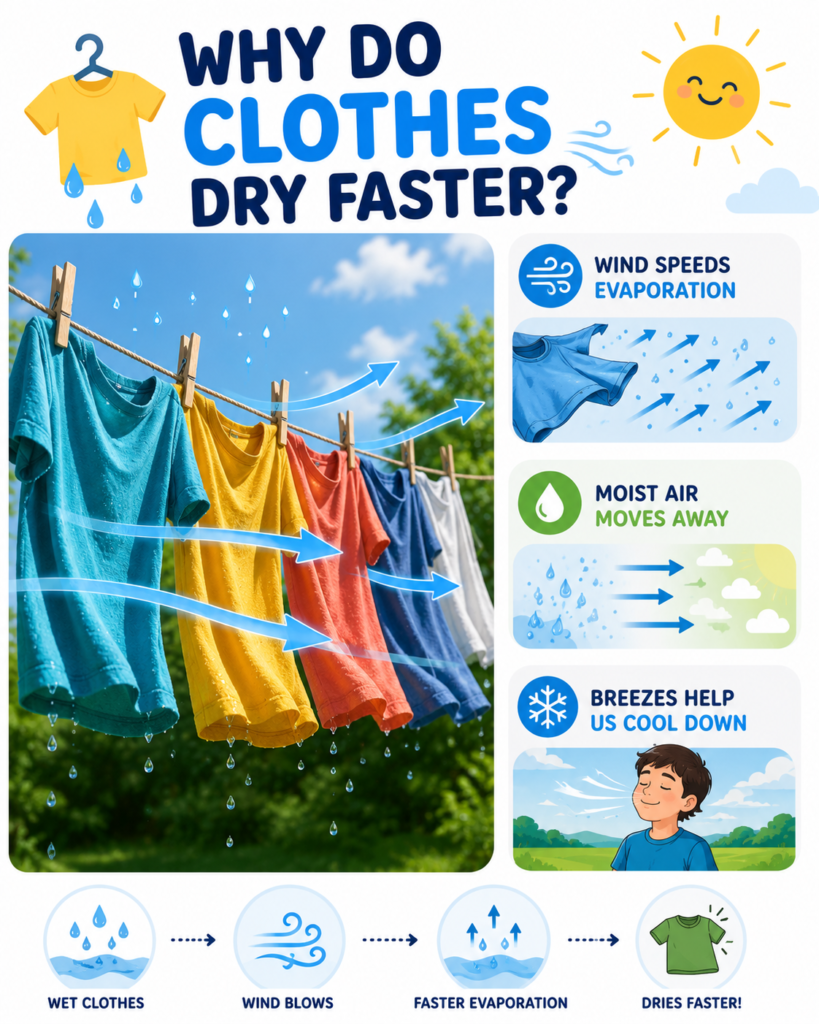
Wet Clothes on the Line Why do clothes dry faster on a windy day than a still one? Evaporation is the answer — but wind speeds it up by constantly replacing the moist air around the fabric with drier air. This is also why we feel cooler when a breeze hits sweaty skin. Your laundry line is teaching fluid dynamics without a single equation.
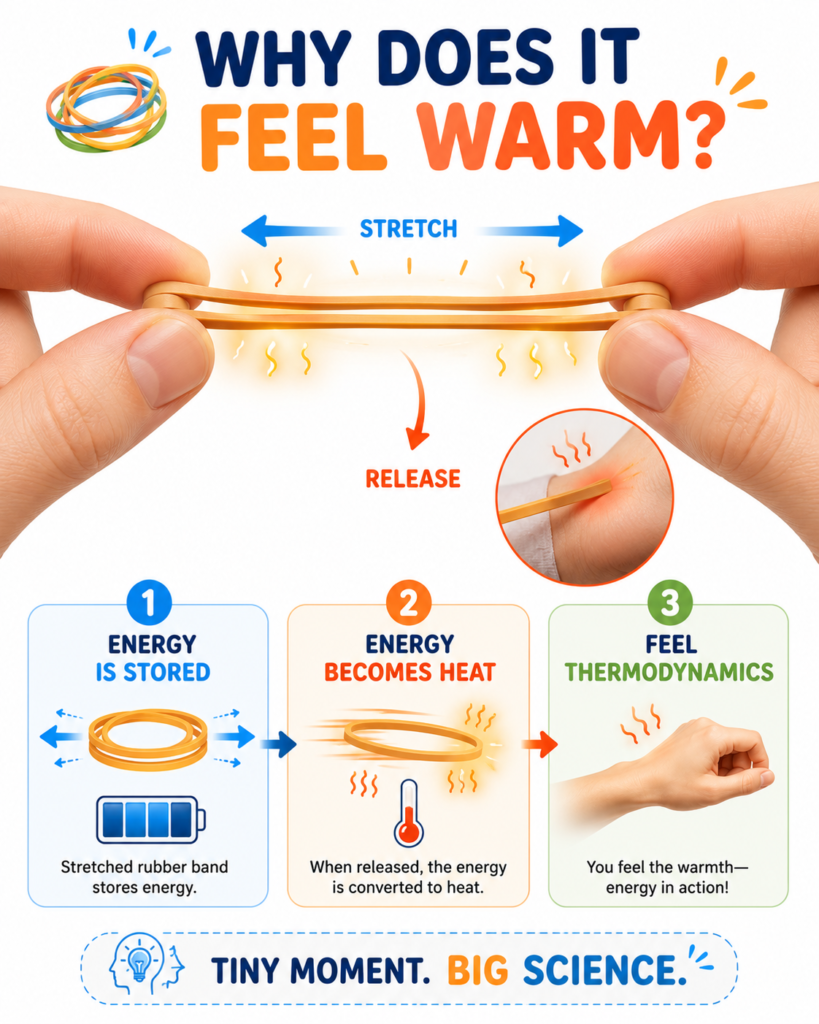
The Stretched Rubber Band Stretch a rubber band and then release it against your skin — it feels warm. That warmth is energy conversion in action. The mechanical energy stored in the stretched rubber is released as heat. This tiny moment introduces thermodynamics in a way that is felt, not just understood.
How to Turn Curiosity Into a Habit
The goal isn’t to have all the answers ready. It’s to build a thinking habit together. Try this simple flow: Observe → Question → Guess → Test → Discuss.
When your child notices something strange or unexpected, resist the urge to explain right away. Ask: “What do you think is happening?” That pause — that space for a guess — is where scientific thinking is born.
Why It Matters Beyond the Experiment
Children who develop curiosity early show stronger critical thinking, better problem-solving, and greater academic confidence as they grow. Scientific thinking at home reinforces classroom learning and makes it feel genuinely relevant to real life.
At Vega Schools, curiosity is built into how students engage with every subject — through inquiry, observation, and hands-on learning that connects seamlessly from home to classroom. When parents create space for questions at home, they become true partners in that learning journey.
Infrastructure, facilities, and experienced teachers are a big asset to the learning & development of students, be it for Nursery, Primary or Senior children making Vega Schools the best schools in Gurgaon. For information about admission, please visit the Vega Schools campuses in Sector 48 and Sector 76 Gurugram. Get the best education for you child in New Gurgaon and be part of the top school infrastructure for sector 78, Sector 83, Sector 85, Sector 90, Sector 102, Sector 106 in Gurgaon, near Dwarka Expressway.